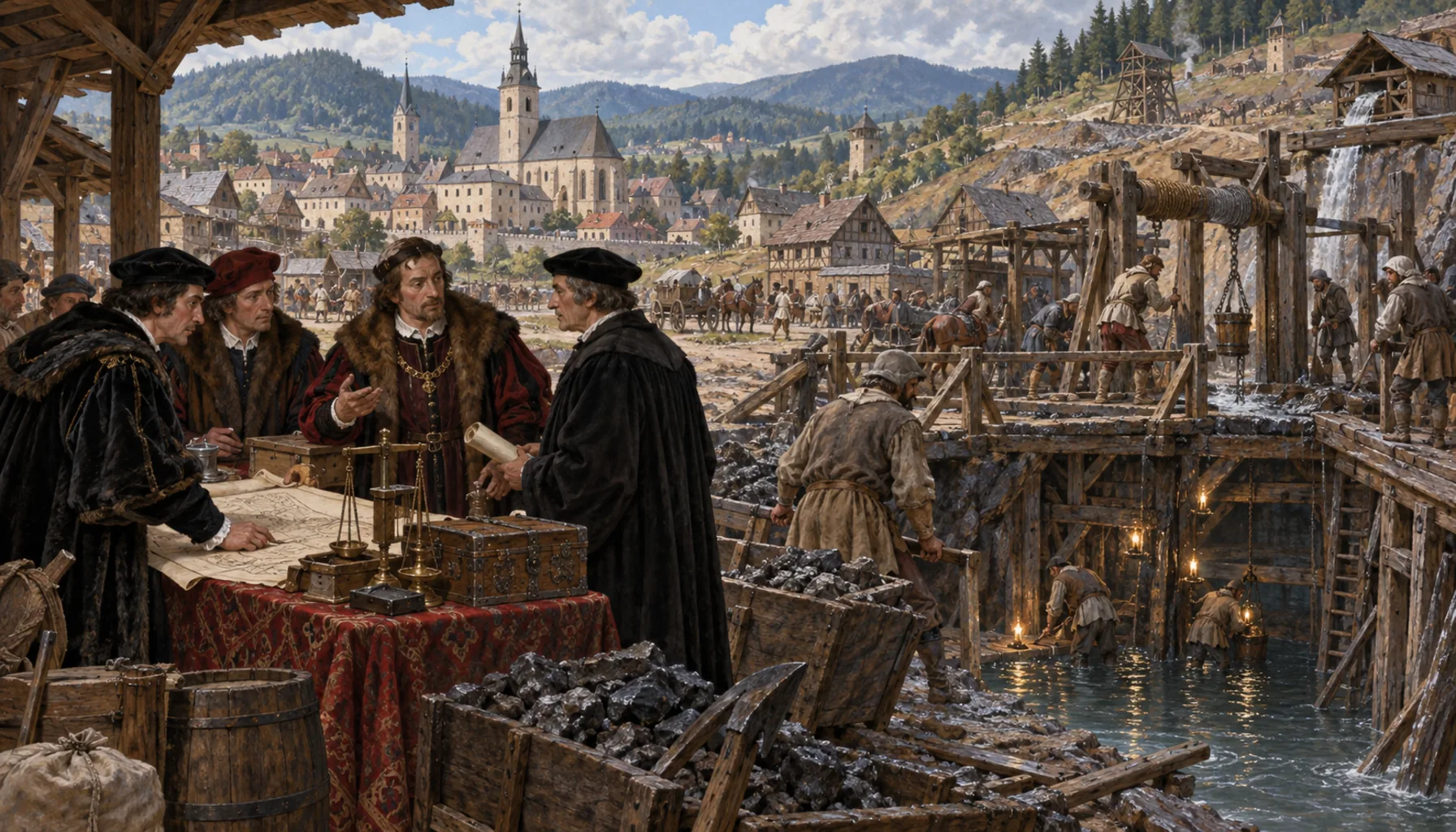
By the end of the fifteenth century the easy ore near the surface was gone and the deep workings were filling with water. Ján Thurzo, a burgher from Spiš who had learned water-lifting engineering abroad, had the machines; the Fuggers of Augsburg, bankers to emperors, had the money. In 1494 the two families set up a joint company with its office in Banská Bystrica, known in German as the Ungarischer Handel — 'the Hungarian trade' — and sealed the partnership in 1495. German capital, Slovak ore, and a head office on this square: historians regularly call it one of the first multinational companies in Europe. For the next half-century it made a small mountain town matter in Kraków, Antwerp and Venice.Koncom 15. storočia bola ľahko dostupná ruda pri povrchu preč a hlboké banské diela zaplavovala voda. Ján Thurzo, spišský mešťan, ktorý sa v cudzine vyučil čerpaniu vody z baní, mal stroje; augsburskí Fuggerovci, bankári cisárov, mali peniaze. V roku 1494 založili obe rodiny spoločný podnik so sídlom v Banskej Bystrici, po nemecky Ungarischer Handel — „uhorský obchod“ — a v roku 1495 partnerstvo spečatili. Nemecký kapitál, slovenská ruda a riaditeľstvo na tomto námestí: historici o tejto firme bežne hovoria ako o jednej z prvých nadnárodných spoločností v Európe. Na pol storočia vďaka nej malé horské mesto niečo znamenalo v Krakove, Antverpách aj v Benátkach.