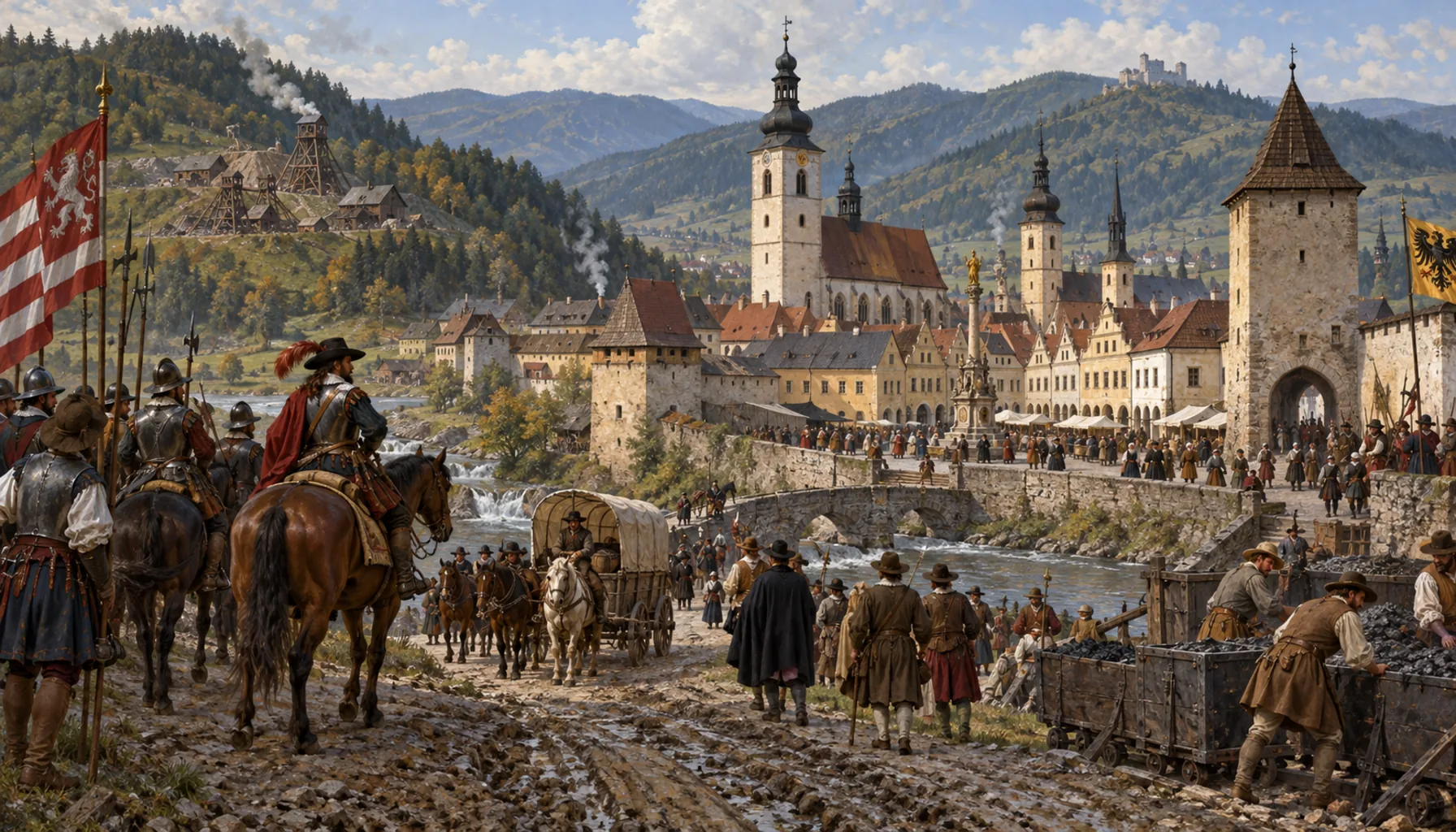
For a hundred years the Hungarian estates rose against their Habsburg kings, and central Slovakia — Protestant, wealthy and astride the roads — was fought over every time. The high point for this town came on 20 August 1620, when a diet meeting in Banská Bystrica elected the Transylvanian prince Gabriel Bethlen king of Hungary. He was a Protestant, and he was never crowned. Armies of one side or the other came up the Hron repeatedly over the next ninety years, mining stopped whenever they did, and the miners themselves struck again and again. The Counter-Reformation eventually won the churches back for the Catholics, and the uprisings ended with the defeat of Rákóczi's in 1711.Sto rokov sa uhorské stavy búrili proti habsburským kráľom a stredné Slovensko — protestantské, bohaté a rozkročené na cestách — sa bilo zakaždým. Vrcholom bol pre toto mesto 20. august 1620, keď snem zasadajúci v Banskej Bystrici zvolil sedmohradské knieža Gabriela Betlena za uhorského kráľa. Bol protestant a nikdy ho nekorunovali. Vojská jednej či druhej strany prichádzali Pohroním ešte deväťdesiat rokov, baníctvo zakaždým zastalo a sami baníci štrajkovali znova a znova. Protireformácia napokon získala kostoly späť pre katolíkov a povstania sa skončili porážkou toho Rákócziho v roku 1711.