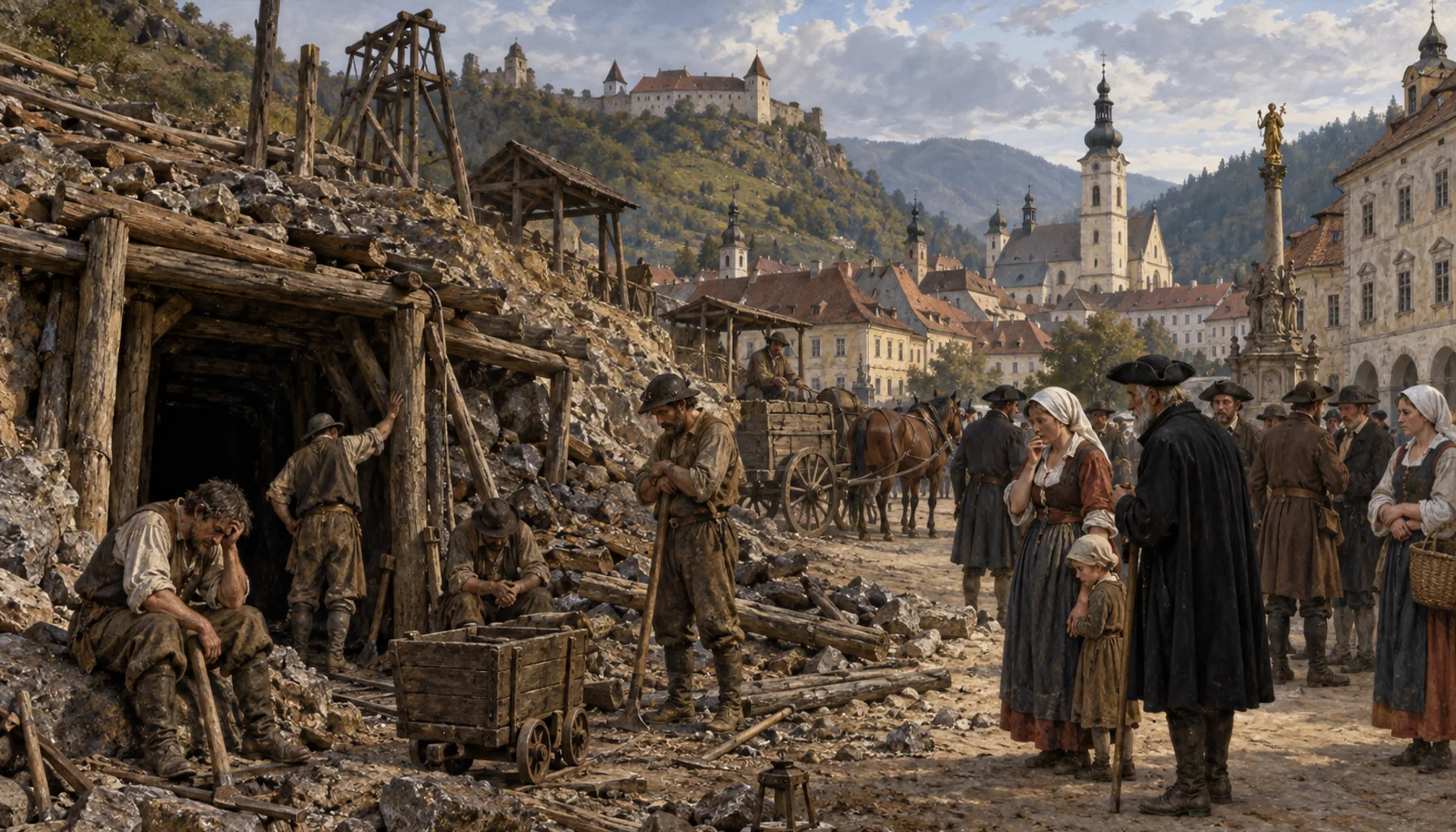
The ore did not last for ever. By the eighteenth century the deposits that had made the town famous were largely worked out, and Banská Bystrica had to become something other than a copper town. It became a town of crafts and offices: 149 guild workshops are counted here in 1720, and 502 in 1784. Administration filled the gap the mines left — in 1766 the town became the seat of Zvolen county, and in 1776 the seat of a new Roman Catholic bishopric. A place that had lived off what it dug up began to live off what it made, taught and administered, which is roughly what it still does.Ruda nevydržala navždy. Do 18. storočia boli ložiská, ktoré mesto preslávili, z veľkej časti vyťažené a Banská Bystrica sa musela stať niečím iným než medeným mestom. Stalo sa mestom remesiel a úradov: v roku 1720 sa tu počíta 149 cechových dielní, v roku 1784 už 502. Medzeru po baniach zaplnila správa — v roku 1766 sa mesto stalo sídlom Zvolenskej stolice a v roku 1776 sídlom nového rímskokatolíckeho biskupstva. Mesto, ktoré žilo z toho, čo vykopalo, začalo žiť z toho, čo vyrobilo, naučilo a spravovalo — a v podstate to robí dodnes.