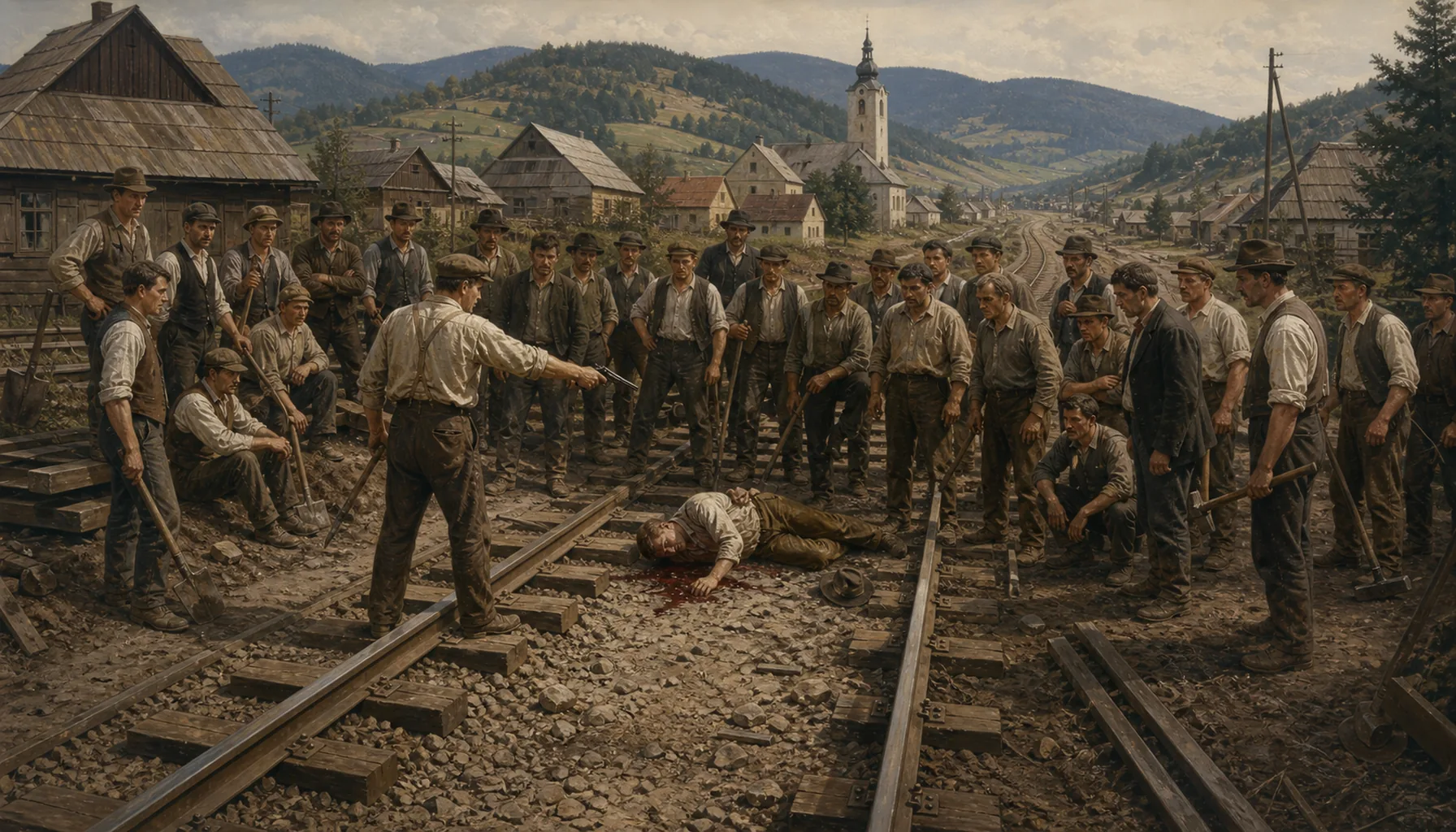
The railway through the village was doubled in 1914, the last piece of peacetime work before the war took everything else. Thirty men of Krásno were killed in the First World War, out of a population of a few thousand — and the families they left behind had to hire themselves out to better-off neighbours to eat. One name is remembered separately: Vincent Čimbora, who was executed at Kragujevac in Serbia after the mutiny of 2 June 1918, when Slovak soldiers refused to be sent back to the front and were court-martialled and shot. He was killed by the army he had been conscripted into, in a country he had no quarrel with, four months before that army's empire ceased to exist. Villages like this one supplied the Habsburg army's infantry, and the bill came to the same few hundred houses every time.V roku 1914 zdvojkoľajnili trať vedúcu obcou — posledný kus mierovej práce predtým, než vojna vzala všetko ostatné. V prvej svetovej vojne padlo tridsať mužov z Krásna, z niekoľkotisícovej obce, a rodiny, ktoré po nich zostali, sa museli chodiť najímať k zámožnejším susedom, aby mali čo jesť. Jedno meno sa pripomína osobitne: Vincent Čimbora, popravený v srbskom Kragujevci po vzbure 2. júna 1918, keď slovenskí vojaci odmietli odísť späť na front, postavili ich pred vojenský súd a postrieľali. Zabila ho armáda, do ktorej ho odviedli, v krajine, s ktorou nemal spor, štyri mesiace pred zánikom ríše, ktorej tá armáda patrila. Práve takéto dediny dodávali habsburskej armáde pechotu — a účet vždy prišiel tým istým pár stovkám domov.