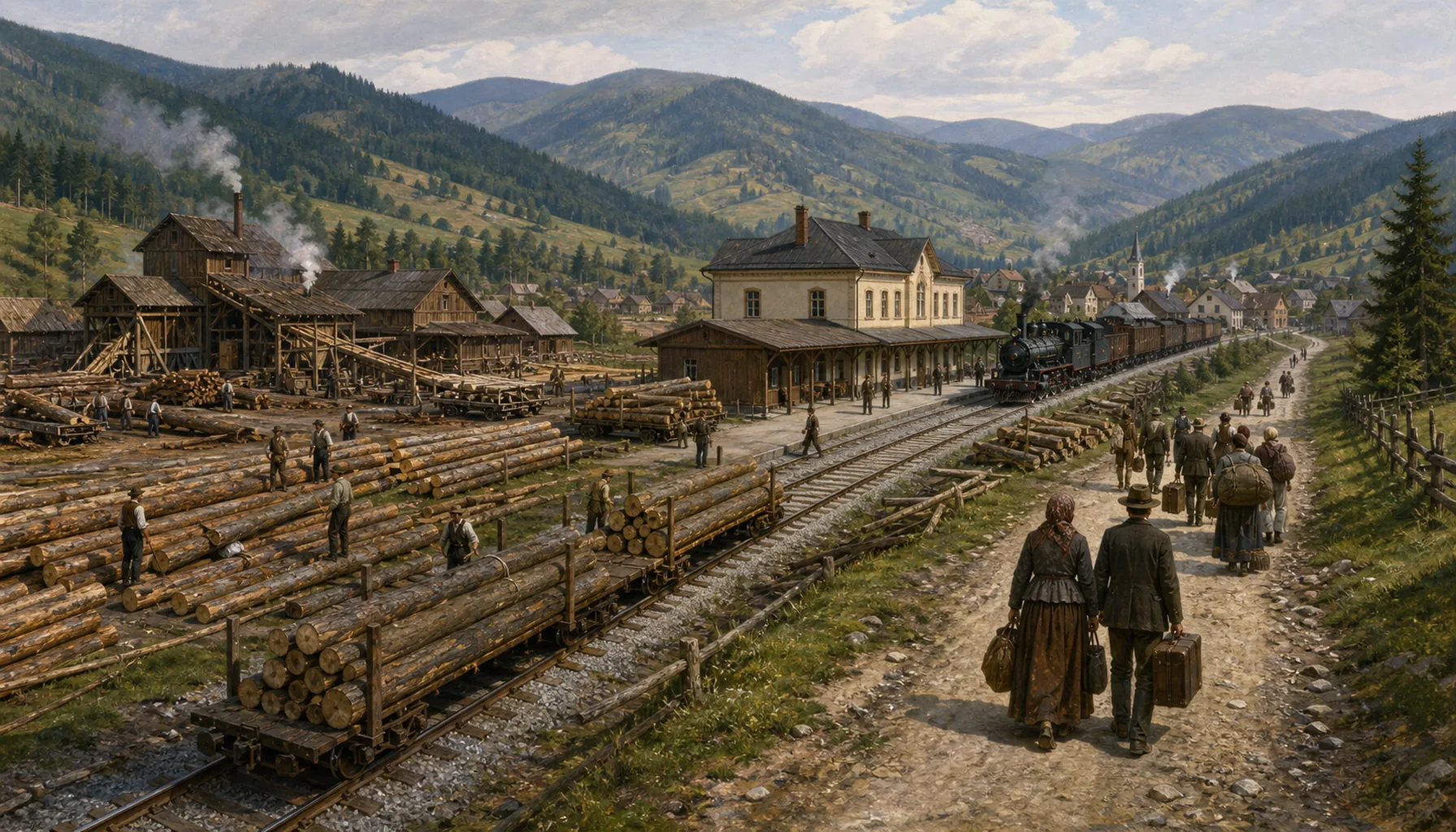
In 1871 the Košice–Bohumín railway came up the valley and Krásno got a station of its own, which for a timber village is worth more than a town hall: logs could now leave in quantity and go anywhere the network went. In 1895 the municipality built a sawmill employing about fifty people, and that mill is the foundation of everything the town has done for a living since. The other export was people. This was the peak of the emigration to the United States — roughly 500,000 Slovaks between 1880 and the mid-1920s, more than half of them to Pennsylvania — and men from villages like this one went to the coal and the steel mills meaning to buy land when they came home. Some did. Many sent for their families instead, and the hamlets on the ridges above Krásno lost households that were never replaced.V roku 1871 prišla dolinou Košicko-bohumínska železnica a Krásno získalo vlastnú stanicu, čo pre drevársku obec znamená viac než radnicu: klady mohli odchádzať vo veľkom a dostať sa všade, kam siahala sieť. V roku 1895 postavila obec pílu s asi päťdesiatimi robotníkmi a práve tá píla je základom všetkého, čím sa mesto odvtedy živí. Druhým vývozným artiklom boli ľudia. Bol to vrchol vysťahovalectva do Spojených štátov — približne 500 000 Slovákov medzi rokom 1880 a polovicou dvadsiatych rokov, viac než polovica do Pensylvánie — a muži z takýchto dedín odchádzali k uhliu a k oceliarňam s tým, že po návrate kúpia pôdu. Niektorí ju kúpili. Mnohí si namiesto toho dali doviezť rodiny a osady na hrebeňoch nad Krásnom prišli o domácnosti, ktoré už nikto nenahradil.