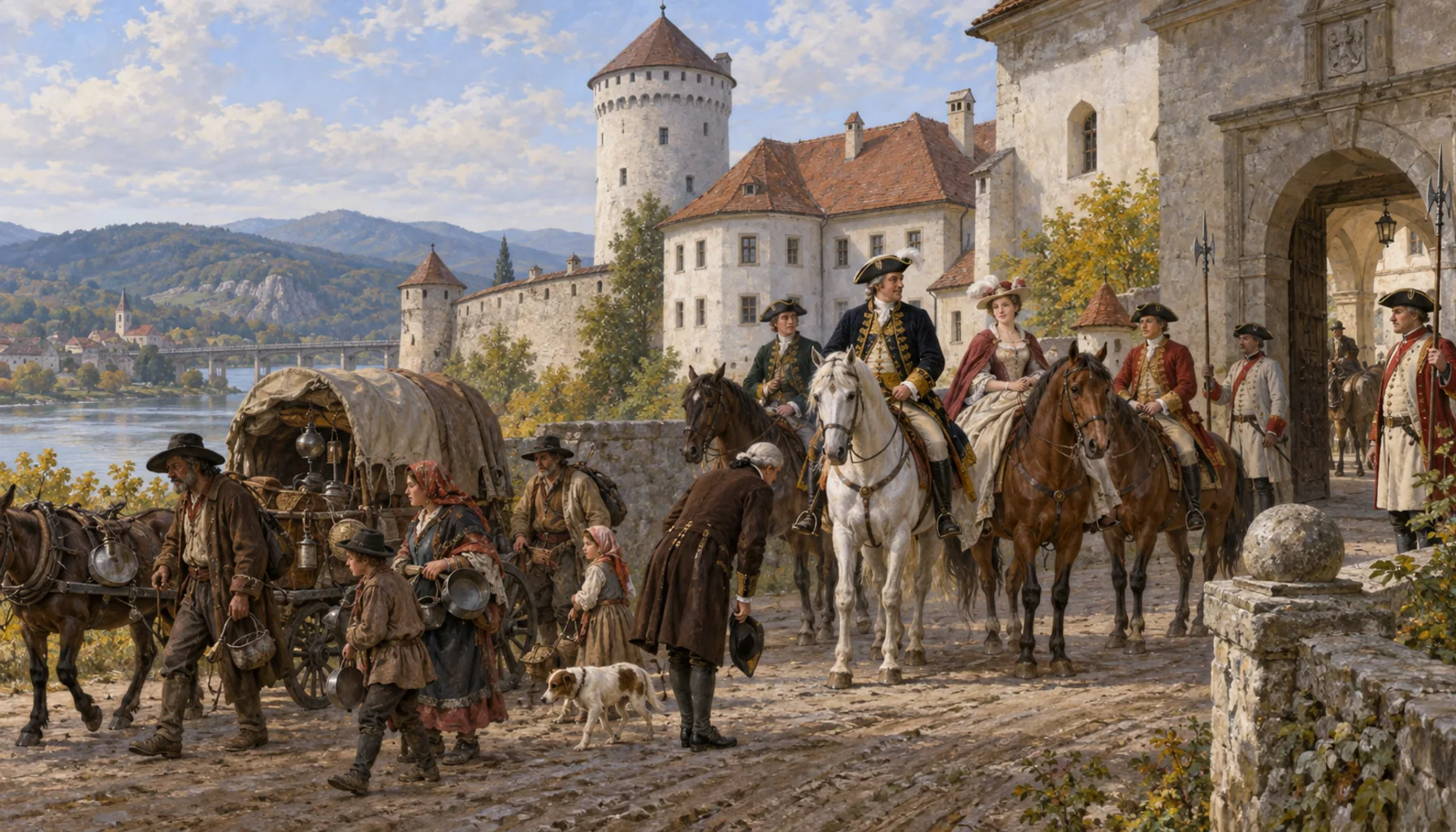
The Suňog line died out in 1798 and Budatín passed to the Čáky family — Csáky in Hungarian — who held it until 1945 and softened a fortress into a residence. Something else began in the same decades that matters more to the castle's present than any owner does. The mountain villages of the Kysuce and the upper Váh had thin soil and too many mouths at the table, and from the late eighteenth century men started leaving them on foot as drotári — travelling tinkers, with a coil of wire on their back and a pair of pliers in their hand. A cracked earthenware pot was not thrown away: a drotár bound it in a tight mesh of wire and it went back on the stove.Suňogovská vetva roku 1798 vymrela a Budatín prešiel na Čákyovcov — po maďarsky Csáky — ktorí ho držali až do roku 1945 a z pevnosti postupne spravili sídlo. V tých istých desaťročiach sa však začalo aj čosi iné, čo pre dnešný Budatín znamená viac než ktorýkoľvek majiteľ. Horské dediny Kysúc a horného Považia mali chudobnú pôdu a priveľa úst pri stole, a od konca osemnásteho storočia z nich muži odchádzali pešo do sveta ako drotári — vandrovní remeselníci s kotúčom drôtu na chrbte a s kliešťami v ruke. Prasknutý hlinený hrniec sa nevyhadzoval: drotár ho ovinul hustou sieťou drôtu a hrniec sa vrátil na pec.