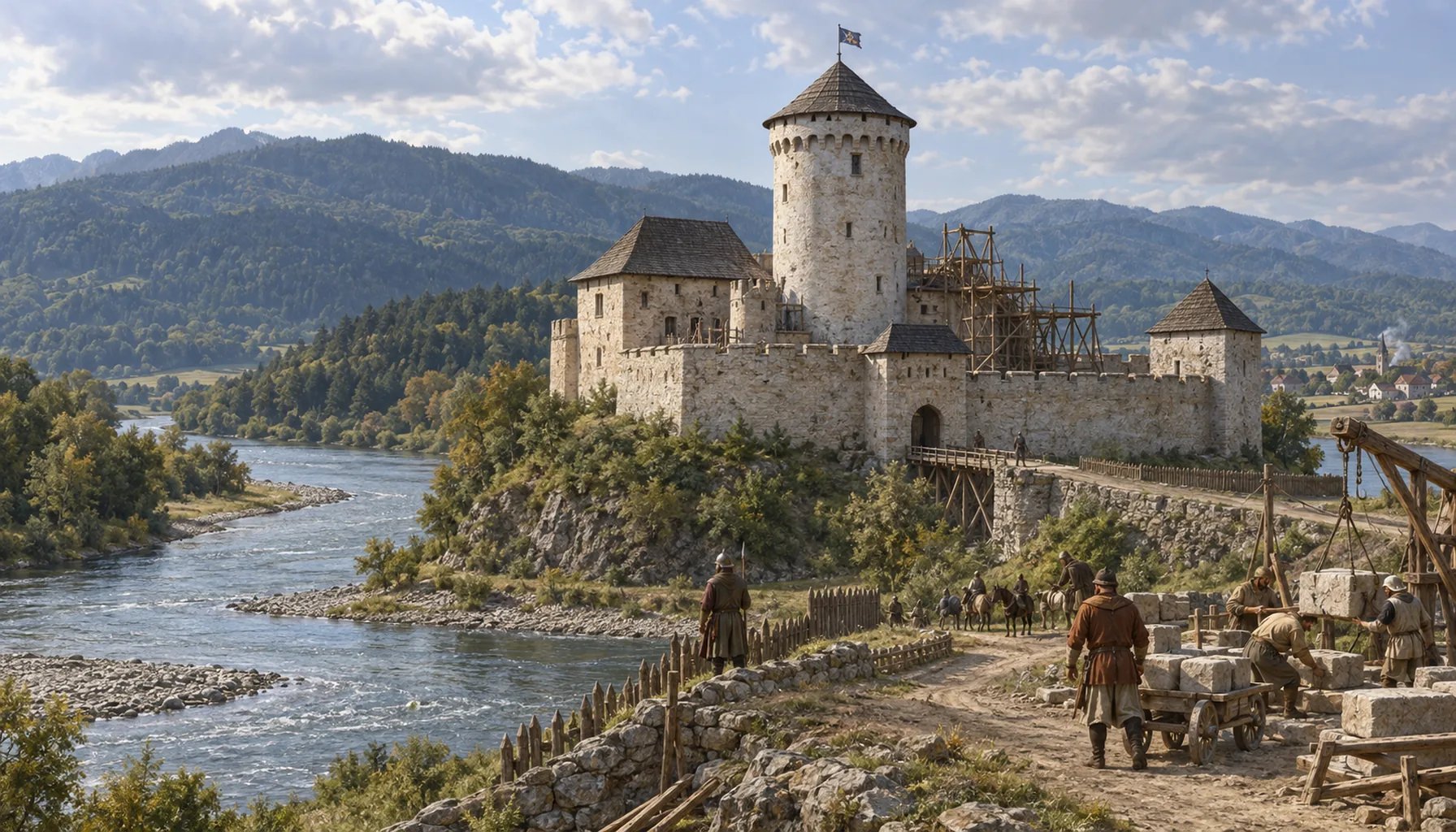
Budatín was founded in the second half of the thirteenth century, which puts it squarely in the wave of stone castles built after the Mongol invasion of 1241. King Béla IV had watched wooden forts burn and earth banks fail, and his answer was masonry on defensible ground — built by the crown and by nobles he pushed into building. The oldest part of Budatín is still the most impressive: a massive round Romanesque tower, a cylindrical keep with walls thick enough to outlive everything later built against it. It was not raised to fight an army. It was raised so that a small garrison could hold a river crossing and make travellers pay to use it.Budatín vznikol v druhej polovici trinásteho storočia, čo ho radí presne do vlny kamenných hradov, ktoré sa stavali po mongolskom vpáde roku 1241. Kráľ Belo IV. videl horieť drevené hradiská a zlyhávať valy a jeho odpoveďou bolo murivo na dobre chránenom mieste — staval ho panovník aj šľachtici, ktorých do stavania tlačil. Najstaršia časť Budatína je dodnes aj tou najpôsobivejšou: mohutná okrúhla románska veža, valcová obytná veža s múrmi takými hrubými, že prežili všetko, čo k nim neskôr pristavali. Nepostavili ju preto, aby odolala vojsku. Postavili ju preto, aby malá posádka udržala riečny prechod a nechala si zaň od pocestných platiť.