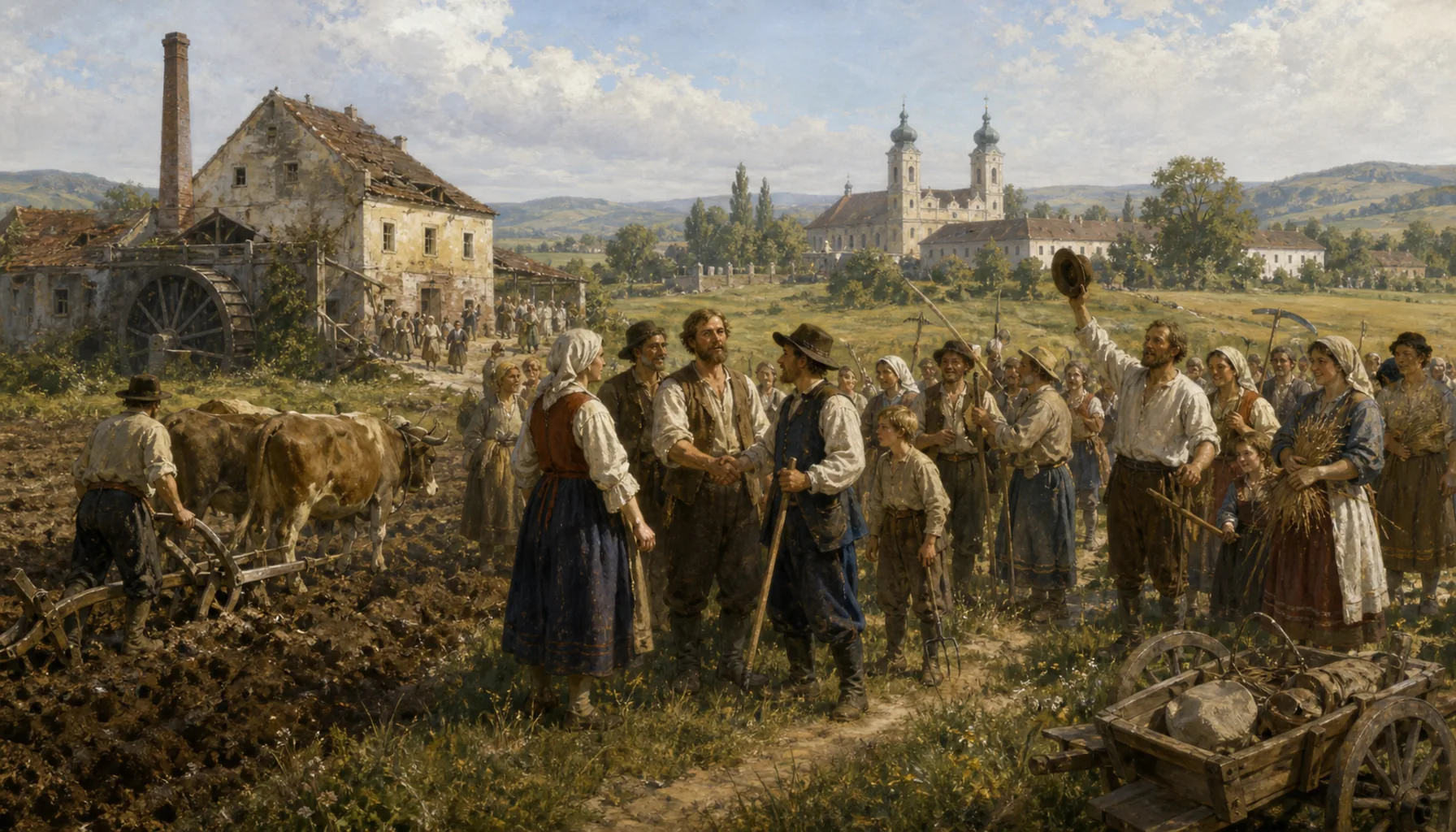
The revolution of 1848 abolished serfdom across the monarchy: villagers who had owed unpaid labour to the Šaštín estate became owners of their fields. In the same upheaval the great cotton manufactory failed, closing probably in 1848 or 1849 after more than a century — and the thousands of people who had spun for it at home lost that income at exactly the moment they gained their land. In the 1860s the empty building was converted into a sugar factory, because sugar beet was what the Záhorie plain was growing by then. One set of walls in Šaštín had been a Renaissance house, a cotton mill and a sugar works inside two hundred years.Revolúcia roku 1848 zrušila v celej monarchii poddanstvo: dedinčania, ktorí panstvu odpracúvali robotu zadarmo, sa stali vlastníkmi svojich polí. V tom istom prevrate zanikla aj veľká bavlnárska manufaktúra — skončila pravdepodobne v rokoch 1848 alebo 1849, po vyše storočí — a tisíce ľudí, ktoré pre ňu priadli doma, prišli o tento zárobok presne vo chvíli, keď získali pôdu. V šesťdesiatych rokoch 19. storočia prestavali prázdnu budovu na cukrovar, lebo cukrovú repu vtedy pestovala veľká časť záhorskej roviny. Jedny múry v Šaštíne boli za dvesto rokov renesančným domom, bavlnárskou manufaktúrou aj cukrovarom.