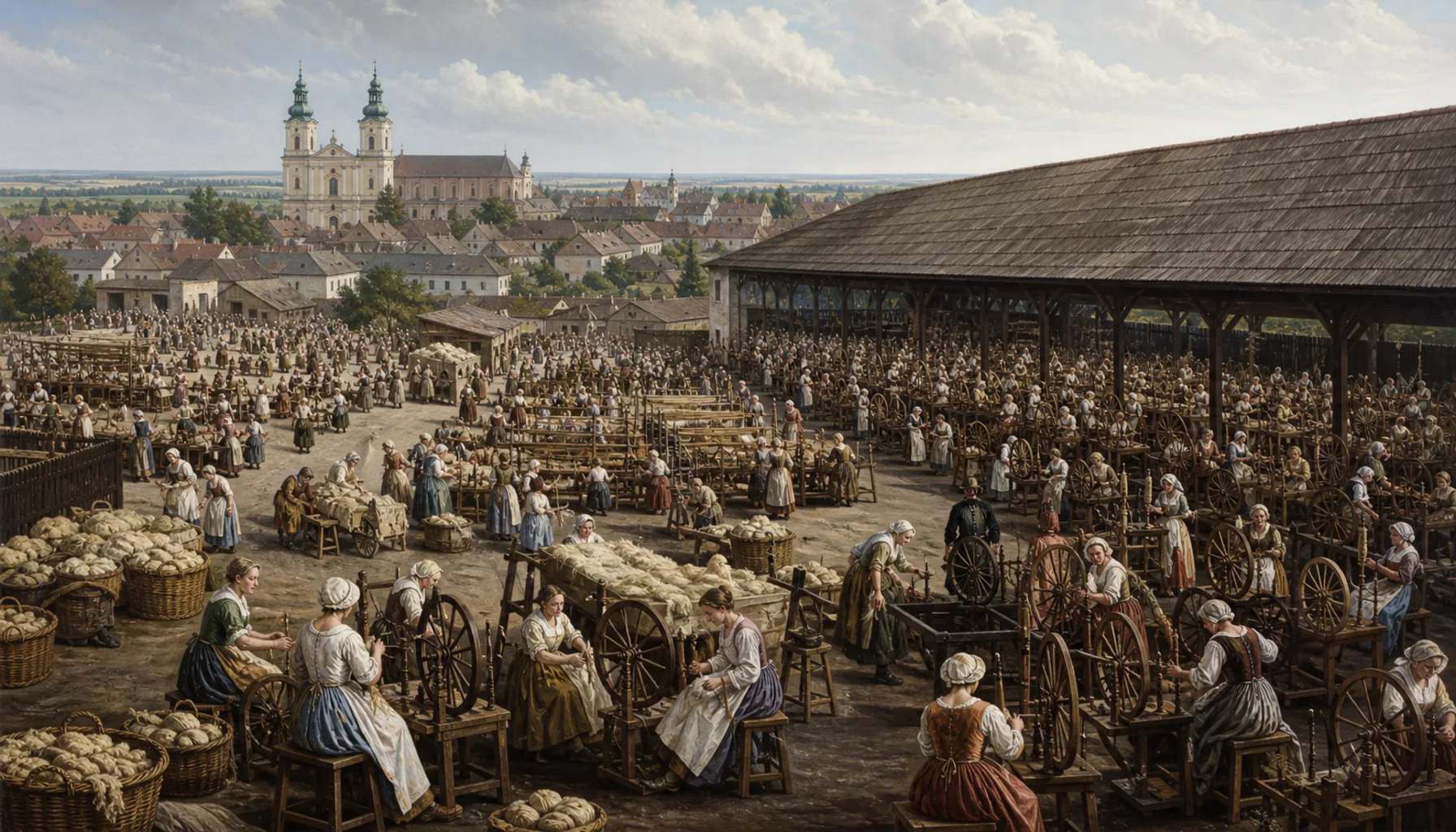
The same owner did something else in Šaštín that is easy to overlook beside a basilica. Francis Stephen turned a Renaissance building in the village into a kartúnka — a manufactory printing cotton and half-cotton cloth. At its height it employed about a thousand people on the premises and gave piecework to nearly twenty thousand home spinners across the surrounding countryside, who spun thread in their own cottages and were paid by the piece. That is industry on a scale Slovakia would not see again for a century, in a village, in the seventeen-hundreds. Between them, Holíč's faience works and Šaštín's cotton mill were one man's attempt to make his new estates produce something other than grain.Ten istý majiteľ urobil v Šaštíne ešte čosi, čo sa popri bazilike ľahko prehliadne. František Štefan premenil renesančnú budovu v dedine na kartúnku — manufaktúru na potlač bavlnených a polobavlnených látok. V najlepších časoch zamestnávala priamo asi tisíc ľudí a takmer dvadsaťtisíc domáckych pradiarov z okolitých dedín pre ňu priadlo doma za odmenu od kusa. To je priemysel v rozsahu, aký potom Slovensko celé storočie nezažilo — v dedine, v osemnástom storočí. Holíčska fajansa a šaštínska kartúnka boli spolu pokusom jedného človeka prinútiť svoje nové panstvá vyrábať aj niečo iné než obilie.