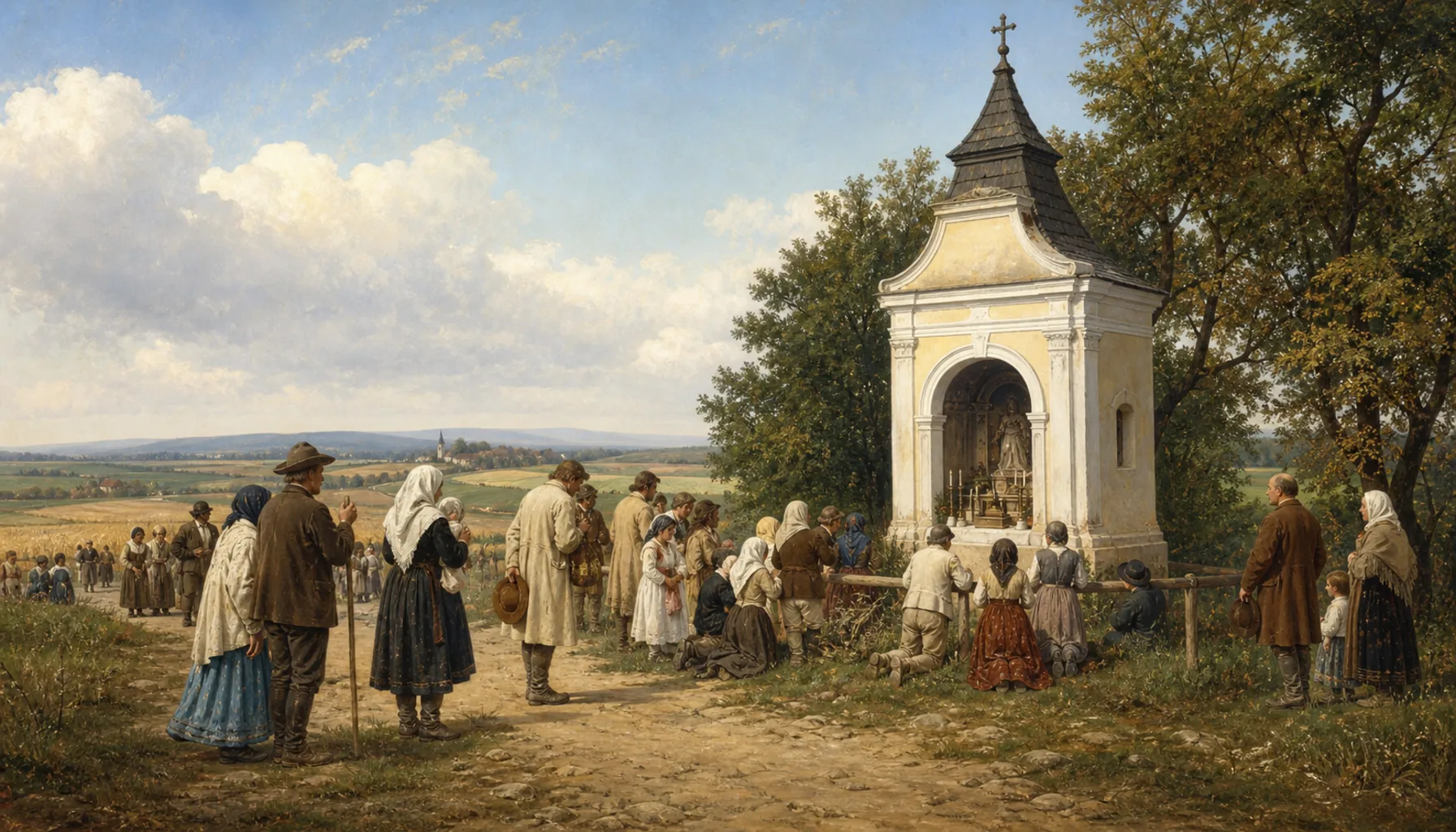
For a century and a half people came to the roadside chapel and reported cures and answered prayers. In 1732 the Archbishop of Esztergom, Imrich Esterházy, did what the church does with reports like that: he appointed a commission to examine them one at a time. The commission worked through 726 recorded cases and on 10 November 1732 declared the statue miraculous, in front of a crowd said to have numbered twenty thousand. That is the moment a local devotion became an official one — and the reason a village on a sandy plain was about to be given one of the largest churches in the country.Poldruha storočia sem k tej kaplnke pri ceste chodili ľudia a hlásili uzdravenia a vypočuté modlitby. V roku 1732 urobil ostrihomský arcibiskup Imrich Esterházi to, čo cirkev v takých prípadoch robí: vymenoval komisiu, ktorá mala prípady preskúmať jeden po druhom. Komisia prešla 726 zaznamenaných prípadov a 10. novembra 1732 vyhlásila sochu za milostivú pred zástupom, ktorý sa odhadoval na dvadsaťtisíc ľudí. To je chvíľa, keď sa z miestnej úcty stala úcta oficiálna — a dôvod, prečo mala dedina na piesočnatej rovine dostať jeden z najväčších kostolov v krajine.