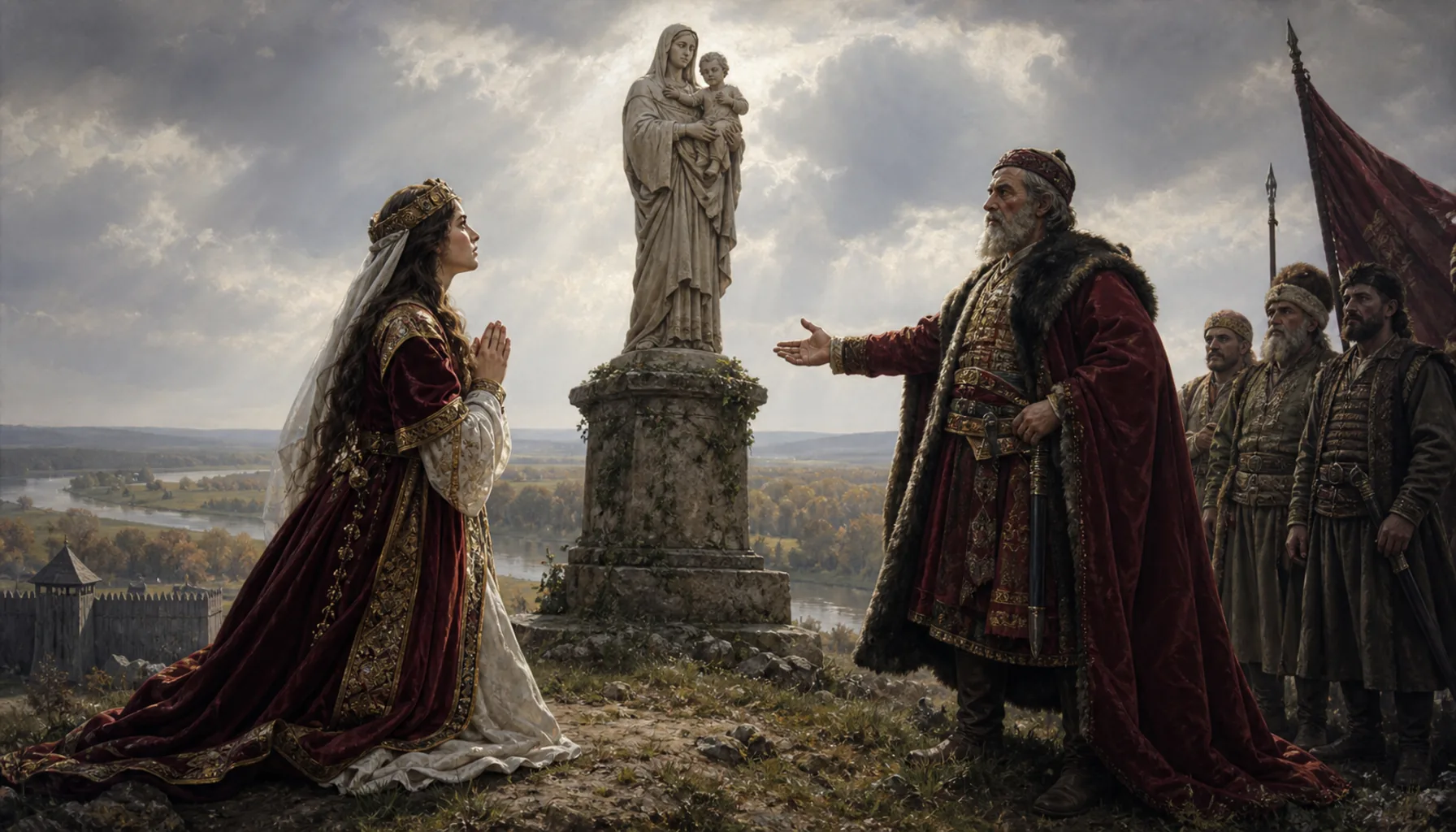
The whole story of Šaštín starts with a quarrel and a promise. Angelika Bakičová, wife of Count Imrich Czobor, the lord of Šaštín, had a pieta — a carving of the Virgin Mary holding the body of her dead son — made in 1564 in fulfilment of a vow, and set it up in a small chapel beside the road. Her father was Pavle Bakić, the last titular despot of Serbia, who had fled the Ottoman conquest of his country into the Kingdom of Hungary and was killed fighting the Ottomans at Gorjani in 1537. The Ottoman century pushed armies north across Europe; it pushed families north too, and one of those families founded what is now Slovakia's national shrine.Celý príbeh Šaštína sa začína hádkou a sľubom. Angelika Bakičová, manželka šaštínskeho zemepána grófa Imricha Cobora, dala v roku 1564 na splnenie sľubu vyrezať pietu — sochu Panny Márie s telom mŕtveho syna v náručí — a postavila ju do malej kaplnky pri ceste. Jej otcom bol Pavol Bakič, posledný titulárny srbský despota, ktorý ušiel pred osmanským dobytím svojej krajiny do Uhorska a v roku 1537 padol v boji proti Osmanom pri Gorjanoch. Osmanské storočie tlačilo Európou na sever vojská; tlačilo na sever aj rodiny — a jedna z nich založila dnešnú národnú svätyňu Slovenska.