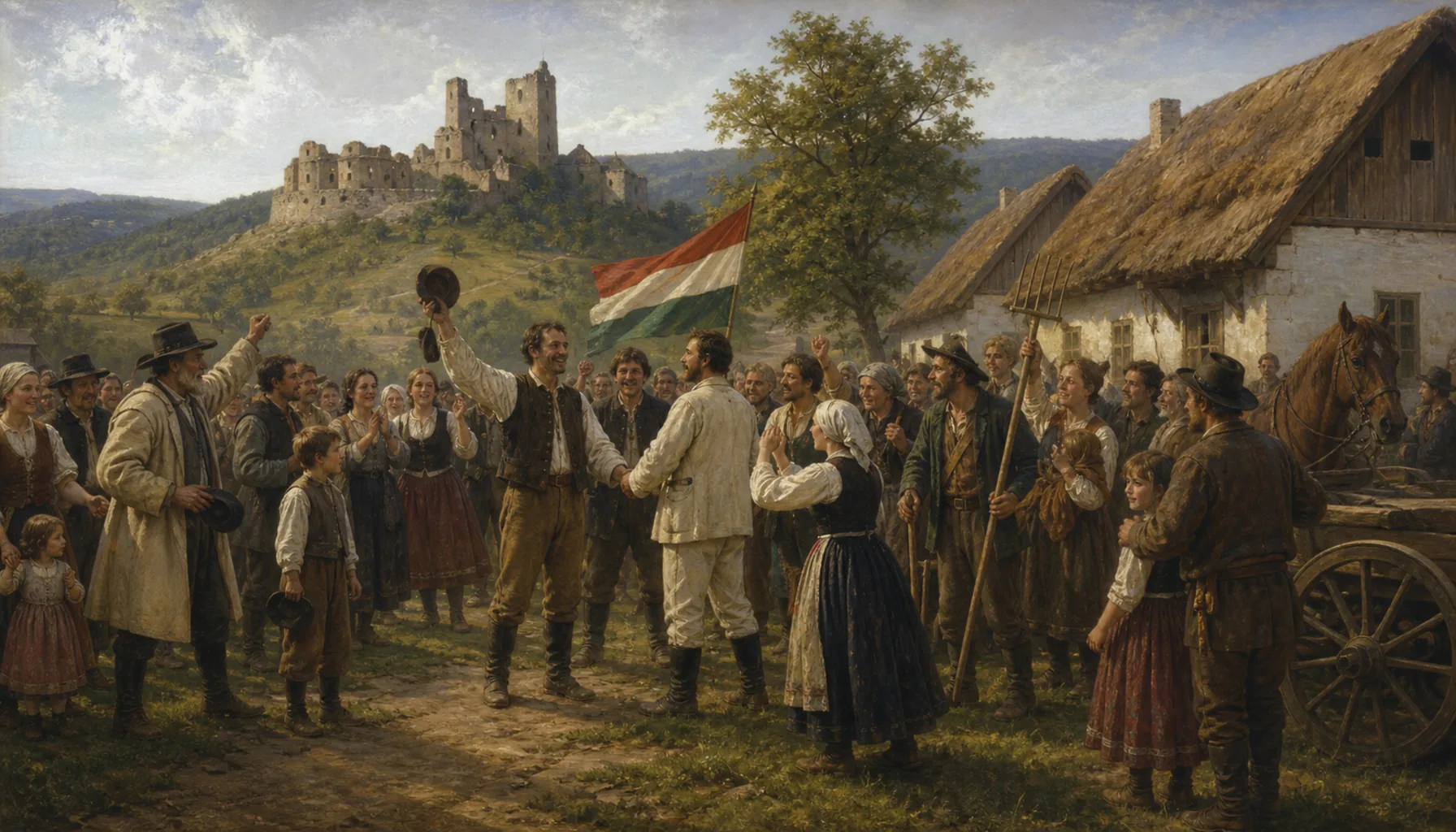
The revolutions of 1848 abolished serfdom throughout the Kingdom of Hungary, and with it the labour days, the dues in kind and the lord's court that had governed people here since the castle was built. What followed was not automatic prosperity. Land was divided; a family with a few hectares of vineyard and a horse could make a living, a family with less went into debt, into service, or eventually onto a ship. What survived and grew was the wine, because vines will take a stony south-facing slope where wheat will not, and that slope now belonged to the people who worked it. The cellars behind the houses on the main street are what that change looks like from the outside.Revolučný rok 1848 zrušil v celom Uhorsku poddanstvo a s ním aj robotu, naturálne dávky a zemepanský súd, ktoré tunajších ľudí riadili od čias, keď postavili hrad. To, čo prišlo potom, však nebol samočinný blahobyt. Pôda sa rozdelila; rodina s pár hektármi vinice a s koňom sa uživila, rodina s menšou výmerou sa zadlžila, išla slúžiť alebo napokon na loď do Ameriky. Prežilo a rástlo vinohradníctvo, lebo vinič znesie kamenistý južný svah, na ktorom pšenica nerastie — a ten svah teraz patril tým, čo ho obrábali. Pivnice za domami na hlavnej ulici sú to, ako táto zmena vyzerá zvonku.