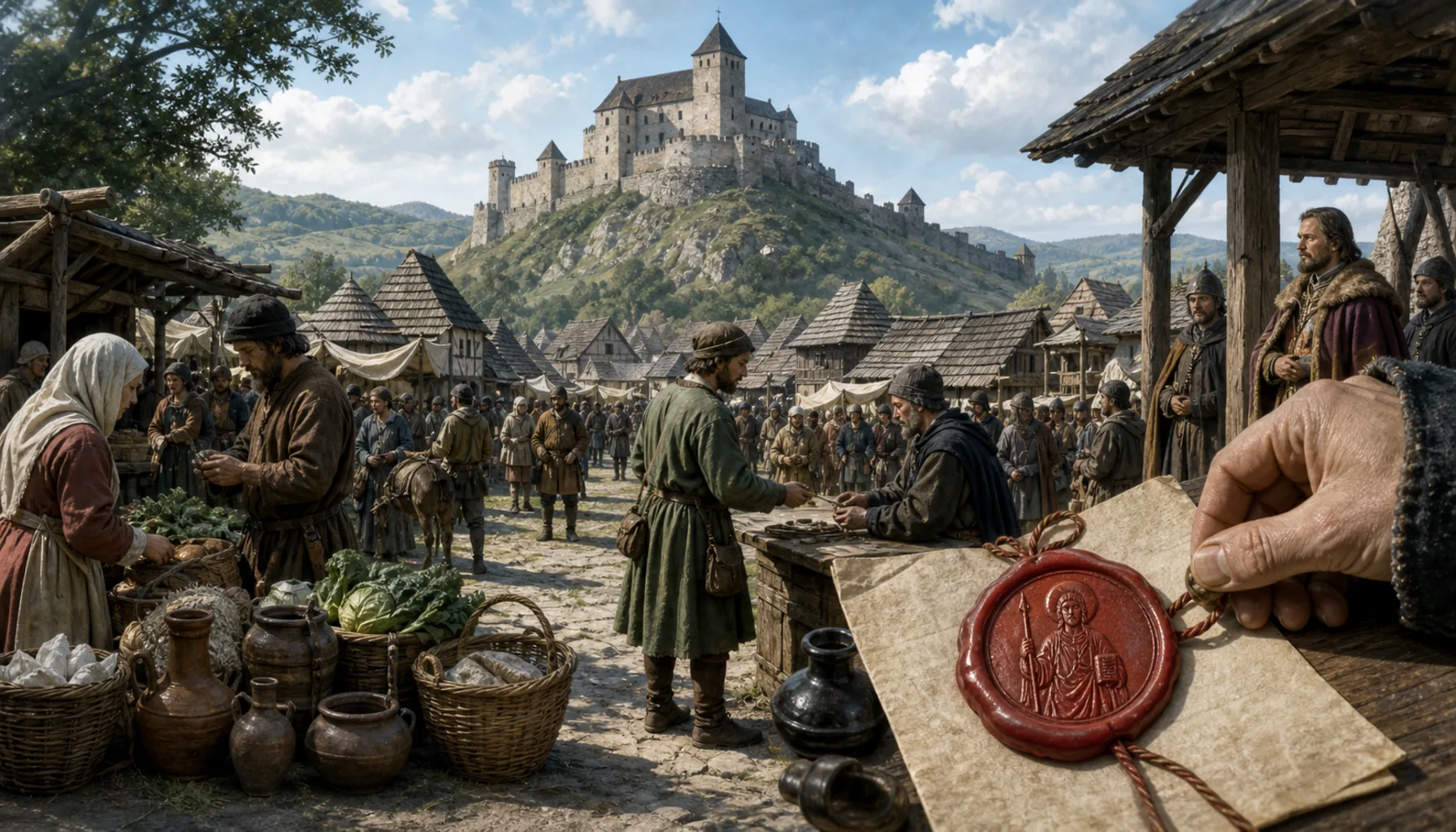
In 1392 King Sigismund handed the Čachtice estate to Stibor of Stiboricz, and in the same year the settlement was granted the rights of a zemepanské mestečko — a landlord's market town, which meant it could hold markets, take the tolls from them and settle its own small affairs, while still belonging body and soul to the lord on the hill. Its arms and seal carried St Ladislaus, the eleventh-century warrior king of Hungary, and the parish church raised here in the late fourteenth century was dedicated to the same saint. Market rights are the reason the village still has the shape it has: a street wide enough to hold a fair, an open space in the middle, and long narrow plots running back from the road. Čachtice slipped back to being a village in later centuries and the title lapsed. The ground plan did not.V roku 1392 dal kráľ Žigmund čachtické panstvo Stiborovi zo Stiboríc a v tom istom roku získala osada výsady zemepanského mestečka — smela usporadúvať trhy, vyberať z nich mýto a vybavovať si drobné veci sama, hoci telom i dušou ďalej patrila pánovi na kopci. V erbe a na pečati mala svätého Ladislava, uhorského kráľa a bojovníka z jedenásteho storočia, a farský kostol postavený tu koncom štrnásteho storočia bol zasvätený tomu istému svätcovi. Trhové právo je dôvod, prečo má obec dodnes takýto tvar: ulica dosť široká na jarmok, otvorené priestranstvo uprostred a dlhé úzke parcely vybiehajúce od cesty dozadu. Čachtice v neskorších storočiach klesli späť na dedinu a titul zanikol. Pôdorys nie.