Villages of the Trenčín RegionObce Trenčianskeho kraja
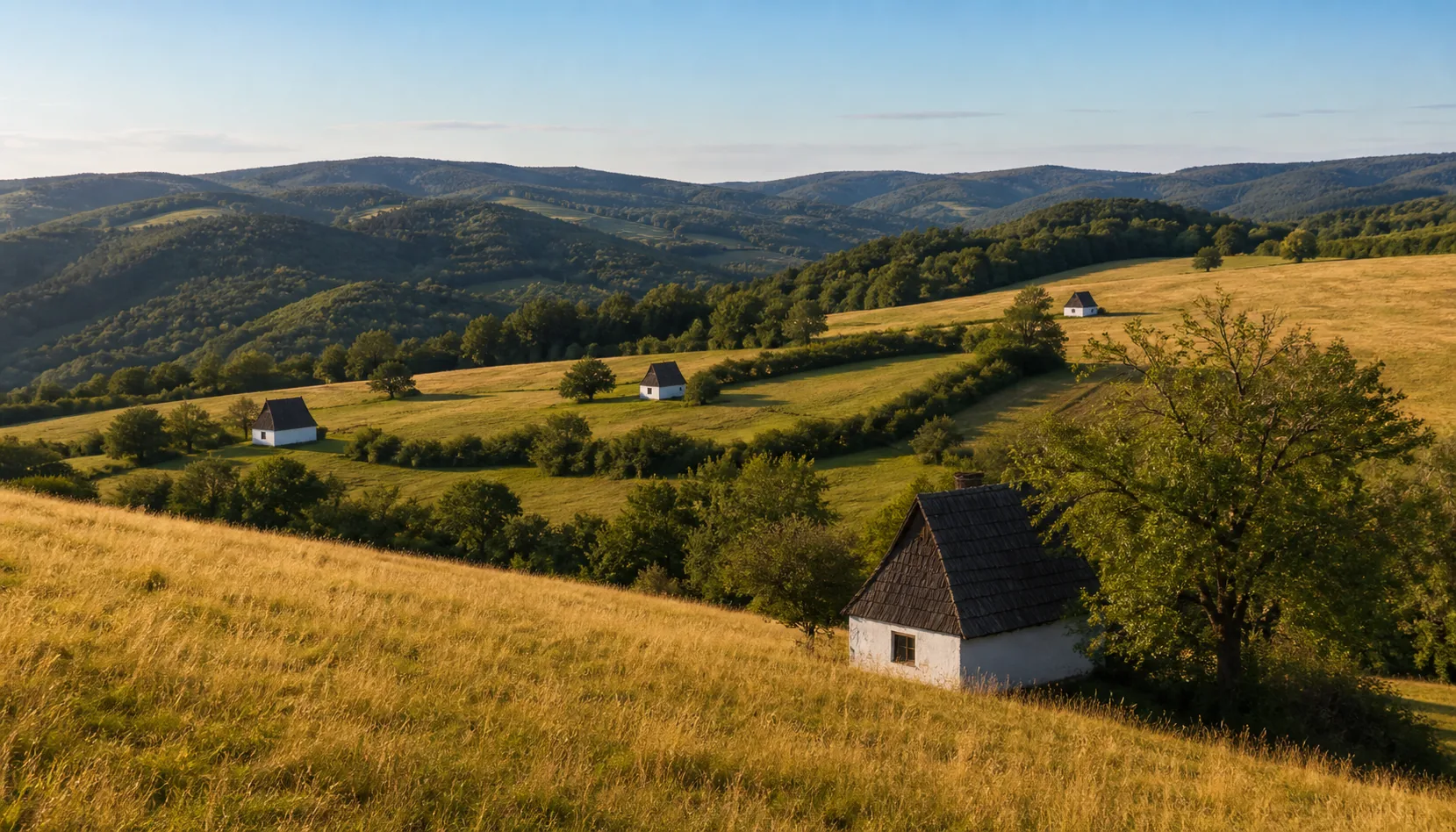
The region's villages come in two kinds: the close line of them along the Váh under the castle rocks, and the scattered hillside farmsteads of the White Carpathians, where a whole settlement can be houses spread across a slope with no centre at all.Obce kraja sú dvojaké: hustá šnúra pozdĺž Váhu pod hradnými bralami a rozptýlené kopanice v Bielych Karpatoch, kde celé sídlo tvoria domy roztrúsené po svahu bez akéhokoľvek stredu.
Scattered kopanice farmsteads on the White Carpathian slopes above MyjavaRoztrúsené kopanice na svahoch Bielych Karpát nad Myjavou
Two kinds of villageDva druhy obcí
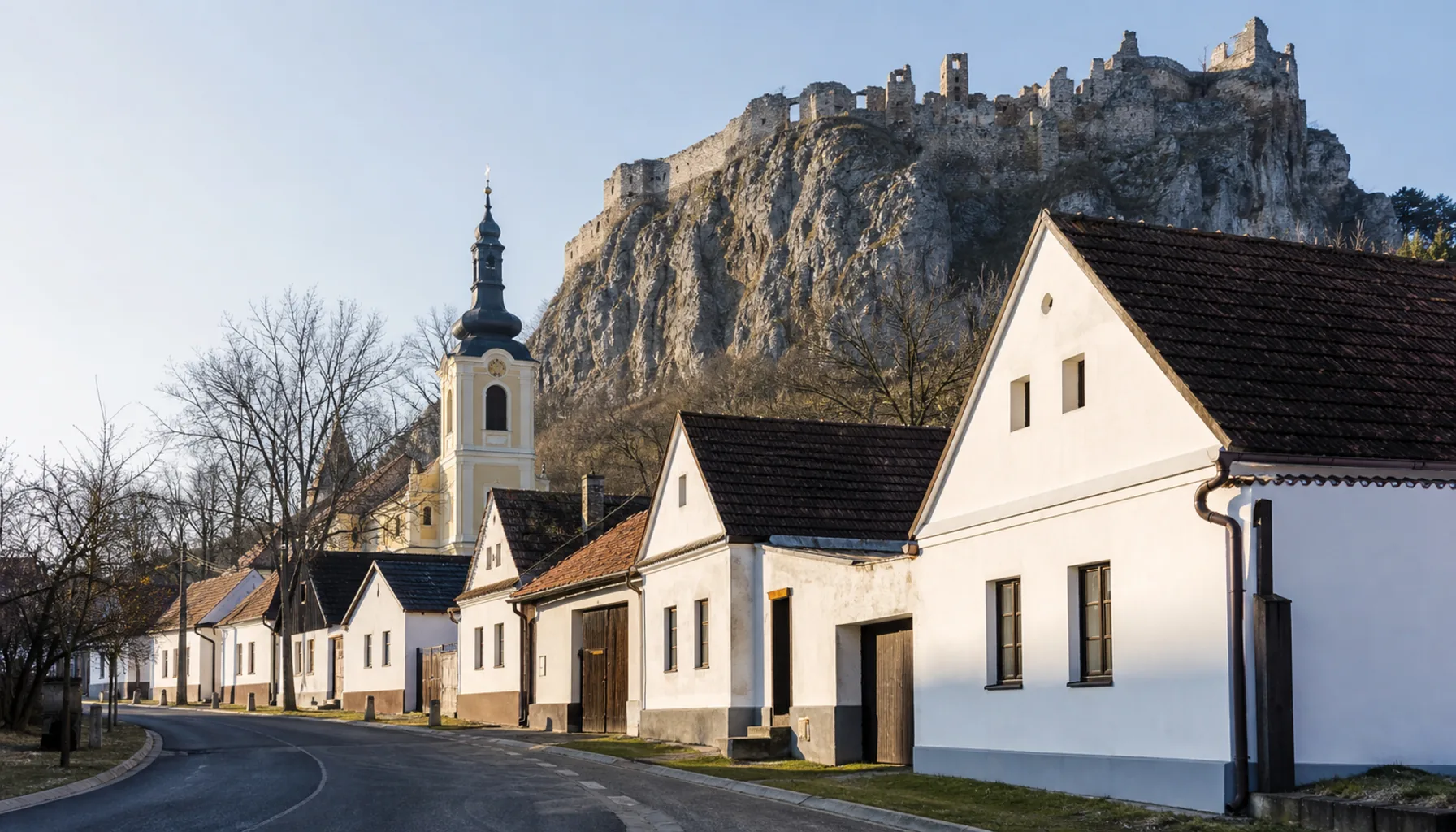
The Váh corridor sets the pattern for most of them. Villages stand in a line on the terrace between the river and the hills, a few kilometres apart, and every so often a limestone rock rises out of the plain with a castle on it and a village at its foot that was once the estate's market. Road, railway and motorway all use the same gap, so none of these places has ever been remote.Väčšine z nich udáva podobu považský koridor. Obce stoja v rade na terase medzi riekou a kopcami, pár kilometrov od seba, a tu i tam sa z roviny dvíha vápencové bralo s hradom a s obcou pod ním, ktorá bývala trhovým strediskom panstva. Cesta, železnica aj diaľnica využívajú tú istú bránu, takže odľahlé tu nebolo nikdy nič.
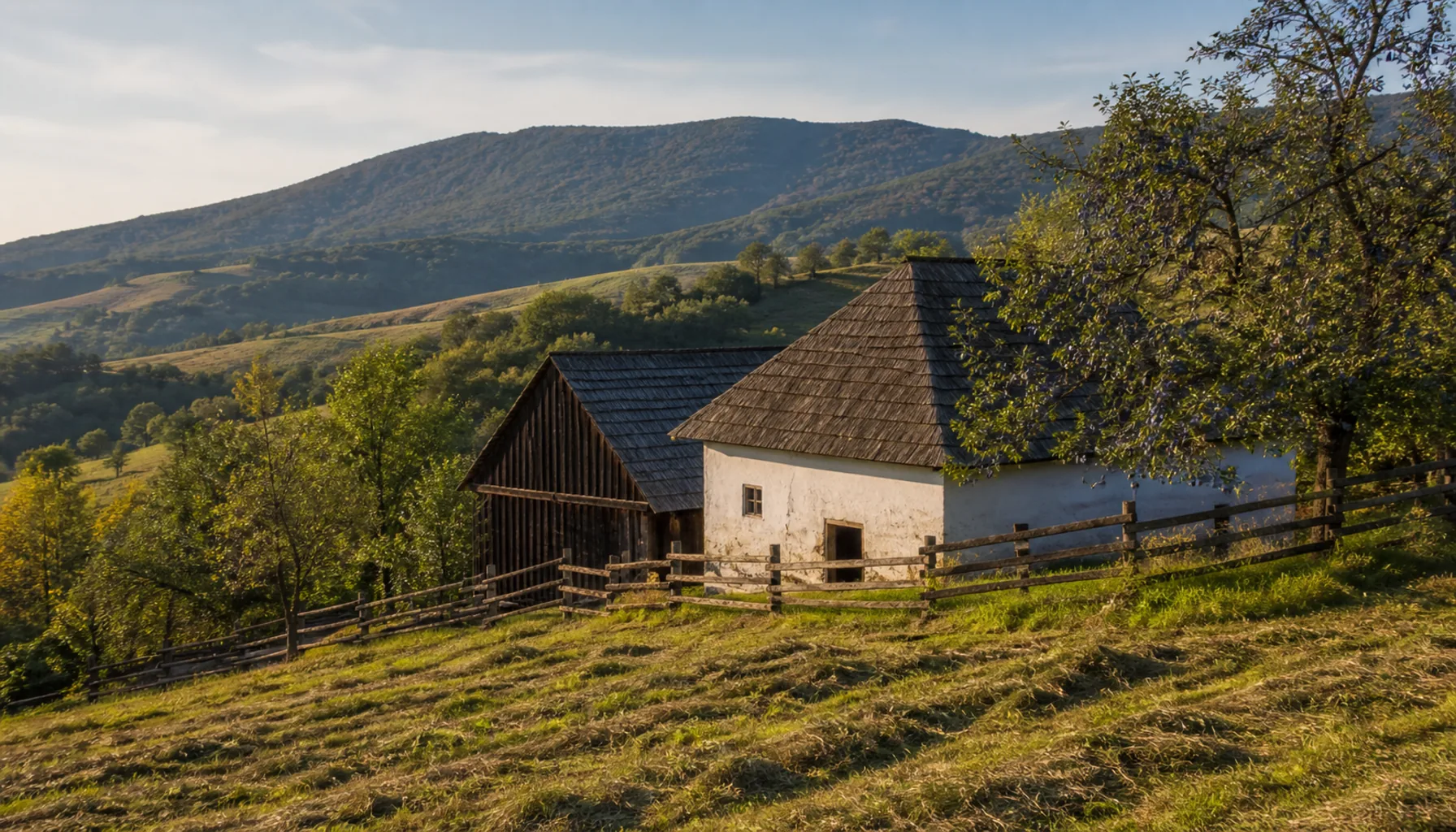
Behind the corridor the country changes twice. The Bebrava valley and the Upper Nitra basin are farming pockets closed in by wooded ridges, reached by one road each and leading nowhere in particular. On the Moravian border the White Carpathians carry kopanice — dispersed hamlets cleared out of the forest between the sixteenth and eighteenth centuries, many of them still named after the family that did the clearing. A kopanica has no square and usually no church; the parish is down in the valley.Za koridorom sa krajina dvakrát mení. Dolina Bebravy a hornonitrianska kotlina sú poľnohospodárske kúty uzavreté zalesnenými hrebeňmi, do každého vedie jedna cesta, ktorá ďalej nikam nepokračuje. Na moravskej hranici nesú Biele Karpaty kopanice — rozptýlené osady vyklčované z lesa medzi šestnástym a osemnástym storočím, mnohé dodnes pomenované po rodine, ktorá ich vyklčovala. Kopanica nemá námestie a spravidla ani kostol; fara je dole v doline.
What they are built ofZ čoho sú postavené
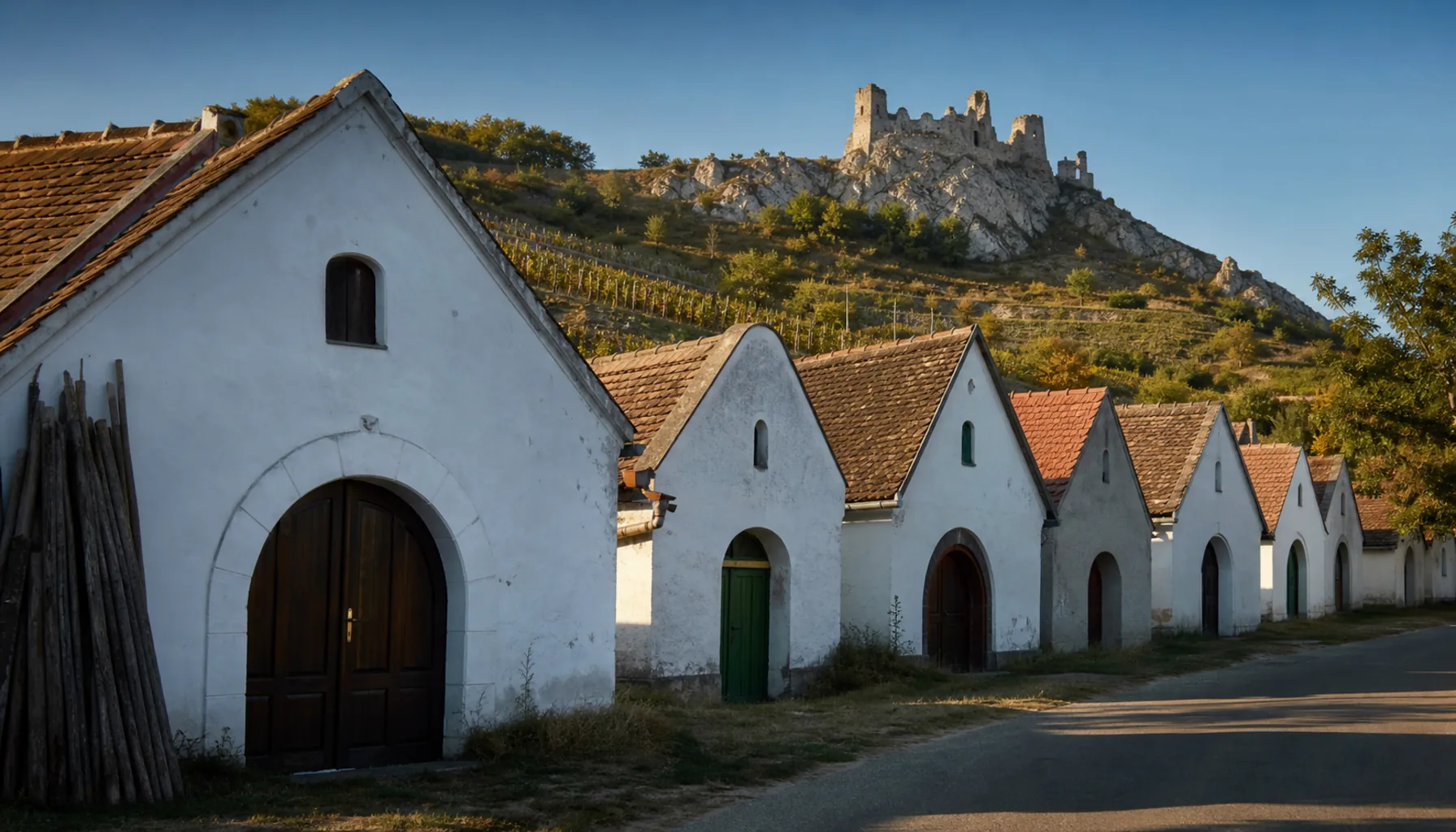
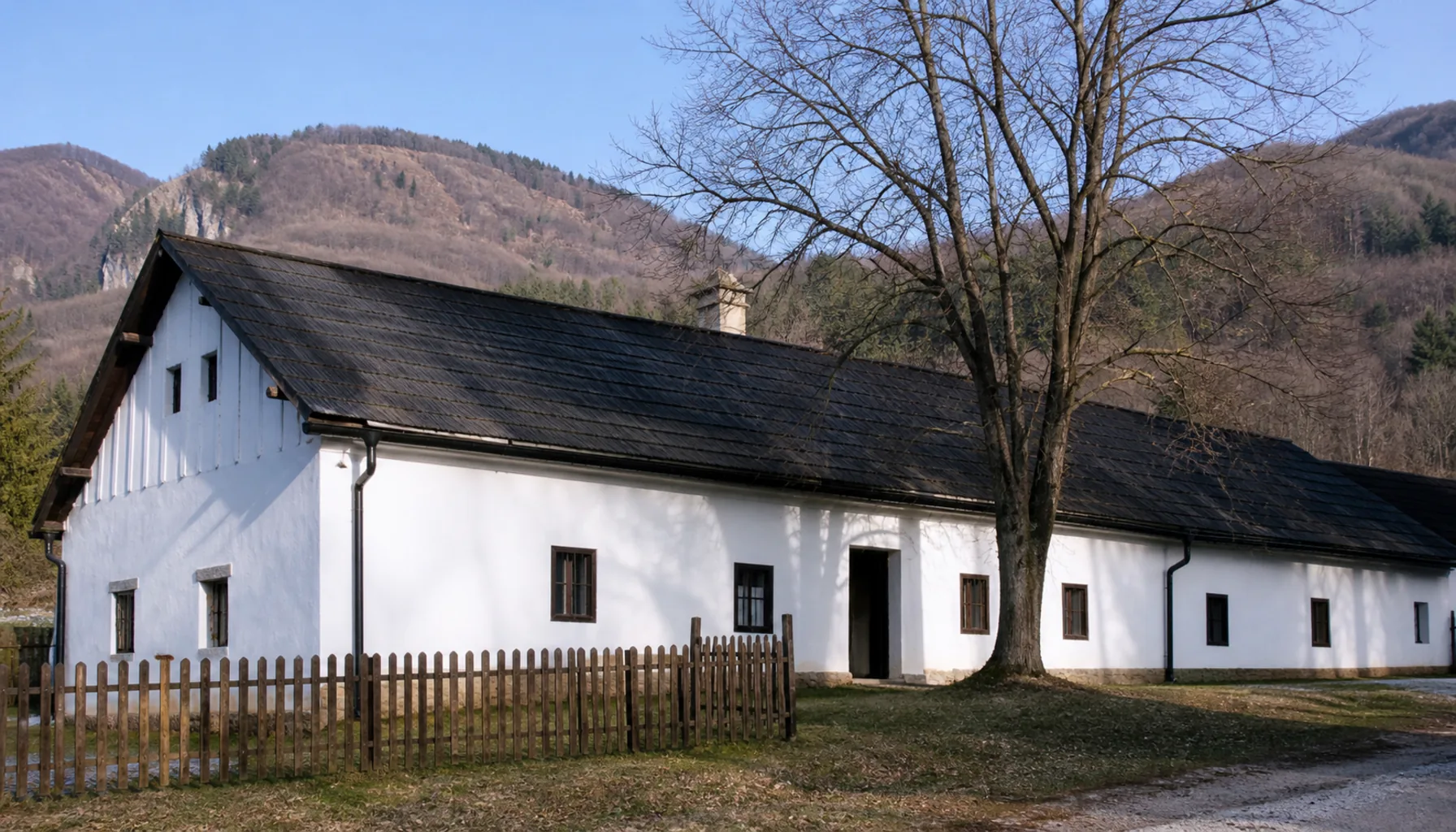
Along the Váh the ordinary house is brick or stone under lime render, long and narrow, its gable to the street and the yard running back behind it. On the vine slopes above Čachtice and Nové Mesto nad Váhom the cellars are dug into the banks at the edge of the vineyards. Timber lasted longest in the hills, where the forest was at the door, and shingle roofs survived there into living memory.Pozdĺž Váhu je bežným domom tehlová alebo kamenná stavba pod vápennou omietkou, dlhá a úzka, štítom do ulice a s dvorom natiahnutým dozadu. Na vinohradníckych svahoch nad Čachticami a Novým Mestom nad Váhom sú pivnice vykopané do brehov na okraji viníc. Drevo vydržalo najdlhšie v kopcoch, kde bol les za dverami, a šindľové strechy sa tam udržali do nedávnej minulosti.
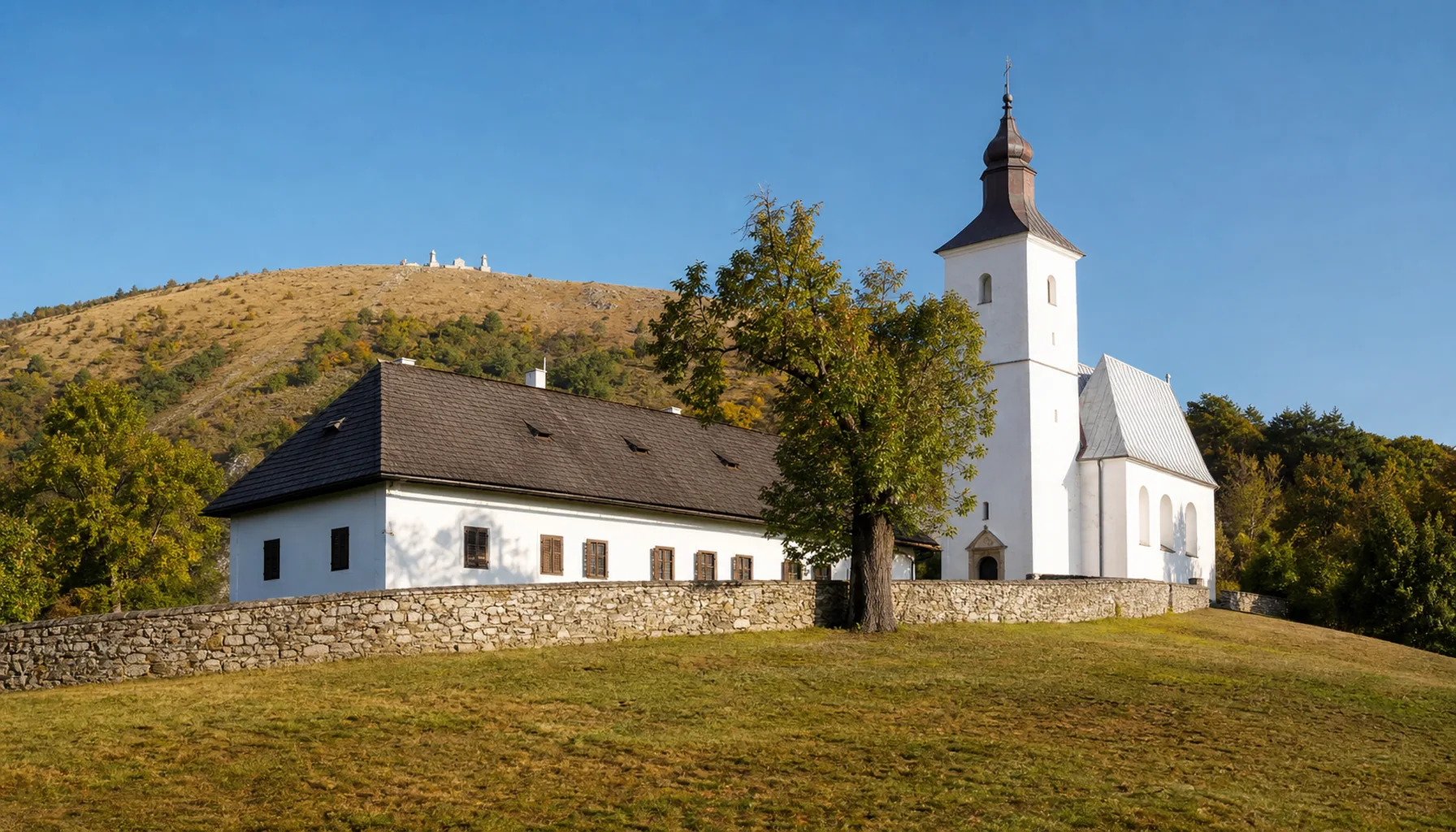
Churches divide the region as sharply as building material does. The corridor and the Bebrava valley are Catholic; the kopanice country and much of the Myjava district are Lutheran, and their churches are the plain wide halls with galleries built after the Patent of Toleration of 1781, when Protestants were allowed to build again — towers were added later, when that too became permitted. On the ridge above Brezová pod Bradlom stands the region's great modern monument: Dušan Jurkovič's stone mound for Milan Rastislav Štefánik, who was born in the village of Košariská below it.Kostoly delia kraj rovnako ostro ako stavebný materiál. Koridor a dolina Bebravy sú katolícke; kopaničiarsky kraj a veľká časť myjavského okresu sú evanjelické a ich kostoly sú jednoduché široké siene s emporami, postavené po Tolerančnom patente z roku 1781, keď smeli protestanti opäť stavať — veže pribudli neskôr, keď sa povolili aj tie. Na hrebeni nad Brezovou pod Bradlom stojí najväčší novodobý pomník kraja: kamenná mohyla Milana Rastislava Štefánika od Dušana Jurkoviča; Štefánik sa narodil v Košariskách pod ňou.
Visiting them wellAko ich navštíviť
Very little of this is ticketed. The castle ruins above the villages are open ground reached by marked paths; the birth-house museums keep fixed hours and a closed day; and a good many of the manor houses admit nobody at all, being in private hands or waiting on repair. Two or three villages make a comfortable day, because the distances between them are short.Spoplatnené je z toho málo. Zrúcaniny nad obcami sú voľným terénom prístupným po značených chodníkoch, múzeá v rodných domoch majú pevné hodiny a jeden zatvorený deň a dosť veľa kaštieľov nepúšťa dnu nikoho, lebo sú v súkromných rukách alebo čakajú na opravu. Dve či tri obce vydajú na pohodlný deň, vzdialenosti medzi nimi sú krátke.
Without a car the corridor is easy — the main Bratislava–Žilina railway runs through it and buses fill in from the district towns — while the kopanice have no railway and thin bus services that all but stop at weekends. Weekdays are better than Sundays for anything staffed. And these are working villages: the yards are private, the meadows are cut for hay, and the tractor has right of way.Bez auta je koridor jednoduchý — vedie ním hlavná trať Bratislava – Žilina a autobusy dopĺňajú spojenia z okresných miest — kým kopanice železnicu nemajú a autobusy tam cez víkend takmer nechodia. Na čokoľvek s personálom sú všedné dni lepšie než nedeľa. A sú to fungujúce obce: dvory sú súkromné, lúky sa kosia na seno a prednosť má traktor.