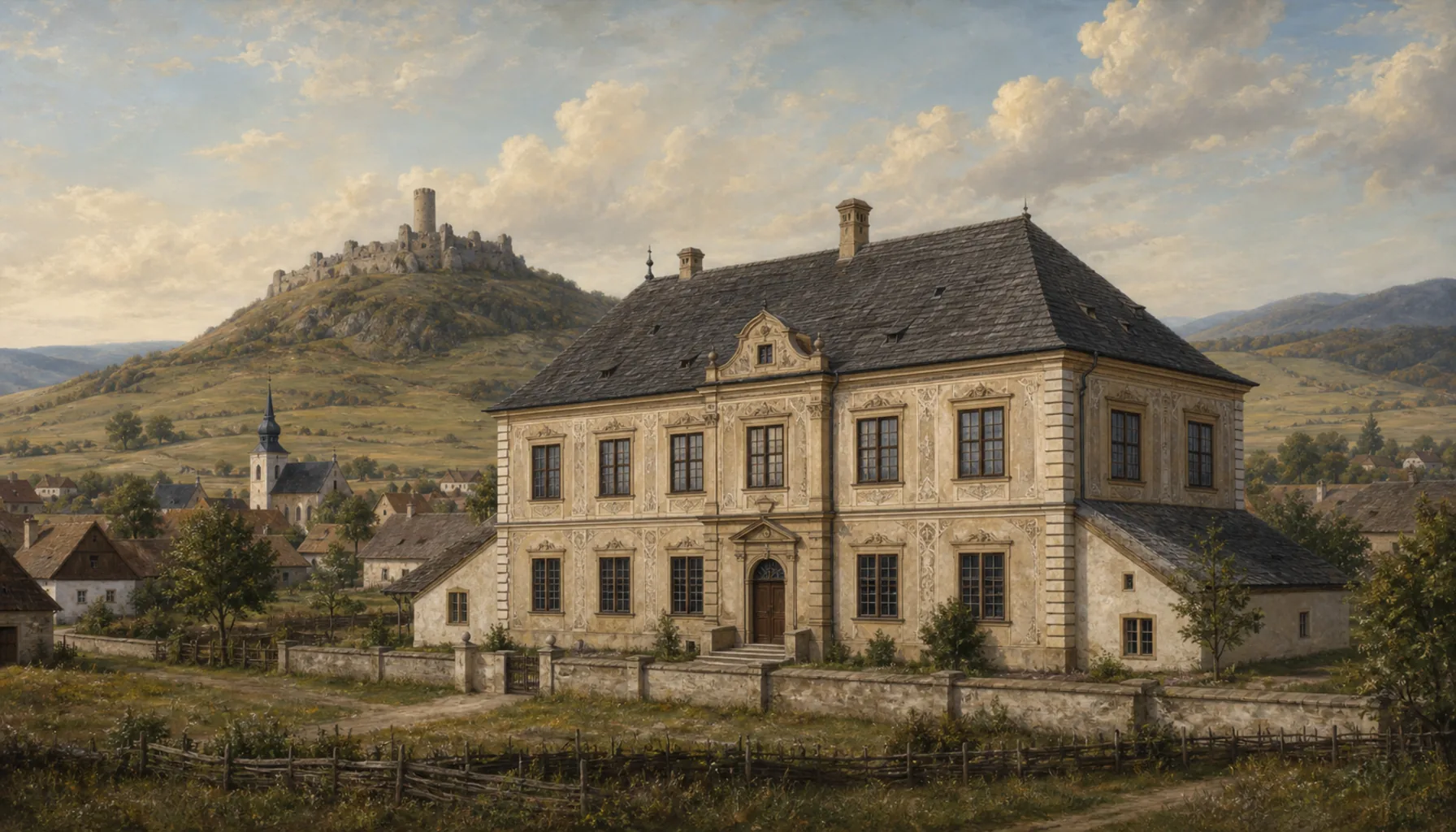
In 1668 a two-storey late-Renaissance manor house, the Draškovič kaštieľ, was built down in the village on the flat, with large windows and rooms that could be heated. That house explains the fate of the castle better than any siege does: once a lord could live comfortably in the village, a cold crest half an hour above it stopped being a home and became an expense. Forty years later the expense was settled for good. In 1708 the castle was stormed by the kuruc, the rebel army of Francis II Rákóczi, who had risen against the Habsburg emperor in 1703 and held much of Slovakia for eight years — a civil war inside the kingdom, not a Turkish raid, whatever the tourist version says. The manor house is still standing in the village, and today it holds the small local-history museum.V roku 1668 postavili dolu v obci, na rovine, dvojpodlažný neskororenesančný Draškovičovský kaštieľ s veľkými oknami a izbami, ktoré sa dali vykúriť. Práve tento dom vysvetľuje osud hradu lepšie než akékoľvek obliehanie: keď mohol pán pohodlne bývať v dedine, prestal byť studený hrebeň pol hodiny nad ňou domovom a stal sa nákladom. O štyridsať rokov sa náklad vyriešil natrvalo. V roku 1708 dobyli hrad kuruci, povstalecké vojsko Františka II. Rákociho, ktorý sa v roku 1703 postavil proti habsburskému cisárovi a osem rokov ovládal veľkú časť Slovenska — bola to občianska vojna vnútri kráľovstva, nie turecký vpád, nech turistická verzia hovorí čokoľvek. Kaštieľ v obci stojí dodnes a sídli v ňom malé vlastivedné múzeum.