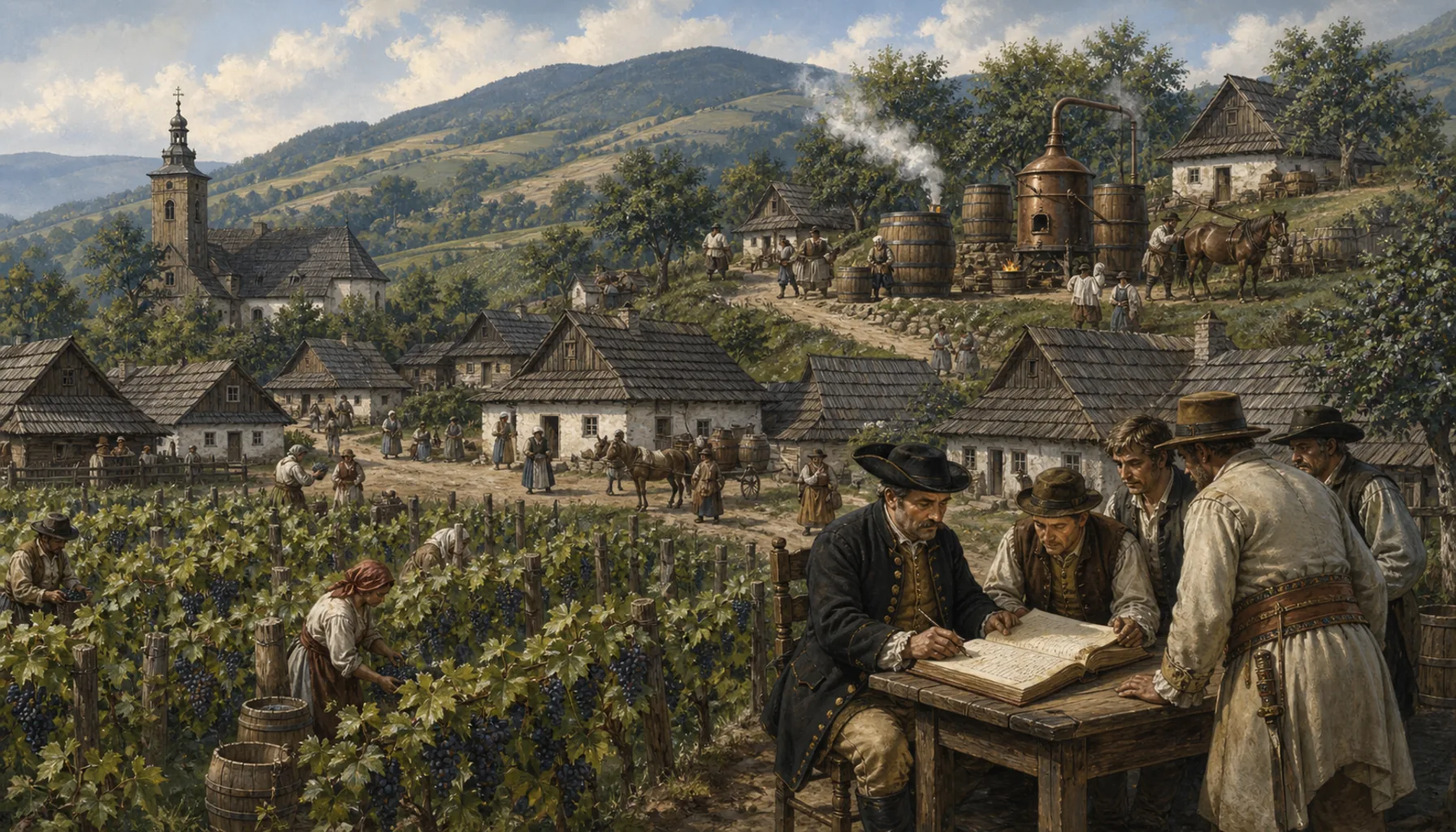
The urbáre — the estate registers that wrote down what every serf household held and owed — describe an eighteenth-century Bzince of about 120 people with its own richtár, the village judge. The soil was poor, but the slopes grew wine: Bzince, Hrušové and Lubina all had vineyards, and a few old cellars are all that survives of them. Lower Bzince kept to the vines and Upper Bzince distilled plum brandy, which tells you the two halves were already different places. Men made tools out of wood and women wove súkno, coarse woollen cloth, and both were carried to market in Nové Mesto nad Váhom and over the hills into Moravia. The Lutherans built the church they still use in 1793–95, after the Patent of Toleration finally let them.Urbáre — panské súpisy, ktoré zapisovali, čo každá poddanská domácnosť drží a čím je povinná — opisujú Bzince 18. storočia asi so 120 obyvateľmi a s vlastným richtárom. Pôda bola chudobná, no na svahoch sa darilo hroznu: vinice mali Bzince, Hrušové aj Lubina a zostalo z nich niekoľko starých pivníc. Dolnobzinčania sa držali viníc, Hornobzinčania pálili slivovicu, čo samo o sebe hovorí, že tie dve polovice boli už vtedy dve rôzne dediny. Muži vyrábali náradie z dreva, ženy tkali súkno a oboje sa vozilo na trh do Nového Mesta nad Váhom a cez kopce na Moravu. Evanjelický kostol, ktorý používajú dodnes, si postavili v rokoch 1793 – 1795, keď im to Tolerančný patent konečne dovolil.