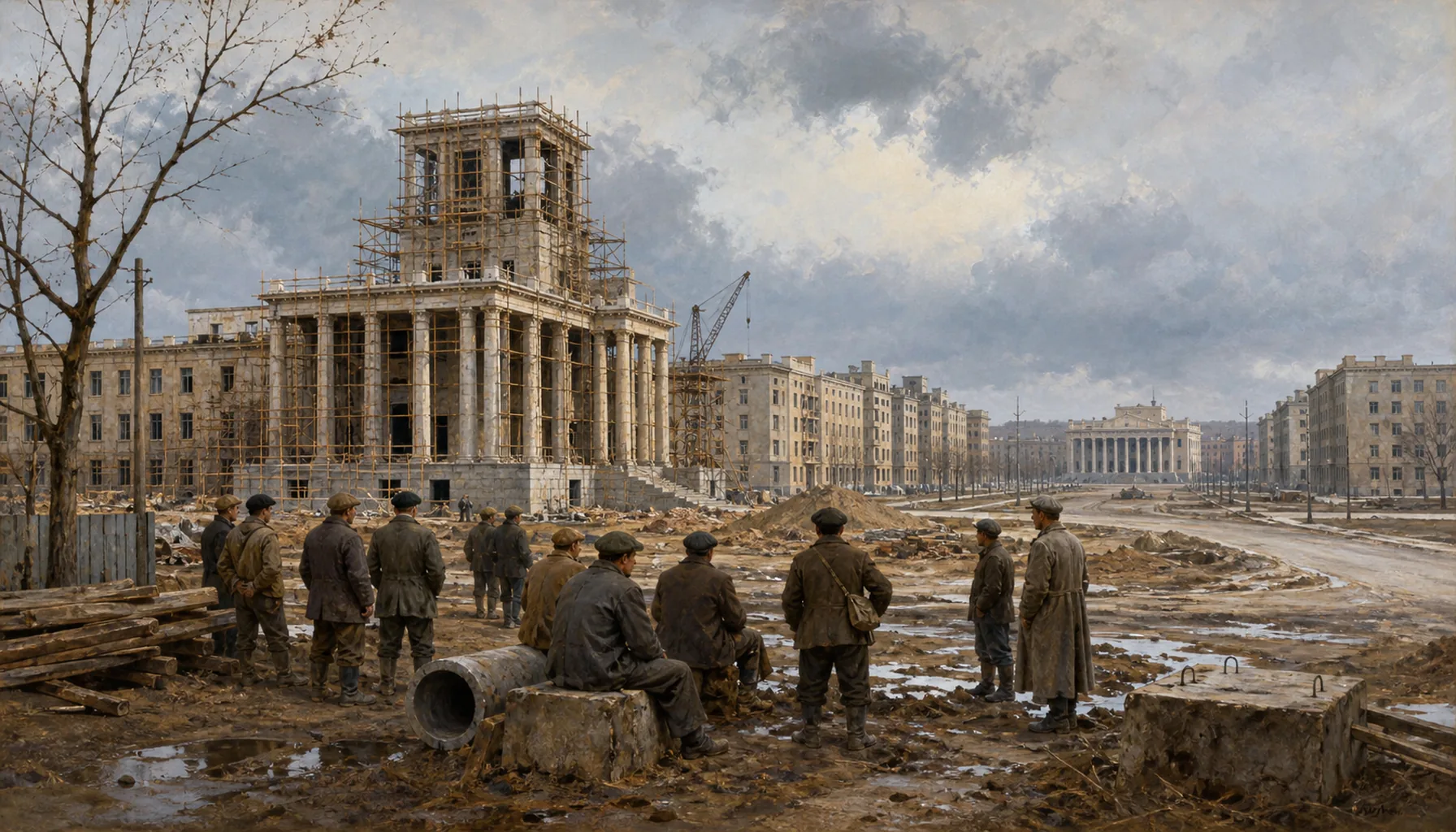
Stalin died in the spring of 1953 and the grand plan began to fall apart; Kroha was taken off the job in 1955. At about the same time the Soviet leadership denounced excesses in design and ordered the whole bloc to switch to industrialised prefabrication, and building changed almost overnight. Only about a third of Kroha's town was ever built. Everything put up afterwards is panel housing like anywhere else — which is why the middle of Nová Dubnica holds the clearest visible break in twentieth-century Slovak architecture: arcades and sgraffito on one side, plain concrete panels on the other, five years apart.Na jar 1953 zomrel Stalin a veľkolepý plán sa začal rozpadať; Krohu z projektu odvolali v roku 1955. Približne v tom čase sovietske vedenie odsúdilo prehnanosti v architektúre a nariadilo celému bloku prejsť na priemyselnú panelovú výstavbu – a stavalo sa zrazu úplne inak. Z Krohovho mesta postavili asi tretinu. Všetko, čo pribudlo potom, sú paneláky ako všade inde – a práve preto je uprostred Novej Dubnice najlepšie viditeľný zlom v slovenskej architektúre 20. storočia: na jednej strane podlubia a sgrafitá, na druhej holý panel, s odstupom piatich rokov.