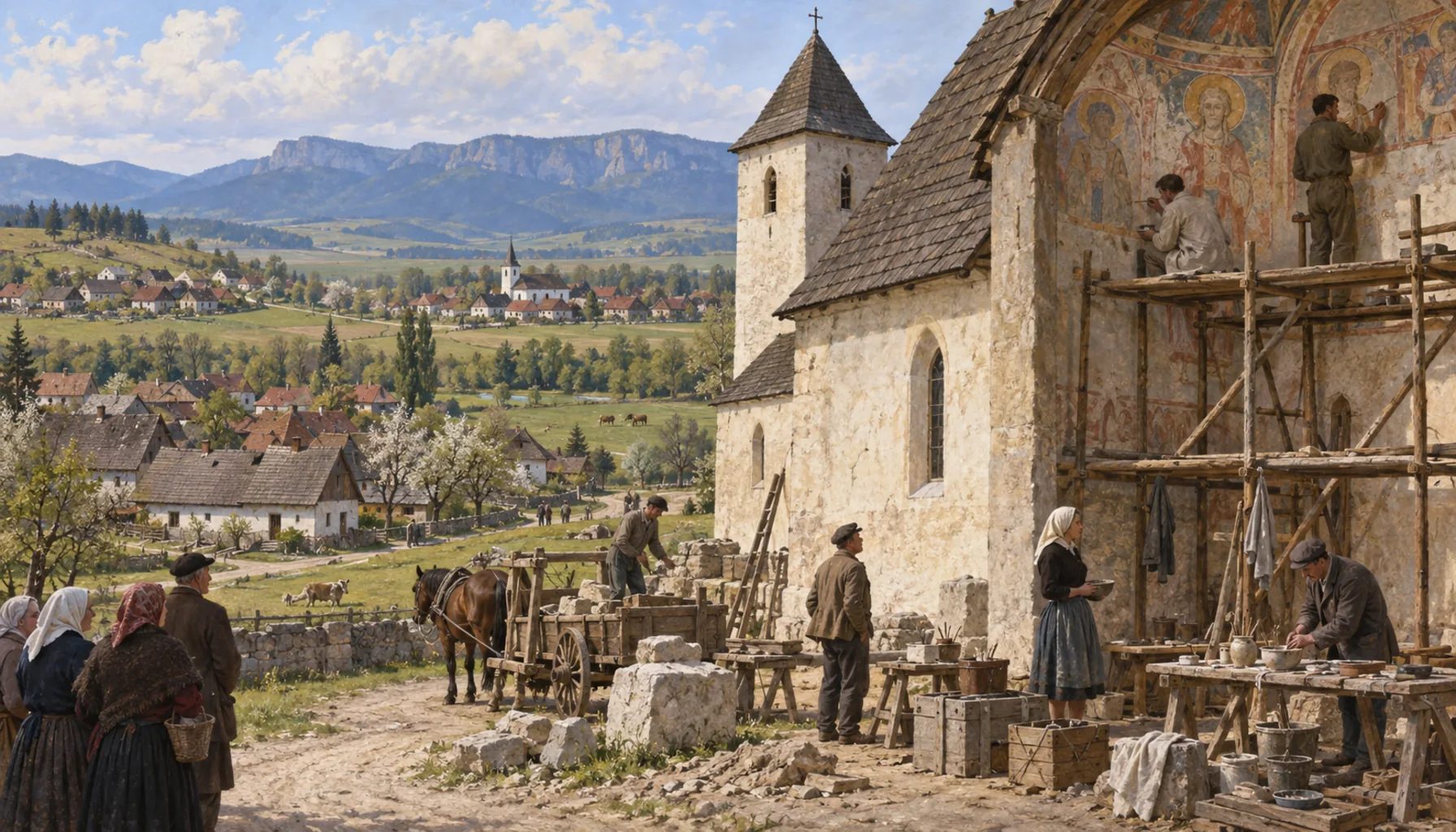
Between 1956 and 1959 the wall paintings were restored, and that campaign is why the church looks the way it does to a visitor today. The manor at Hodkovce, taken from the Csákys, went into institutional use and has stayed in it — a building to look at from the road, not a museum you can enter. The village itself changed shape in these decades: of Žehra's three parts — the old village, Hodkovce and the settlement below the Dreveník hill — the settlement grew into much the largest, and about three quarters of the municipality's people live there now. The listed church on its rise and the streets below it have had very different histories.V rokoch 1956 – 1959 nástenné maľby zreštaurovali a práve tejto akcii vďačí kostol za podobu, ktorú dnes návštevník vidí. Kaštieľ v Hodkovciach, odobratý Čákiovcom, dostal inštitucionálne využitie a ostalo mu — je to budova na pozeranie z cesty, nie múzeum, do ktorého sa vojde. Samotná obec v tých desaťročiach zmenila tvar: z troch častí Žehry — starej dediny, Hodkoviec a sídliska pod Dreveníkom — vyrástlo sídlisko na zďaleka najväčšiu a dnes v ňom býva asi tri štvrtiny obyvateľov obce. Pamiatkovo chránený kostol na vyvýšenine a ulice pod ním majú veľmi odlišné dejiny.