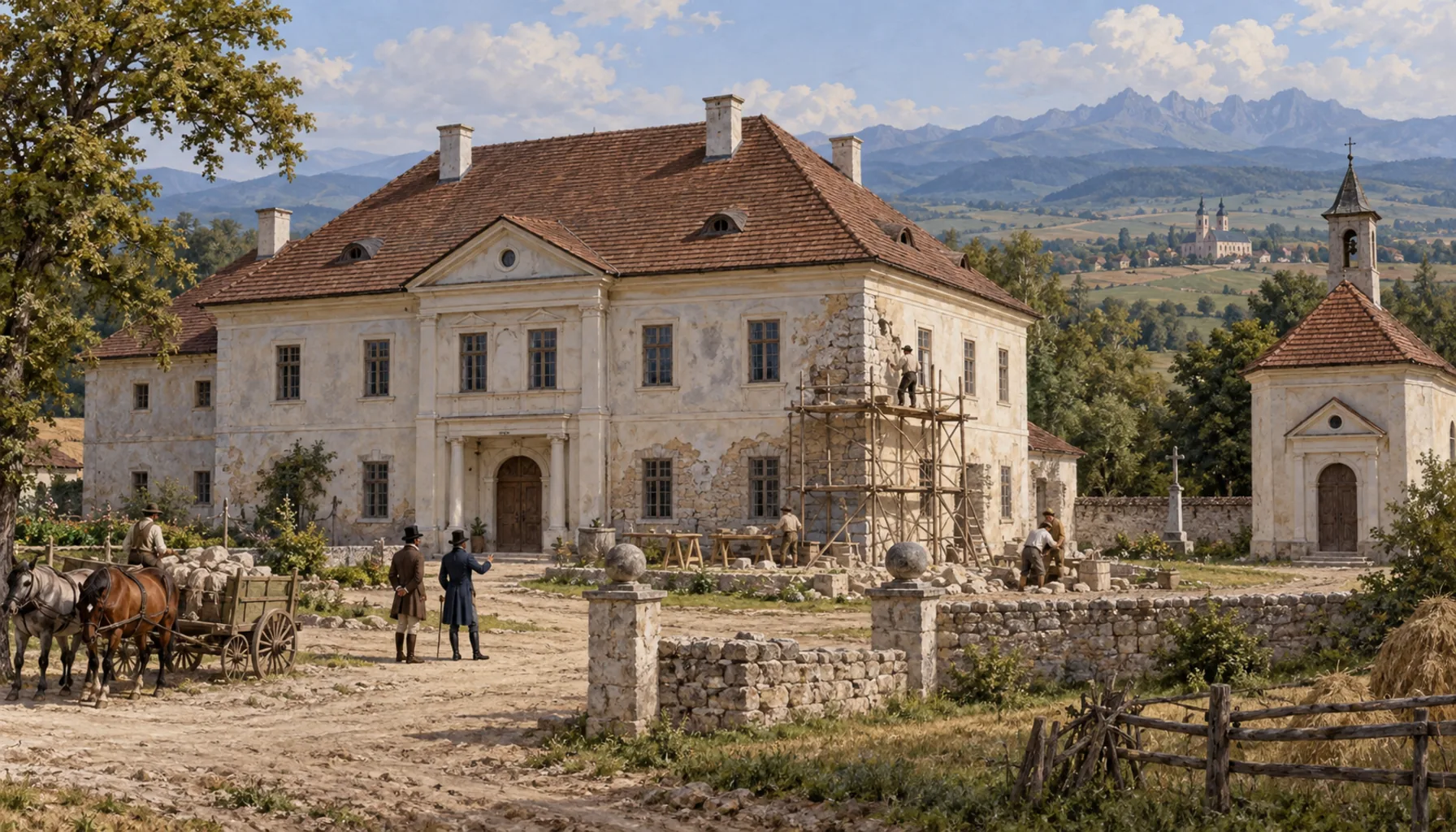
The manor at Hodkovce got its classicist face between 1810 and 1820, a north wing in 1860, and the chapel beside it its neo-Gothic look in 1855. Then, from 1870, the limewash in the church began to come off and the medieval paintings started coming back into the light — gradually, over decades, not in one campaign. This was the same generation that was beginning to take Spiš's monuments seriously; in 1865 the imperial commission in Vienna had turned its attention to the castle on the hill. What emerged at Žehra turned out to be not a fragment here and there but most of an interior.Kaštieľ v Hodkovciach dostal klasicistickú fasádu v rokoch 1810 – 1820, severné krídlo v roku 1860 a kaplnka vedľa neho neogotickú podobu v roku 1855. A od roku 1870 začalo z kostola schádzať vápno a stredoveké maľby sa vracali na svetlo — postupne, celé desaťročia, nie v jednej akcii. Bola to tá istá generácia, ktorá začala brať spišské pamiatky vážne; v roku 1865 sa cisárska komisia vo Viedni zaoberala hradom na kopci. To, čo sa v Žehre vynorilo, sa napokon ukázalo nie ako fragment tu a tam, ale ako takmer celý interiér.