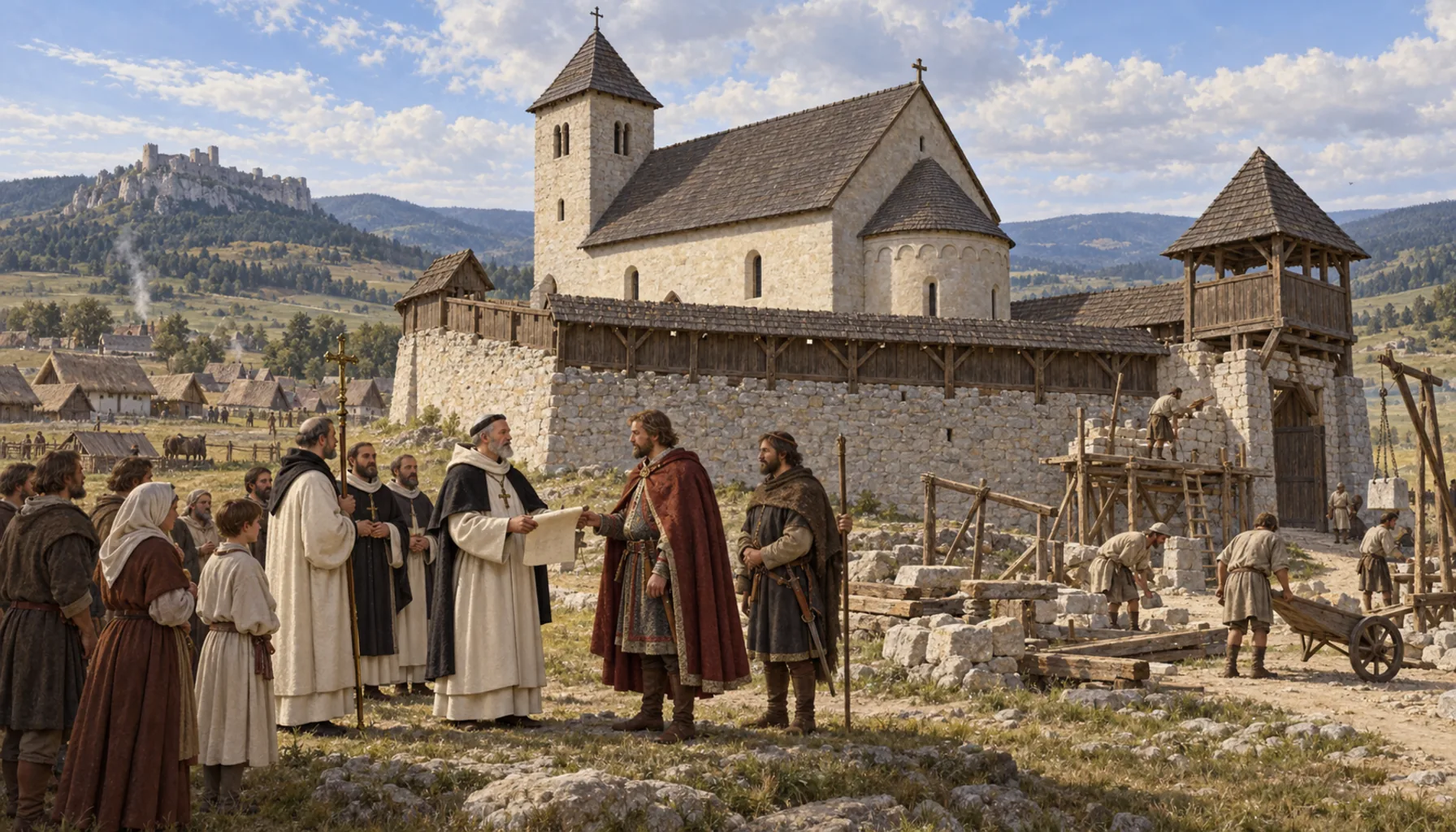
In 1245 the Spiš provost Matthew confirmed to the local landowner, Count Ján Sigray, the building of a church with a fortification at Žehra — and that document is also the village's first written mention. The reason is stated plainly in the sources: the Tatar raids of 1241–42 and the wrecked, half-empty countryside they left behind. This is the ordinary pattern of Spiš after the invasion, and it is the exact opposite of the folk story that the Mongols destroyed everything you can see. The church went up between 1245 and 1275 — a single-nave early Gothic building with a polygonal presbytery and a tower added at the end of the century, still Romanesque in its weight: thick walls, small windows, a stone defensive wall around the churchyard, and a late-Romanesque stone font that is still in the nave.V roku 1245 potvrdil spišský prepošt Matej miestnemu zemepánovi, grófovi Jánovi Sigrayovi, výstavbu kostola s opevnením v Žehre — a tá istá listina je zároveň prvou písomnou zmienkou o obci. Dôvod pramene uvádzajú bez okolkov: tatárske nájazdy z rokov 1241 – 1242 a spustošená, spolovice prázdna krajina po nich. Je to obvyklá spišská schéma po vpáde a pravý opak ľudovej historky, že Mongoli zničili všetko, čo tu vidieť. Kostol postavili v rokoch 1245 – 1275 — jednoloďová ranogotická stavba s polygonálnym záverom presbytéria a s vežou pristavanou koncom storočia, no ťažkosťou ešte románska: hrubé múry, malé okná, kamenný obranný múr okolo cintorína a neskororománska kamenná krstiteľnica, ktorá stojí v lodi dodnes.