Only what belongs to Prešov — each on its own page.Len to, čo patrí k mestu Prešov — každé s vlastnou stránkou.
Pick a year to see what was happening here then.Vyberte rok a uvidíte, čo sa tu vtedy dialo.
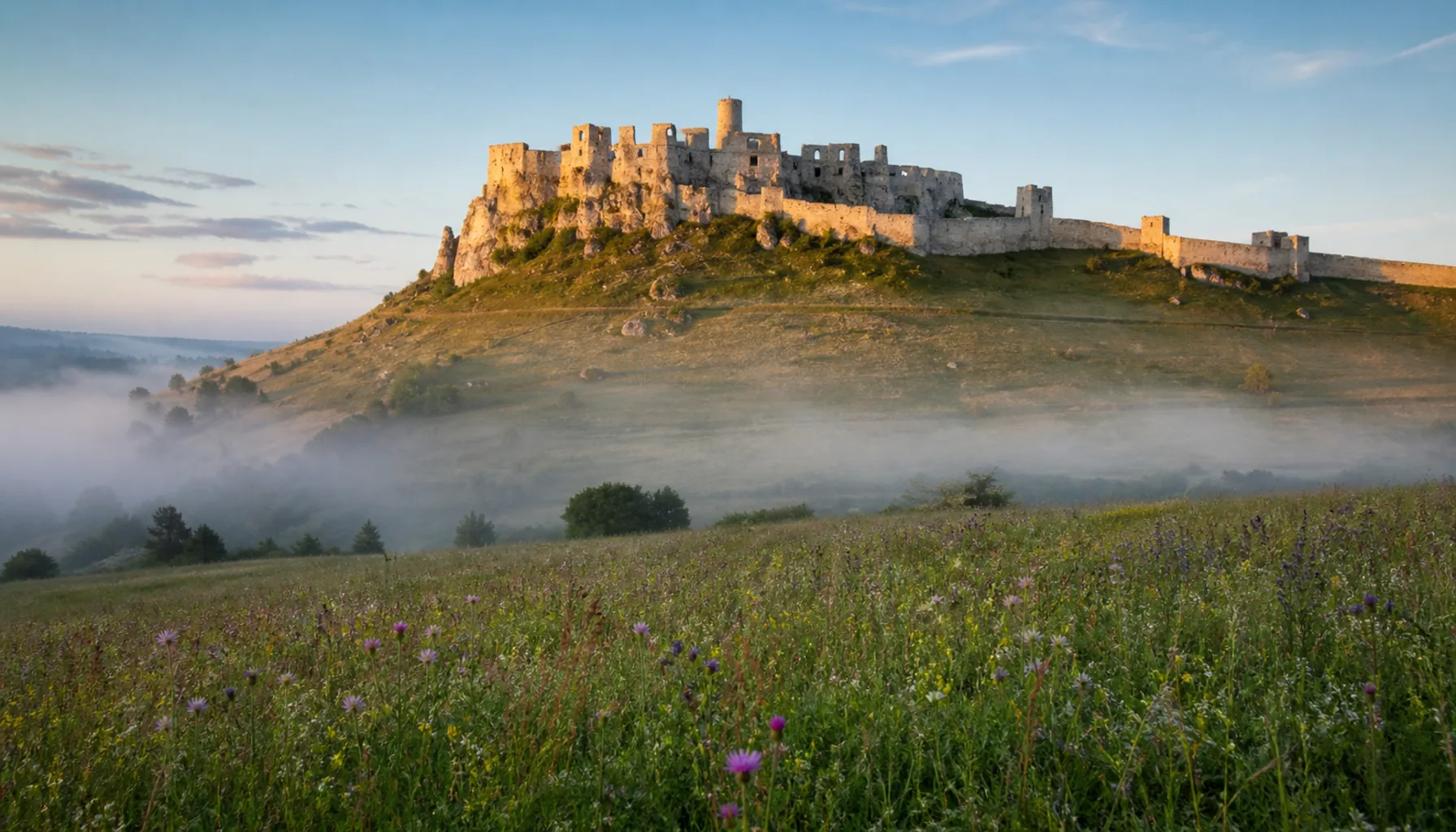
In 1241 a Mongol army destroyed the Hungarian king's forces at the river Slaná and rode across the kingdom, and Béla IV came back to a country he had to rebuild. Two things followed in the north-east: stone castles on the hilltops — Šariš, on its volcanic cone above the Torysa, is one of them — and an invitation to settlers, mostly German-speaking, to come and hold ground that was thinly held. Prešov appears in writing for the first time in 1247, six years after the invasion, in a charter of Béla IV that calls the people here Theutonici de Epuryes, the Germans of Eperjes. Read that slowly: a first mention is a fact about a document, not a founding date, and this one tells you the settlement was already there and already German-speaking. What the Mongols did to Prešov itself is nowhere recorded — what they did was force the kingdom to rebuild its north-east, and Prešov is part of that rebuilding.V roku 1241 rozdrvilo mongolské vojsko uhorské sily pri rieke Slanej a prehnalo sa kráľovstvom; Belo IV. sa vrátil do krajiny, ktorú musel postaviť nanovo. Na severovýchode z toho vzišli dve veci: kamenné hrady na kopcoch — jedným z nich je Šariš na sopečnom kuželi nad Torysou — a pozvanie pre osadníkov, väčšinou nemecky hovoriacich, aby prišli obsadiť riedko osídlenú zem. Prešov sa v písomnostiach objavuje prvý raz v roku 1247, šesť rokov po vpáde, v listine Bela IV., ktorá tunajších ľudí nazýva Theutonici de Epuryes, teda Nemci z Eperies. Stojí za to prečítať si to pomaly: prvá zmienka je údaj o listine, nie o založení mesta, a hovorí nám, že osada tu už bola a už bola nemecká. Čo Mongoli urobili priamo Prešovu, nevieme; vieme však, čo urobili kráľovstvu — donútili ho severovýchod osídliť nanovo, a Prešov k tomuto znovuosídleniu patrí.
Six kilometres south of the square, where the district of Solivar is today, salt water comes up out of the ground. The place is first recorded in 1261, when the young prince Stephen — the future King Stephen V — granted an estate at Šovár, land with a church on it. Salt here was not a seasoning but a strategic good: it kept meat through the winter, it was taxed, and in the kingdom of Hungary it belonged to the king. Prešov grew up beside a royal salt works, and the name of the district still says exactly what was done there — soľ is salt, and Solivar is the place where salt was boiled.Šesť kilometrov na juh od námestia, tam, kde je dnes mestská časť Solivar, vyviera zo zeme slaná voda. Miesto je prvý raz doložené v roku 1261, keď mladý kráľovič Štefan — neskorší kráľ Štefan V. — daroval majetok v Šovári, zem s kostolom. Soľ tu nebola korenie, ale strategický tovar: udržala mäso cez zimu, zdaňovala sa a v Uhorskom kráľovstve patrila kráľovi. Prešov teda vyrastal vedľa kráľovskej soľnej prevádzky a názov mestskej časti dodnes hovorí, čo sa tam robilo — soľ sa tam varila, a preto Solivar.
In 1299 King Andrew III granted Prešov town privileges — the right to hold a market, to judge its own people, to elect its own richtár, the town magistrate. In 1374 King Louis I extended them and Prešov became a free royal town: a town with no landlord standing over it except the king himself, which in the Middle Ages was about as free as a place could be. It was granted its coat of arms in 1453 and the right to a three-day annual fair by Ladislaus the Posthumous in 1455. All of it comes back to one thing — the road. Prešov sits where the trade route from Hungary to Poland runs, and a king who wanted that traffic taxed and protected needed a strong town standing on it.V roku 1299 udelil kráľ Ondrej III. Prešovu mestské výsady — právo trhu, právo súdiť si vlastných ľudí a právo voliť si richtára. V roku 1374 ich kráľ Ľudovít I. rozšíril a Prešov sa stal slobodným kráľovským mestom: mestom, nad ktorým nestál nijaký zemepán, iba sám kráľ. V stredoveku to bola najväčšia sloboda, akú mohlo mesto mať. Erb dostalo v roku 1453 a právo na trojdňový výročný jarmok mu v roku 1455 udelil Ladislav Pohrobok. Za všetkým je jedno a to isté — cesta: Prešov leží na obchodnej trase z Uhorska do Poľska a kráľ, ktorý chcel tento obchod zdaňovať a chrániť, potreboval na nej silné mesto.
In the first half of the fifteenth century Prešov walled itself in: a circuit with gates, of which the Florián gate on Baštová still stands, and towers, of which one on Kováčska survives restored. In the 1440s an older bastion was rebuilt into something rarer — the Kumšt, a water tower with a horse-driven pump that pushed spring water into stone cisterns along the main street, so a town of this size did not have to live off wells. These were the years when Upper Hungary was effectively run by Ján Jiskra of Brandýs, a Bohemian captain holding the north in the name of the child king Ladislaus the Posthumous while the kingdom argued about who should rule it. Both of Prešov's royal grants from those years, the arms of 1453 and the fair of 1455, carry that boy's name.V prvej polovici 15. storočia sa Prešov opevnil: hradbami s bránami, z ktorých Floriánova brána na Baštovej stojí dodnes, a s vežami, z ktorých sa jedna na Kováčskej zachovala obnovená. V 40. rokoch prestavali jednu zo starších bášt na čosi vzácnejšie — na Kumšt, vodárenskú vežu s konským pohonom, ktorá tlačila pramenitú vodu do kamenných nádrží pozdĺž hlavnej ulice, aby mesto takej veľkosti nemuselo žiť iba zo studní. V tých istých rokoch spravoval Horné Uhorsko fakticky Ján Jiskra z Brandýsa, český kapitán, ktorý držal sever v mene detského kráľa Ladislava Pohrobka, kým sa kráľovstvo hádalo, kto mu má vládnuť. Obe kráľovské výsady, ktoré Prešov vtedy dostal — erb z roku 1453 a jarmok z roku 1455 — nesú meno práve tohto chlapca.
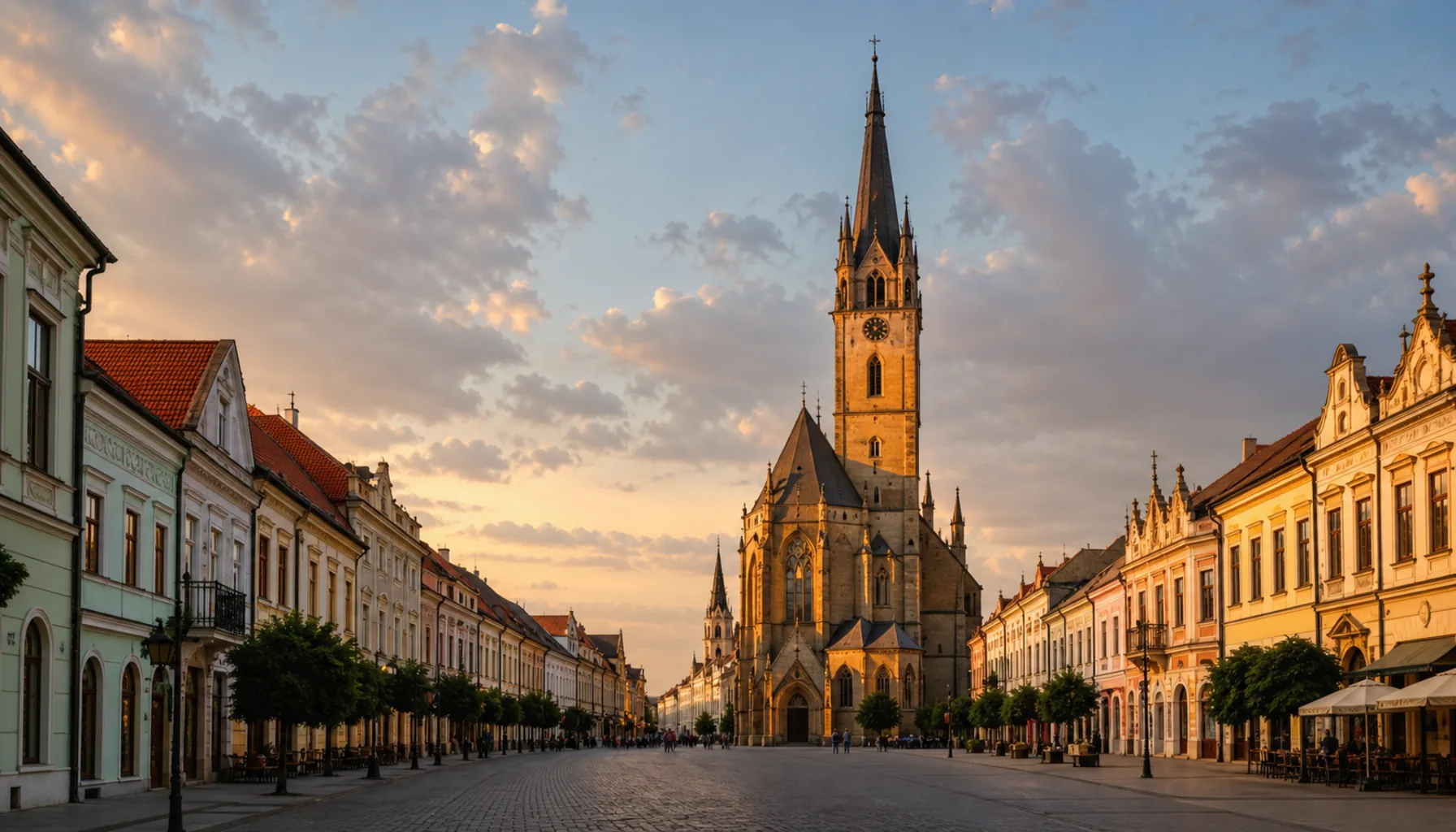
The Reformation reached these German-speaking towns early, and by the middle of the sixteenth century Prešov was Lutheran. In 1549 the five free royal towns of the north-east — Prešov, Košice, Bardejov, Levoča and Sabinov, the group known as the Pentapolitana — set out their shared faith in a joint written confession drafted by Leonard Stöckel of Bardejov. What that meant on the ground you can still walk into. The foundation stone of the Lutheran church of the Holy Trinity on Hlavná was laid on 25 July 1642 and the church was consecrated in 1647, and it is one of very few Protestant churches in Slovakia that was actually built as one instead of being taken over from somebody else; its Renaissance pews and an organ of 1642 are still inside.Reformácia sa do týchto nemeckých miest dostala skoro a v polovici 16. storočia bol Prešov luteránsky. V roku 1549 dalo päť slobodných kráľovských miest severovýchodu — Prešov, Košice, Bardejov, Levoča a Sabinov, teda Pentapolitana — svoju spoločnú vieru písomne; text zostavil bardejovský Leonard Stöckel. Ako to vyzeralo v praxi, sa dá dodnes vojsť pozrieť. Základný kameň evanjelického chrámu Svätej Trojice na Hlavnej položili 25. júla 1642 a chrám vysvätili v roku 1647. Je to jeden z mála protestantských kostolov na Slovensku, ktorý ako protestantský naozaj postavili, a nie prevzali po niekom inom — renesančné lavice aj organ z roku 1642 sú v ňom stále.
In 1571 miners under a master called Wolfgang Styx began sinking a shaft at Šovár to reach the rock salt itself, not just the brine that seeped to the surface. They cut it in a single year, to a depth of 155 metres: the Imperial shaft, later renamed Leopold after the emperor. A state mining settlement grew around it, and for the next 180 years the southern edge of Prešov was a salt mine. The hoist house still standing over the shaft, with its enormous horse-driven winding wheel, was built in 1674 — it is a large part of why Solivar is a national cultural monument today.V roku 1571 začali baníci pod vedením majstra Wolfganga Styxa hĺbiť v Šovári šachtu, aby sa dostali ku kamennej soli, nielen k soľanke presakujúcej na povrch. Vyhĺbili ju za jediný rok, do hĺbky 155 metrov: Cisárska šachta, neskôr premenovaná podľa cisára na Leopold. Okolo nej vyrástla erárna, teda štátna banícka osada, a nasledujúcich stoosemdesiat rokov bol južný okraj Prešova soľnou baňou. Gápeľ, ktorý nad šachtou stojí dodnes so svojím obrovským konským kolesom, postavili v roku 1674 — aj vďaka nemu je Solivar národnou kultúrnou pamiatkou.
In 1665 the Protestant estates of Upper Hungary resolved to found a school of their own at Prešov, and in 1667 the Collegium opened on Hlavná — a Lutheran college meant to train the lawyers, pastors and officials a Protestant Hungary would need. It opened at precisely the wrong moment. The Habsburg court was turning hard against Protestantism, and over the next twenty years the building was taken from the Lutherans, handed back, and taken again as the political wind shifted. The college survived all of it, its historic library is still in the hall — and the memorial to the men killed by Caraffa's court in 1687 stands at its corner.V roku 1665 sa protestantské stavy Horného Uhorska uzniesli, že si v Prešove založia vlastnú školu, a v roku 1667 sa na Hlavnej otvorilo kolégium: evanjelická škola, ktorá mala vychovávať právnikov, kňazov a úradníkov pre protestantské Uhorsko. Otvorili ho v tej najhoršej možnej chvíli. Viedenský dvor práve tvrdo zakročil proti protestantom a v nasledujúcich dvadsiatich rokoch evanjelici budovu striedavo strácali a znova získavali podľa toho, ako sa točil politický vietor. Kolégium to všetko prežilo, jeho historická knižnica je v sále dodnes — a na jeho nároží stojí pamätník mužom, ktorých v roku 1687 popravil Caraffov súd.
Imre Thököly's kuruc rising against the Habsburgs had held thirteen counties of Upper Hungary — most of today's Slovakia — and Prešov had been on his side. When the rising collapsed the town surrendered to the imperial army on agreed terms, and the terms were then broken. In January 1687 General Antonio Caraffa arrived, set up a special tribunal, held his prisoners in the old town gaol beside the town hall, had them tortured, and between 5 March and 12 September had twenty-four burghers and noblemen executed on a scaffold on the main street: senators, merchants, judges, a Calvinist preacher. Some of the bodies were quartered and displayed at the town gates; what remained was wrapped up after six weeks and buried in gardens outside the walls. Slovak calls it the prešovské jatky, the Prešov butchery, and the town has never put it down — the plague column of 1751 stands on the execution spot, four of the dead lie in the crypt of the Lutheran church, and the gaol is the city gallery today, with a glass floor over the hidden room beneath it.Kuruckému povstaniu Imricha Tökölyho proti Habsburgovcom patrilo trinásť stolíc Horného Uhorska — väčšina dnešného Slovenska — a Prešov stál pri ňom. Keď povstanie padlo, mesto sa cisárskemu vojsku vzdalo na dohodnuté podmienky, ktoré potom nikto nedodržal. V januári 1687 prišiel generál Antonio Caraffa, zriadil mimoriadny súd, väzňov držal v starej mestskej väznici vedľa radnice, dal ich mučiť a od 5. marca do 12. septembra dal na popravisku na hlavnej ulici popraviť dvadsaťštyri mešťanov a šľachticov: senátorov, kupcov, sudcov, kalvínskeho kazateľa. Niektoré telá rozštvrtili a vystavili pri mestských bránach, zvyšky po šiestich týždňoch zabalili a pochovali v záhradách za hradbami. Po slovensky sa tomu hovorí prešovské jatky a mesto ich nikdy nepustilo z hlavy: na mieste popravísk stojí morový stĺp z roku 1751, štyria z popravených ležia v krypte evanjelického chrámu a z väznice je dnes mestská galéria so sklenenou podlahou nad skrytou miestnosťou pod ňou.
Fifteen years after Caraffa the north-east rose again, this time under Ferenc Rákóczi II, and Prešov was in rebel hands for most of the war of 1703–1711. When it was over the winning side did the arithmetic: every rising had leaned on the same scattering of small hill castles, so the castles were taken down by decree. Kapušany, on its cone just outside the city, was neither stormed nor burnt — it was dismantled, and its stone went into the village below. Šariš, the other ruin on Prešov's horizon, had already gone in 1687 when its powder store exploded, by tradition after a lightning strike. Then came a quieter, Catholic century: the baroque calvary on the hill west of town was begun in 1720, and in 1751 the Immaculata column went up on the square — on the exact spot where Caraffa's scaffold had stood.Pätnásť rokov po Caraffovi sa severovýchod vzbúril znova, tentoraz pod Františkom II. Rákócim, a Prešov bol väčšinu vojny v rokoch 1703 – 1711 v rukách povstalcov. Keď sa skončila, víťazi si urobili jednoduchý účet: každé povstanie sa opieralo o tie isté malé hrady na kopcoch, tak nech teda hrady zmiznú — a padlo o tom nariadenie. Kapušany na kuželi kúsok za mestom nikto nedobyl ani nevypálil: rozobrali ich a kameň skončil v dedine pod nimi. Šariš, druhá zrúcanina na prešovskom obzore, zanikol už v roku 1687, keď vyletel do vzduchu jeho pušný prach — podľa tradície ho zapálil blesk. Potom prišlo tichšie, katolícke storočie: barokovú kalváriu na kopci západne od mesta začali stavať v roku 1720 a v roku 1751 postavili na námestí súsošie Immaculaty, presne tam, kde stálo Caraffovo popravisko.
Most people in the villages north and east of Prešov were Greek Catholics — Christians who keep the eastern liturgy, the icons and married parish priests, but are in communion with Rome. For centuries they were governed from Mukachevo, far east in what is now Ukraine, which helped nobody here. The emperor decided on a separate see in 1816 and Rome erected the eparchy — the bishopric — at Prešov in 1818, in the old minorite friary beside the church of St John the Baptist on Hlavná. That one administrative decision is why Prešov is the capital of the eastern churches in Slovakia today, and why five minutes' walk along a single street takes you past cathedral-scale churches of four different traditions.Väčšina ľudí v dedinách na sever a na východ od Prešova boli gréckokatolíci — kresťania, ktorí sa držia východnej liturgie, ikon a ženatých kňazov, ale sú v jednote s Rímom. Po stáročia ich spravovali z Mukačeva, ďaleko na východe dnešnej Ukrajiny, čo tunajším ľuďom veru nepomáhalo. V roku 1816 rozhodol cisár o samostatnom sídle a v roku 1818 zriadil Rím v Prešove eparchiu, teda biskupstvo — v starom minoritskom kláštore vedľa chrámu svätého Jána Krstiteľa na Hlavnej. Práve toto úradné rozhodnutie je dôvod, prečo je Prešov dnes metropolou východných cirkví na Slovensku a prečo sa na jedinej ulici dá za päť minút prejsť popri chrámoch štyroch rôznych tradícií.
The revolution of 1848 split this town the way it split the country: Hungarian revolutionaries wanted a Hungary free of Vienna, and the Slovak movement wanted a Slovakia that was not simply Hungarian. In March 1849 Ľudovít Štúr and Jozef Miloslav Hurban, the two leading figures of that movement, spoke at a public meeting in the Black Eagle, the old inn on the south side of Prešov's square. When the fighting ended, none of what they had asked for was granted.Revolúcia roku 1848 rozdelila toto mesto tak ako celú krajinu: maďarskí revolucionári chceli Uhorsko slobodné od Viedne, slovenské hnutie chcelo Slovensko, ktoré nebude jednoducho uhorské. V marci 1849 vystúpili Ľudovít Štúr a Jozef Miloslav Hurban, dve hlavné postavy tohto hnutia, na verejnom zhromaždení v Čiernom orlovi, starom hostinci na južnej strane prešovského námestia. Keď sa boje skončili, z ich požiadaviek nepresadili nič.
Under Austria-Hungary the town grew — 13,392 people in 1880, 20,206 by 1910 — and twice it burned, in the great fires of 1886 and 1887. The harder pressure was political: Hungarian became the language of school, office and public life and Slovak schooling was squeezed out, the period Slovaks call Magyarization. The other answer to it was the boat. Šariš was among the poorest counties in the kingdom and among the biggest exporters of people; tens of thousands left for the mines and mills of Pennsylvania. One of them was a boy from Okrúhle near Prešov called Michal Bosák, who became an American banker — and whose signature was printed on a United States ten-dollar bill.Za Rakúsko-Uhorska mesto rástlo — v roku 1880 malo 13 392 obyvateľov, v roku 1910 už 20 206 — a dvakrát ho zachvátil oheň: veľké požiare v rokoch 1886 a 1887. Tvrdší tlak však bol politický: maďarčina sa stala jazykom školy, úradu i verejného života a slovenské školstvo sa vytláčalo. Tomuto obdobiu hovoríme maďarizácia. Druhou odpoveďou naň bola loď. Šariš patril k najchudobnejším stoliciam kráľovstva a k najväčším vývozcom ľudí — desaťtisíce odišli do baní a hutí v Pensylvánii. Jedným z nich bol chlapec z Okrúhleho pri Prešove Michal Bosák, z ktorého sa stal americký bankár a ktorého podpis vytlačili na americkú desaťdolárovku.
In the winter of 1914–1915 the Eastern Front ran through the Carpathian valleys a day's march north of Prešov, where Austro-Hungarian and Russian armies fought over the passes into Hungary. The ruined castle of Zborov above the Ondava was trenched and shelled, and came out of the war far more broken than it went in; in the village below it lies a military cemetery holding soldiers of both armies. Prešov itself was never taken, but it was a garrison and hospital town in a county filling up with refugees. The geography is the thing to remember: this is one of the few parts of Slovakia where the First World War was actually fought on the ground, and not only described in letters home.V zime 1914 – 1915 prechádzal východný front karpatskými dolinami deň pochodu severne od Prešova, kde sa rakúsko-uhorské a ruské vojská bili o priesmyky do Uhorska. Zrúcaninu hradu Zborov nad Ondavou prekopali zákopmi a rozstrieľali delostrelectvom — z vojny vyšla oveľa dolámanejšia, než do nej vstúpila; v dedine pod hradom je vojenský cintorín, kde ležia vojaci oboch armád. Samotný Prešov front nedosiahol, bol však posádkovým a nemocničným mestom v stolici, ktorá sa plnila utečencami. Zapamätať si treba najmä tú geografiu: toto je jedno z mála miest na Slovensku, kde sa prvá svetová vojna naozaj bojovala, a nielen opisovala v listoch domov.
Austria-Hungary came apart in the last days of October 1918. In Prešov the news reached the reserve company of the 67th infantry regiment first: on 31 October soldiers and townspeople broke open the army stores and some of the shops on the main street. The Hungarian military command declared martial law, a drumhead court sentenced scores of people, and on 1 November 1918 about forty men — soldiers, and two civilians — were shot in the town. This is one of those places where the sources do not agree: some give forty soldiers and two civilians, some forty-one and two, and the memorial plaque on the church wall names thirty-four. Czechoslovakia had been declared in Prague on 28 October, three days before the volleys; in Prešov the old power was still in charge, and still shooting.Rakúsko-Uhorsko sa v posledných októbrových dňoch roku 1918 rozpadlo. V Prešove sa to najskôr dozvedeli vojaci náhradnej roty 67. pešieho pluku: 31. októbra vyrabovali spolu s obyvateľmi mesta vojenské sklady a niektoré obchody na hlavnej ulici. Maďarské vojenské velenie vyhlásilo stanné právo, poľný súd odsúdil desiatky ľudí a 1. novembra 1918 v meste postrieľali asi štyridsať mužov — vojakov a dvoch civilistov. Je to jedno z tých miest, kde sa pramene nezhodujú: niekde sa uvádza štyridsať vojakov a dvaja civilisti, inde štyridsaťjeden a dvaja, a pamätná tabuľa na kostolnom múre menuje tridsiatich štyroch. Československo vyhlásili v Prahe 28. októbra, tri dni pred salvami — v Prešove však ešte stále rozhodovala a strieľala stará moc.
In the summer of 1919 the new border still had to be fought for. The Hungarian Red Army, the army of the communist government in Budapest, pushed north into Slovakia, taking Lučenec on 30 May and Košice on 6 June. On 16 June 1919, at a mass meeting on Hlavná in front of the town hall, a Slovak Soviet Republic was proclaimed, its Revolutionary Governing Council headed by Antonín Janoušek, a Czech communist from Kladno; it decreed the nationalisation of factories with more than twenty workers, of large estates and of the banks, replaced the courts with revolutionary tribunals and began raising a Red Army of its own. It lasted twenty-one days — under Allied pressure Budapest agreed to pull back, the Hungarian troops withdrew, and by 7 July 1919 it was finished. Whether it was a Slovak revolution or a cover for restoring Hungarian control is still argued over: it depended entirely on Budapest's soldiers, and it died the week they left.V lete 1919 sa o novú hranicu ešte stále bojovalo. Maďarská červená armáda, vojsko komunistickej vlády v Budapešti, postupovala na sever Slovenska — 30. mája obsadila Lučenec, 6. júna Košice. Na veľkom zhromaždení na Hlavnej pred radnicou vyhlásili 16. júna 1919 Slovenskú republiku rád; na čele jej revolučnej vládnej rady stál Antonín Janoušek, český komunista z Kladna. Znárodnila továrne s viac ako dvadsiatimi robotníkmi, veľkostatky aj banky, súdy nahradila revolučnými tribunálmi a začala si stavať vlastnú Červenú armádu. Vydržala dvadsaťjeden dní: pod tlakom dohodových mocností sa Budapešť zaviazala ustúpiť, maďarské vojská odišli a 7. júla 1919 bolo po nej — a či išlo o slovenskú revolúciu, alebo o zásterku pre návrat maďarskej moci, sa historici hádajú dodnes.
When the Slovak National Uprising broke out at the end of August 1944, its whole plan rested on the Eastern Slovak Army — two divisions whose command sat in the county house in Prešov, and whose task was to open the Carpathian passes so the Red Army could come straight through. It never happened. On the afternoon of 31 August 1944 the Germans disarmed both divisions almost without a fight, and their commander, General Augustín Malár, was taken at the airfield at Nižná Šebastová on the edge of the city. Around four thousand of the men reached the uprising on their own; the rest were left without weapons, and the Red Army had to force the Dukla pass instead, at a cost of tens of thousands of lives. Prešov was bombed on 20 December 1944, and the Red Army entered the city on 19 January 1945.Keď koncom augusta 1944 vypuklo Slovenské národné povstanie, celý jeho plán stál na Východoslovenskej armáde — na dvoch divíziách, ktorých veliteľstvo sídlilo v prešovskom Župnom dome a ktoré mali otvoriť karpatské priesmyky, aby cez ne mohla prejsť Červená armáda. Nestalo sa. Popoludní 31. augusta 1944 Nemci obe divízie takmer bez boja odzbrojili a ich veliteľa, generála Augustína Malára, zajali na letisku v Nižnej Šebastovej na okraji mesta. Asi štyritisíc mužov sa do povstania dostalo na vlastnú päsť, zvyšok ostal bez zbraní — a Červená armáda si musela Dukliansky priesmyk prebiť sama, za cenu desiatok tisíc mŕtvych. Prešov bombardovali 20. decembra 1944 a 19. januára 1945 do mesta vstúpila Červená armáda.
The other thing communism did to Prešov was make it big. In 1950 the town had around 28,000 people; by 1990 it had about 89,000 and had become Slovakia's third city. The growth came from industry and from villagers moving in for the work, and it was housed in paneláky — blocks assembled from prefabricated concrete panels — on new estates: Sídlisko II, Sídlisko III, and then Sekčov on the far bank of the stream. That is why the old town is one beautiful street and almost everything around it is concrete: the two were built by different centuries, for completely different numbers of people.Komunizmus urobil Prešovu ešte jednu vec — zväčšil ho. V roku 1950 mal asi 28 000 obyvateľov, v roku 1990 už okolo 89 000 a stal sa tretím najväčším mestom Slovenska. Rástol z priemyslu a z ľudí, ktorí prichádzali z dedín za prácou, a býval v panelákoch, teda v domoch zmontovaných z betónových panelov, na nových sídliskách: Sídlisko II, Sídlisko III a potom Sekčov na druhom brehu potoka. Preto je staré mesto jedna nádherná ulica a takmer všetko okolo nej betón: postavili ich dve rôzne storočia a pre celkom iný počet ľudí.
After the communist takeover of February 1948 the state moved against the churches, and in the north-east that meant the Greek Catholics. In April 1950 a staged assembly in Prešov, with delegates the state had arranged, declared the Greek Catholic Church abolished and handed its buildings and property to the Orthodox Church. Priests who refused to convert were imprisoned or moved out with their families; the bishop, Pavol Peter Gojdič, was sentenced to life and died in Leopoldov prison in 1960. The Orthodox cathedral of St Alexander Nevsky was built in Prešov across exactly those years, 1946 to 1950 — its own congregation made none of these decisions; the state did. The Greek Catholic Church was allowed to exist again in 1968, during the Prague Spring, but the question of who owned what was left open.Po komunistickom prevrate vo februári 1948 sa štát pustil do cirkví a na severovýchode to znamenalo gréckokatolíkov. V apríli 1950 vyhlásil zinscenovaný prešovský snem s delegátmi, ktorých si zabezpečila štátna moc, Gréckokatolícku cirkev za zrušenú a jej chrámy i majetok odovzdal pravoslávnej cirkvi. Kňazov, ktorí odmietli prestúpiť, väznili alebo aj s rodinami vysťahovali; biskupa Pavla Petra Gojdiča odsúdili na doživotie a v roku 1960 zomrel v leopoldovskej väznici. Pravoslávny katedrálny chrám svätého Alexandra Nevského stavali v Prešove práve v týchto rokoch, od roku 1946 do roku 1950 — jeho veriaci o ničom z toho nerozhodli, rozhodol štát. Gréckokatolícka cirkev smela znova existovať od roku 1968, počas Pražskej jari, ale otázka majetku zostala otvorená.
Prešov's November 1989 looked like everyone else's: meetings on the square, keys jingling, a state that suddenly stopped insisting. What was particular to this city came afterwards. The Greek Catholic Church, legal again since 1968 but still without most of what had been taken from it in 1950, could finally get its buildings back — and where a whole village congregation had become Orthodox in the meantime, deciding whom a church belonged to was slow, and sometimes bitter. It is worth noticing what that means: something a government settled in a single week in 1950 took decades to unpick, and not all of it was unpicked.November 1989 vyzeral v Prešove ako všade inde: zhromaždenia na námestí, cinkajúce kľúče a štát, ktorý zrazu prestal trvať na svojom. To zvláštne prišlo až potom. Gréckokatolícka cirkev, znova povolená od roku 1968, ale stále bez väčšiny toho, čo jej v roku 1950 zobrali, mohla konečne dostať svoje chrámy späť — a tam, kde medzitým prestúpila na pravoslávie celá dedina, sa o tom, komu kostol patrí, rozhodovalo pomaly a niekedy aj v zlom. Stojí za to všimnúť si, čo to znamená: čo vláda vybavila za jediný týždeň roku 1950, sa rozmotávalo desaťročia — a nerozmotalo sa celkom.
Independent Slovakia gave Prešov its own university in 1997, split off from the university in Košice, and it carries both a Greek Catholic and an Orthodox theological faculty — which tells you exactly what kind of city this is. Bishop Gojdič, who died in a communist prison in 1960, was beatified in 2001, and his sarcophagus stands in the Greek Catholic cathedral on Hlavná. In 2008 Rome raised the Prešov eparchy to a metropolitan archeparchy, making it the head of the Greek Catholic Church in Slovakia; St Nicholas, the Roman Catholic church at the widest point of the same street, became a co-cathedral in the same year. And in 2009 the salt company at Solivar went bankrupt, ending 439 years of taking salt out of that ground — the works are a museum now, which is the usual Slovak ending for an industry.Samostatné Slovensko dalo Prešovu v roku 1997 vlastnú univerzitu, oddelenú od tej košickej, a má na nej gréckokatolícku aj pravoslávnu bohosloveckú fakultu — čo o povahe tohto mesta hovorí všetko. Biskupa Gojdiča, ktorý v roku 1960 zomrel v komunistickom väzení, blahorečili v roku 2001 a jeho sarkofág stojí v gréckokatolíckej katedrále na Hlavnej. V roku 2008 povýšil Rím prešovskú eparchiu na metropolitnú archieparchiu, teda na hlavu Gréckokatolíckej cirkvi na Slovensku; Dóm svätého Mikuláša, rímskokatolícky chrám na najširšom mieste tej istej ulice, sa v tom istom roku stal konkatedrálou. A v roku 2009 skrachovala solivarská soľná firma — po 439 rokoch sa v tejto zemi prestala dobývať soľ. Z prevádzky je múzeum, čo je na Slovensku obvyklý koniec priemyslu.
Sources consulted while researching this page. Follow them to read further — and to check us.Zdroje, z ktorých sme pri príprave tejto stránky vychádzali. Kliknite a čítajte ďalej — aj si nás overte.
Sixteen videos — history, Prešov.Šestnásť videí — dejiny, Prešov.