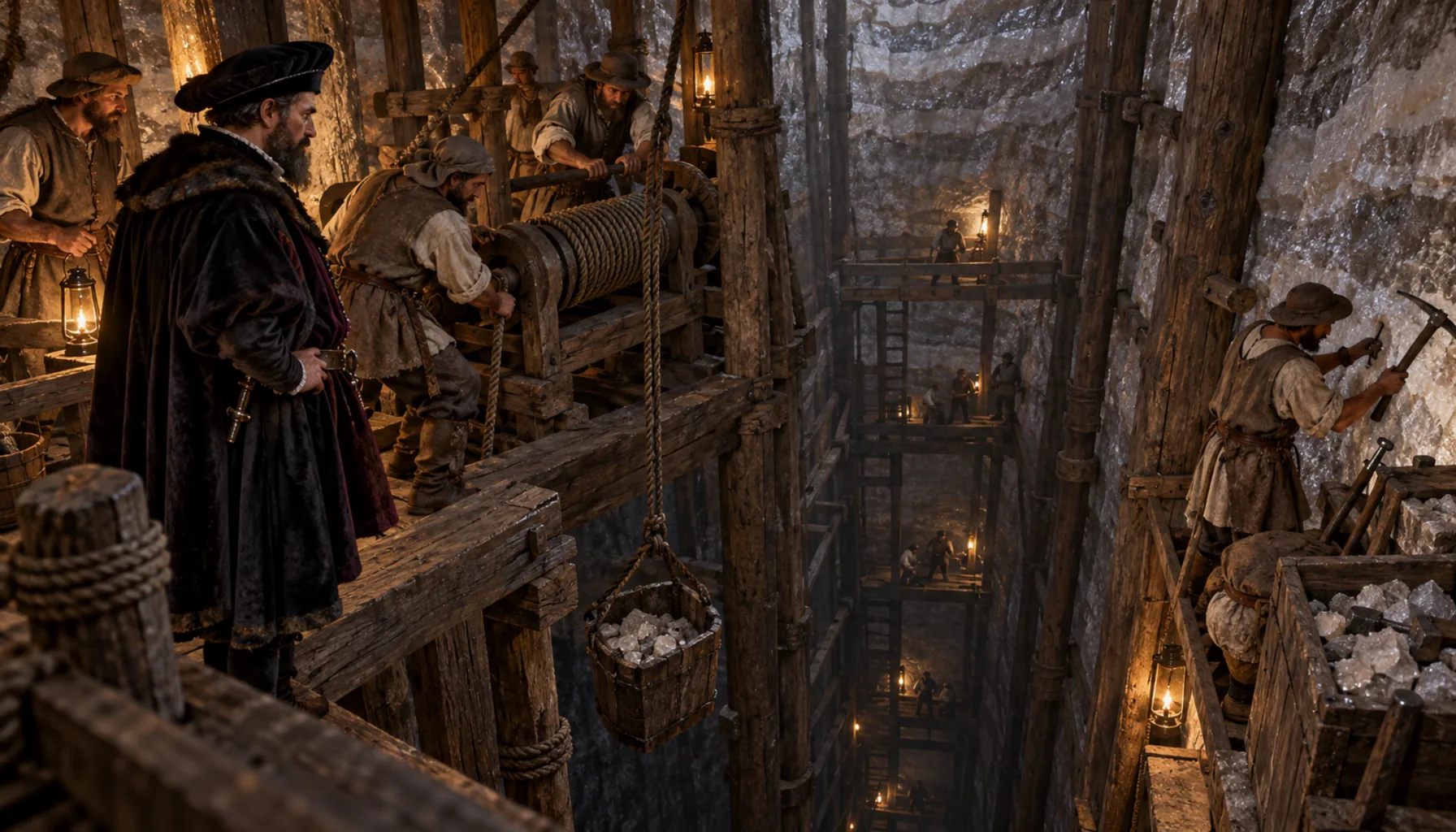
In 1571 miners under a master called Wolfgang Styx began sinking a shaft at Šovár to reach the rock salt itself, not just the brine that seeped to the surface. They cut it in a single year, to a depth of 155 metres: the Imperial shaft, later renamed Leopold after the emperor. A state mining settlement grew around it, and for the next 180 years the southern edge of Prešov was a salt mine. The hoist house still standing over the shaft, with its enormous horse-driven winding wheel, was built in 1674 — it is a large part of why Solivar is a national cultural monument today.V roku 1571 začali baníci pod vedením majstra Wolfganga Styxa hĺbiť v Šovári šachtu, aby sa dostali ku kamennej soli, nielen k soľanke presakujúcej na povrch. Vyhĺbili ju za jediný rok, do hĺbky 155 metrov: Cisárska šachta, neskôr premenovaná podľa cisára na Leopold. Okolo nej vyrástla erárna, teda štátna banícka osada, a nasledujúcich stoosemdesiat rokov bol južný okraj Prešova soľnou baňou. Gápeľ, ktorý nad šachtou stojí dodnes so svojím obrovským konským kolesom, postavili v roku 1674 — aj vďaka nemu je Solivar národnou kultúrnou pamiatkou.