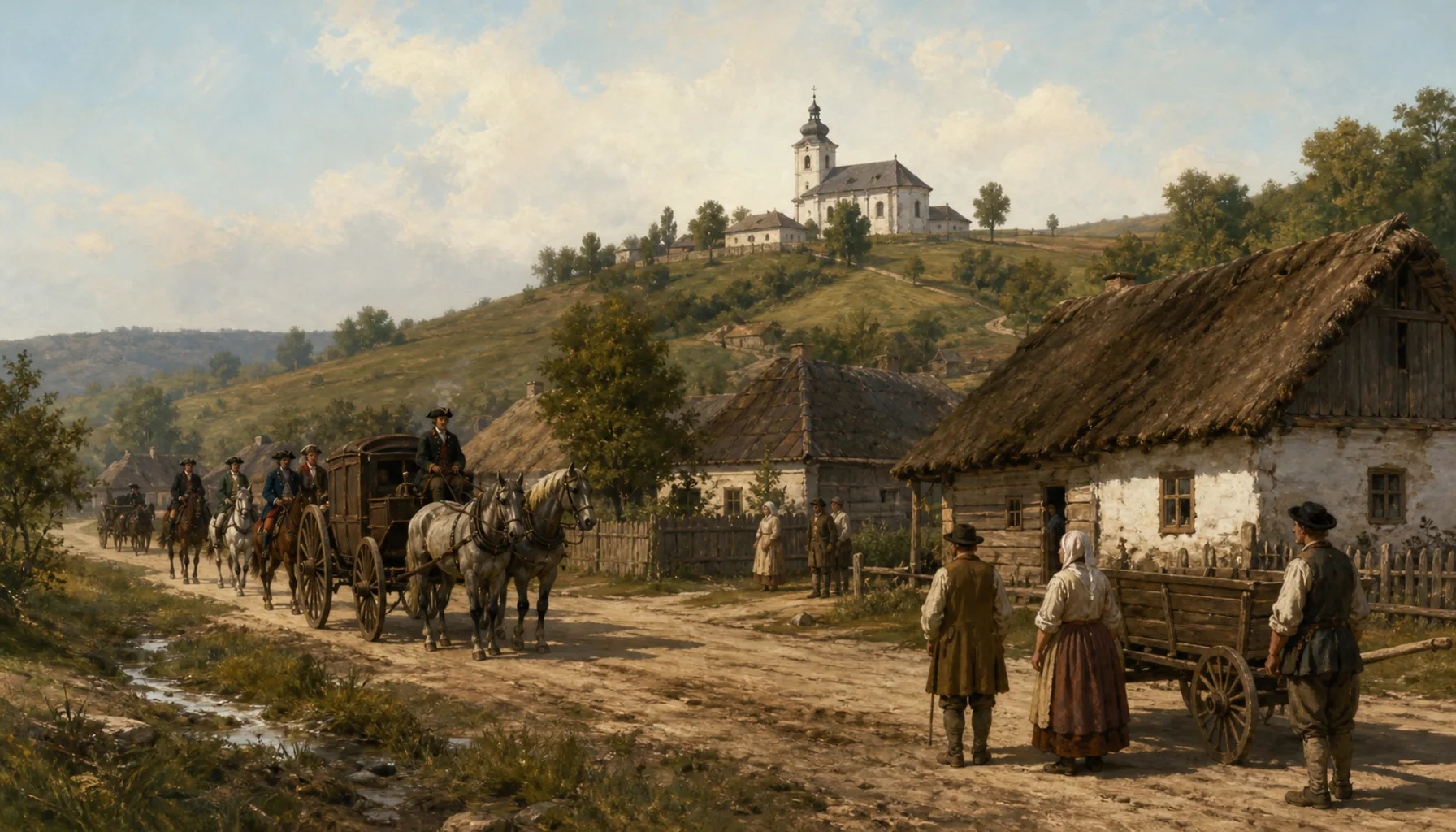
In 1723 the county seat was transferred to Zlaté Moravce and Topoľčianky went back to being what it had been before — a village belonging to an estate. Count Karol Zichy had already set the estate to work with a sawmill, a timber yard and a brewery; the Keglevich family took it over in 1742, and between 1775 and 1791 Count Karol Keglevich demolished the old Gothic church and built a Baroque one up on the hill, moving the Turk-fighter's stone tomb into it. The village you walk through today — church on the rise, estate below it, vineyards on the southern slopes — took its present shape largely in that century.V roku 1723 sa sídlo stolice presunulo do Zlatých Moraviec a Topoľčianky sa vrátili k tomu, čím boli predtým — k dedine patriacej k panstvu. Gróf Karol Zichy dovtedy panstvo rozbehol pílou, drevoskladom a pivovarom; v roku 1742 ho prevzali Keglevichovci a v rokoch 1775 – 1791 dal gróf Karol Keglevich zbúrať starý gotický kostol a hore na kopci postavil barokový, kam preniesli aj kamennú tumbu turkobijca. Obec, ktorou dnes prejdete — kostol na návrší, panstvo pod ním, vinice na južných svahoch — dostala svoju dnešnú podobu prevažne v tomto storočí.