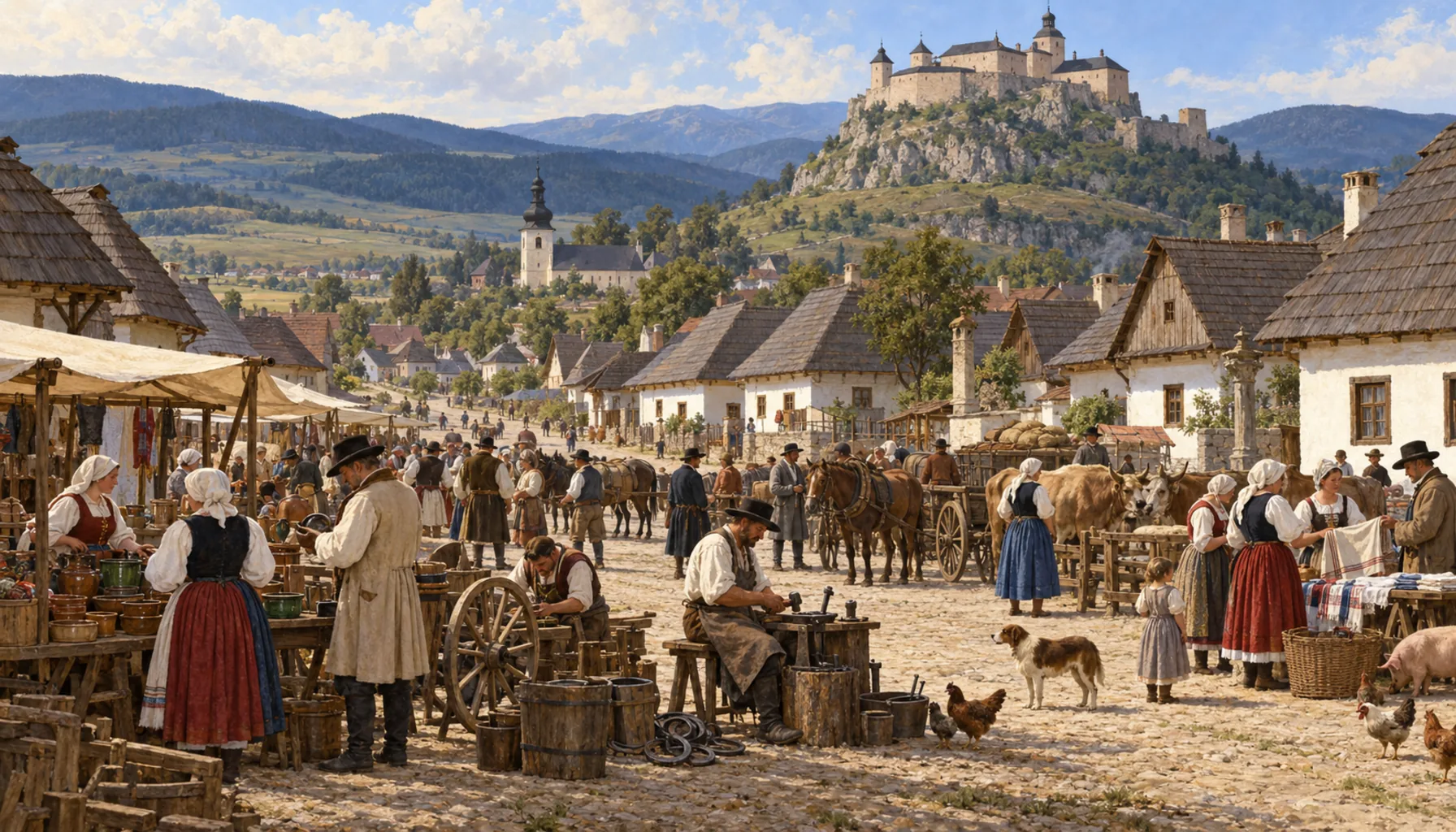
A survey of 1828 recorded 146 houses and 896 inhabitants here, most of them living by crafts rather than by the plough — the market rights had done their work. Ten years earlier, in 1818, the castle above them had burned out and its owners had stopped living in it, though they still owned everything the village stood on. Then in 1848 the Hungarian parliament abolished serfdom throughout the kingdom, and the villagers stopped owing labour days and dues to the lord on the hill. What did not change quickly was ownership: the land, the forests and the ironworks stayed with the Andrássys, and most people went on working for them, now for wages.Súpis z roku 1828 tu zaznamenal 146 domov a 896 obyvateľov, väčšinou remeselníkov, nie roľníkov — jarmočné práva urobili svoje. Desať rokov predtým, v roku 1818, hrad nad nimi vyhorel a jeho majitelia v ňom prestali bývať, hoci naďalej vlastnili všetko, na čom dedina stála. V roku 1848 potom uhorský snem zrušil poddanstvo v celom kráľovstve a dedinčania prestali dlžiť pánovi na kopci robotné dni a dávky. Čo sa rýchlo nezmenilo, bolo vlastníctvo: pôda, lesy aj železiarne zostali Andrášiovcom a väčšina ľudí pre nich pracovala ďalej, teraz za mzdu.