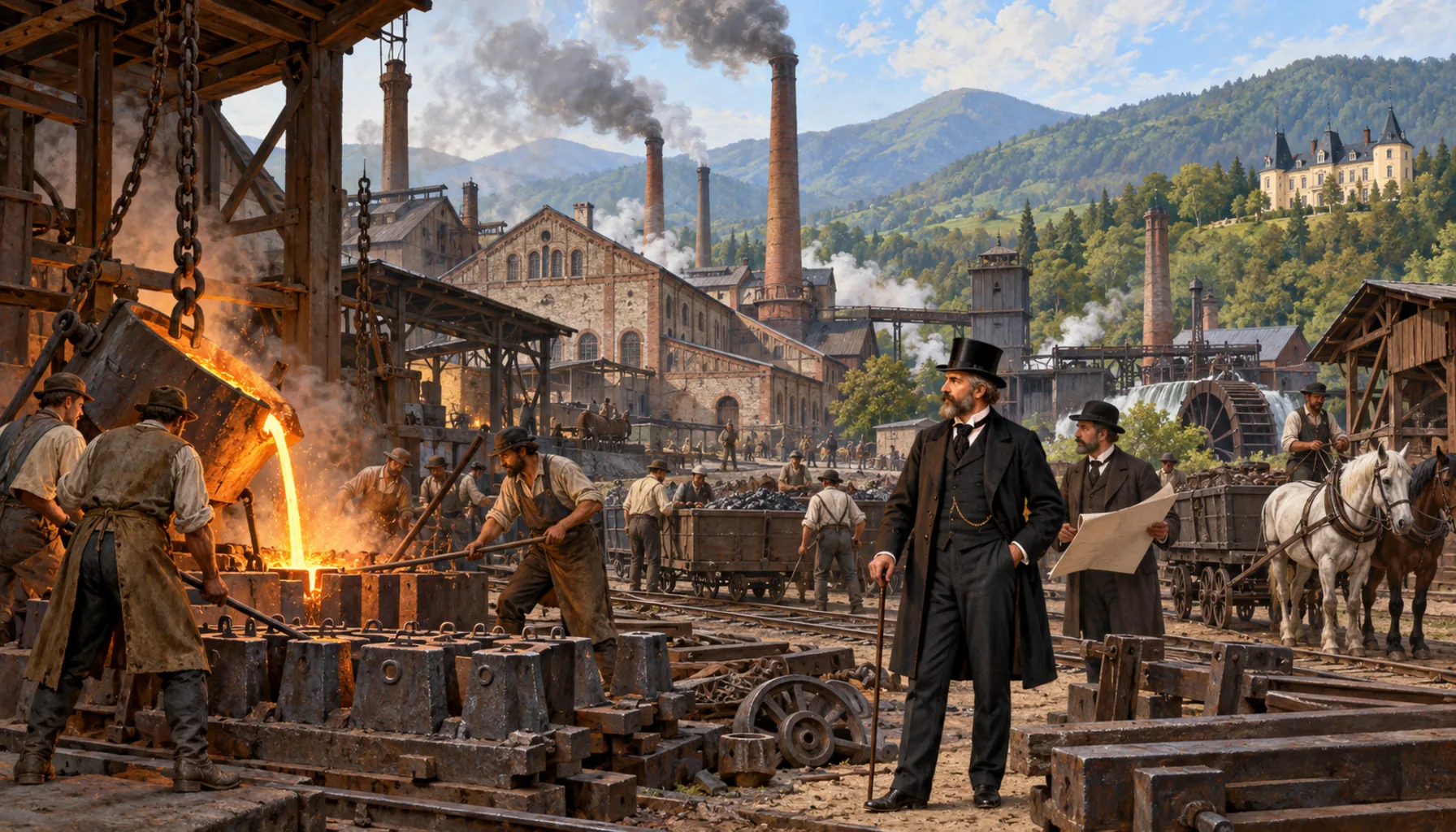
Under Austria-Hungary the valley industrialised properly: an iron factory started work at Betliar in the later nineteenth century, and the man behind the family business was Emanuel Andrássy (1821–1891), chairman of the association of Upper Hungarian ironmasters and nicknamed the iron count. Between 1880 and 1886 he rebuilt the manor into the tall-roofed romantic house that stands there now. For the village this meant two employers who were the same employer: the works and the estate. It also meant that when the iron went, most of the reason for the village's size went with it.Za Rakúsko-Uhorska sa dolina poriadne industrializovala: koncom devätnásteho storočia začala v Betliari pracovať železiarska fabrika a za rodinným podnikaním stál Emanuel Andráši (1821 – 1891), predseda spolku hornouhorských železiarov, prezývaný železný gróf. V rokoch 1880 – 1886 prestaval kaštieľ do romantickej podoby s vysokými strechami, ktorá tam stojí dodnes. Pre dedinu to znamenalo dvoch zamestnávateľov, ktorí boli jedným a tým istým: fabriku a panstvo. A tiež to znamenalo, že keď železo odišlo, odišla s ním väčšina dôvodu, prečo bola dedina taká veľká.