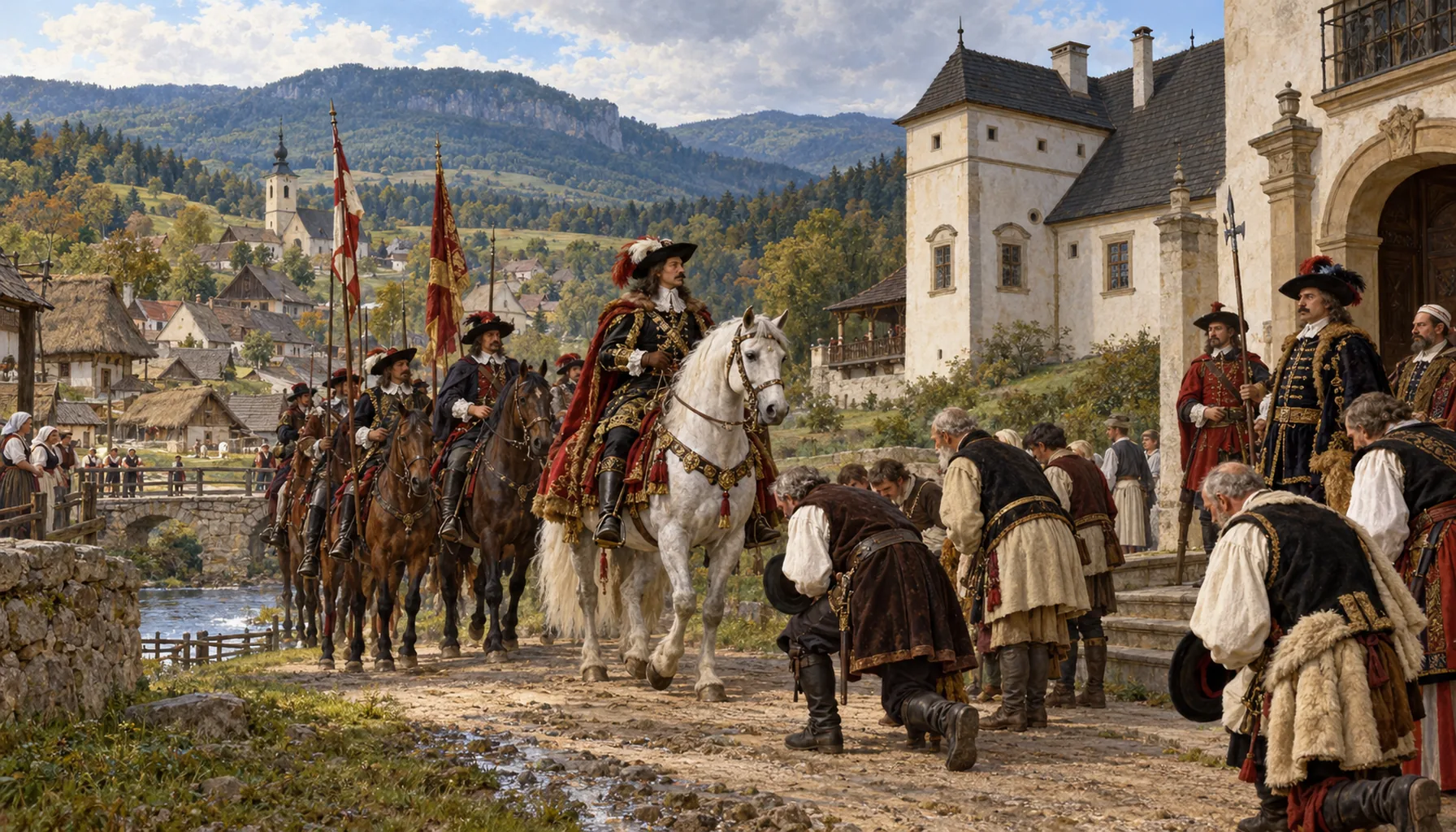
Late in the seventeenth century the Andrássy family split into branches and Štefan Andrássy, made a baron in 1676, took Betliar and founded the branch named after the village; a Hungarian account dates the formal grant of the estate and manor to Baron Pavol Andrássy in 1713. For the villagers this was not a change of country but a change of landlord, and the landlord is who mattered: he set the labour days, took the dues, owned the forest the charcoal came from and the stream that drove the hammers. Around them the anti-Habsburg risings of Thököly and Rákóczi moved up and down this valley, and armies on any side had to be fed by the people they marched past.Koncom sedemnásteho storočia sa rod Andrášiovcov rozdelil na vetvy a Štefan Andráši, od roku 1676 barón, prevzal Betliar a založil vetvu pomenovanú podľa obce; maďarský prameň kladie formálne udelenie panstva a kaštieľa barónovi Pavlovi Andrášimu do roku 1713. Pre dedinčanov to nebola zmena krajiny, ale zmena zemepána — a práve zemepán bol ten, na kom záležalo: určoval robotné dni, bral dávky, vlastnil les, z ktorého sa pálilo uhlie, aj potok, ktorý poháňal hámre. Naokolo sa touto dolinou pohybovali protihabsburské povstania Tököliho a Rákociho a vojská ktorejkoľvek strany musel živiť ten, popri kom prešli.