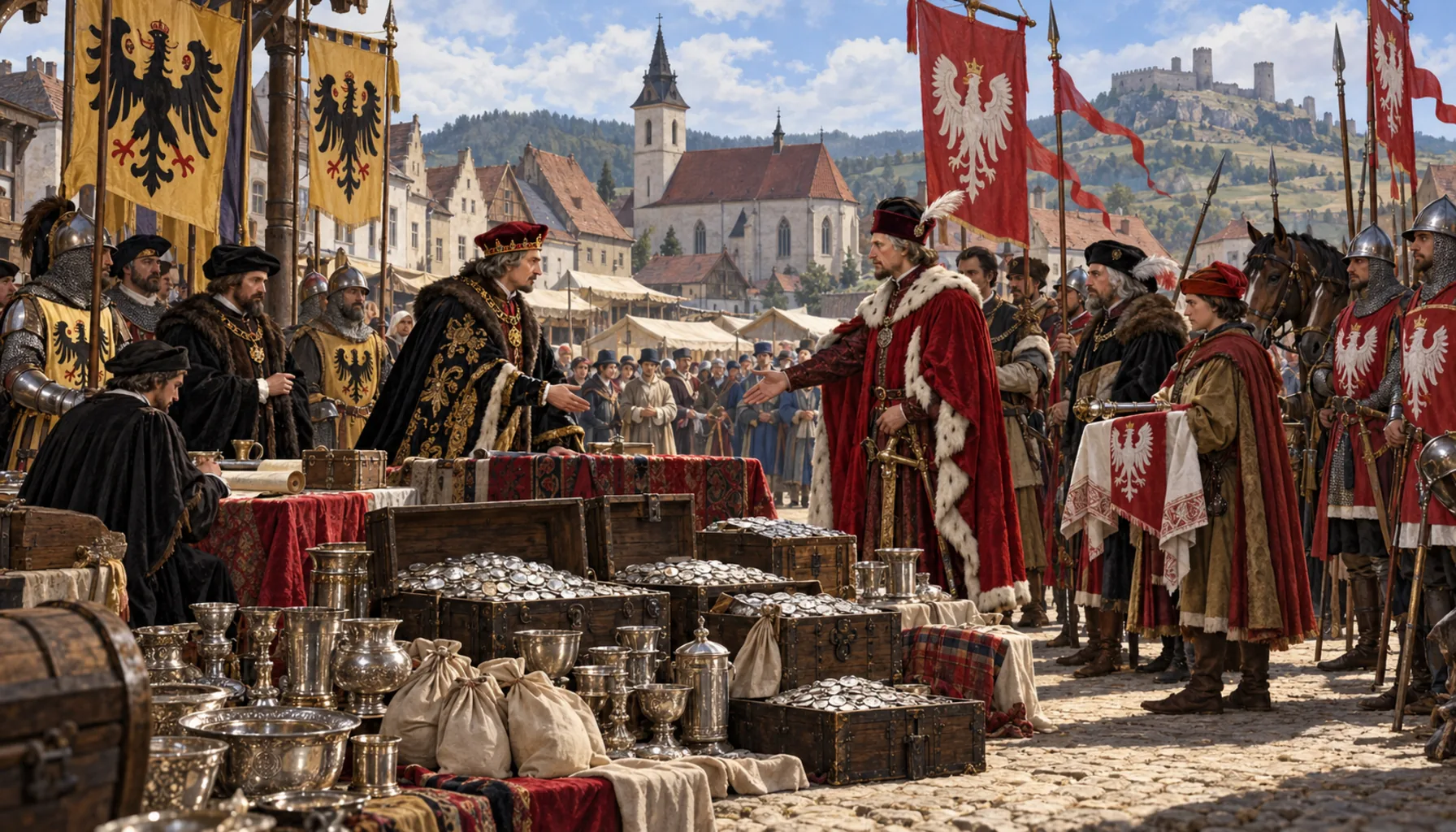
King Sigismund of Luxembourg needed money for a war against Venice, and in November 1412 he pledged thirteen Spiš towns — Spišské Vlachy among them — together with the three towns of the Ľubovňa domain to Władysław Jagiełło of Poland, for a loan worth roughly seven tonnes of silver. He never repaid it, and neither did any of his successors for three hundred and sixty years. The towns were governed from Ľubovňa by a Polish starosta, kept their own law and their own councils, and traded across a border that in effect ran around them. It made the Spiš a place apart, and it is the single most unusual thing in the region's history.Kráľ Žigmund Luxemburský potreboval peniaze na vojnu proti Benátkam a v novembri 1412 dal do zálohu trinásť spišských miest — medzi nimi Spišské Vlachy — spolu s tromi mestami ľubovnianskeho panstva poľskému kráľovi Vladislavovi Jagelovskému za pôžičku v hodnote asi siedmich ton striebra. Nikdy ju nesplatil a nesplatil ju ani nikto po ňom, tristošesťdesiat rokov. Mestá spravoval z Ľubovne poľský starosta, zachovali si vlastné právo aj vlastné rady a obchodovali cez hranicu, ktorá v skutočnosti viedla okolo nich. Spiš sa tým stal krajom osobitným — a je to tá najzvláštnejšia vec v jeho dejinách.