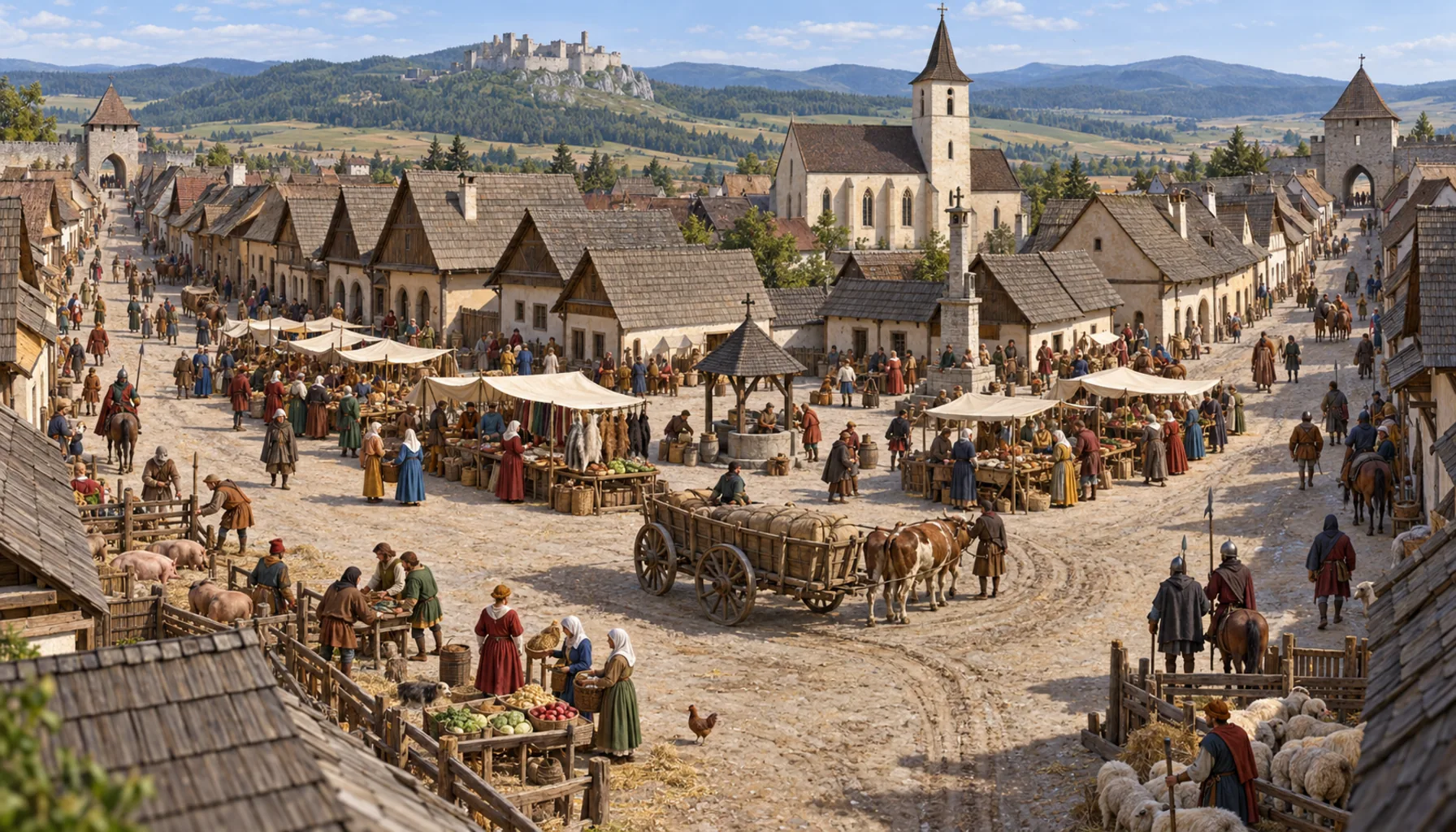
The town was laid out along a single street that widens in the middle into a lens — wide enough for a market and for a wagon to turn — and narrows at both ends where the gates stood. Burgher houses took the long sides, one plot per family, gable to the square; the church and the town hall stand in the open middle, which is the Spiš pattern. Whatever the first settlers spoke, within a couple of generations the town was German-speaking like its neighbours, and Wallendorf is the name it carried for most of its history. The Slovak name kept the memory of the Walloons long after they were gone.Mesto vzniklo pozdĺž jedinej ulice, ktorá sa uprostred rozširuje do šošovky — dosť širokej na trh a na to, aby sa v nej otočil voz — a na oboch koncoch sa zužuje tam, kde stáli brány. Meštianske domy obsadili obe dlhé strany, jeden pozemok na rodinu, štítom k námestiu; kostol a radnica stoja voľne uprostred, čo je spišský vzor. Nech už prví osadníci hovorili čímkoľvek, o dve generácie neskôr bolo mesto nemecké ako jeho susedia a Wallendorf je meno, ktoré nosilo väčšinu svojich dejín. Slovenské meno si však pamäť na Valónov podržalo dlho po tom, čo zmizli.