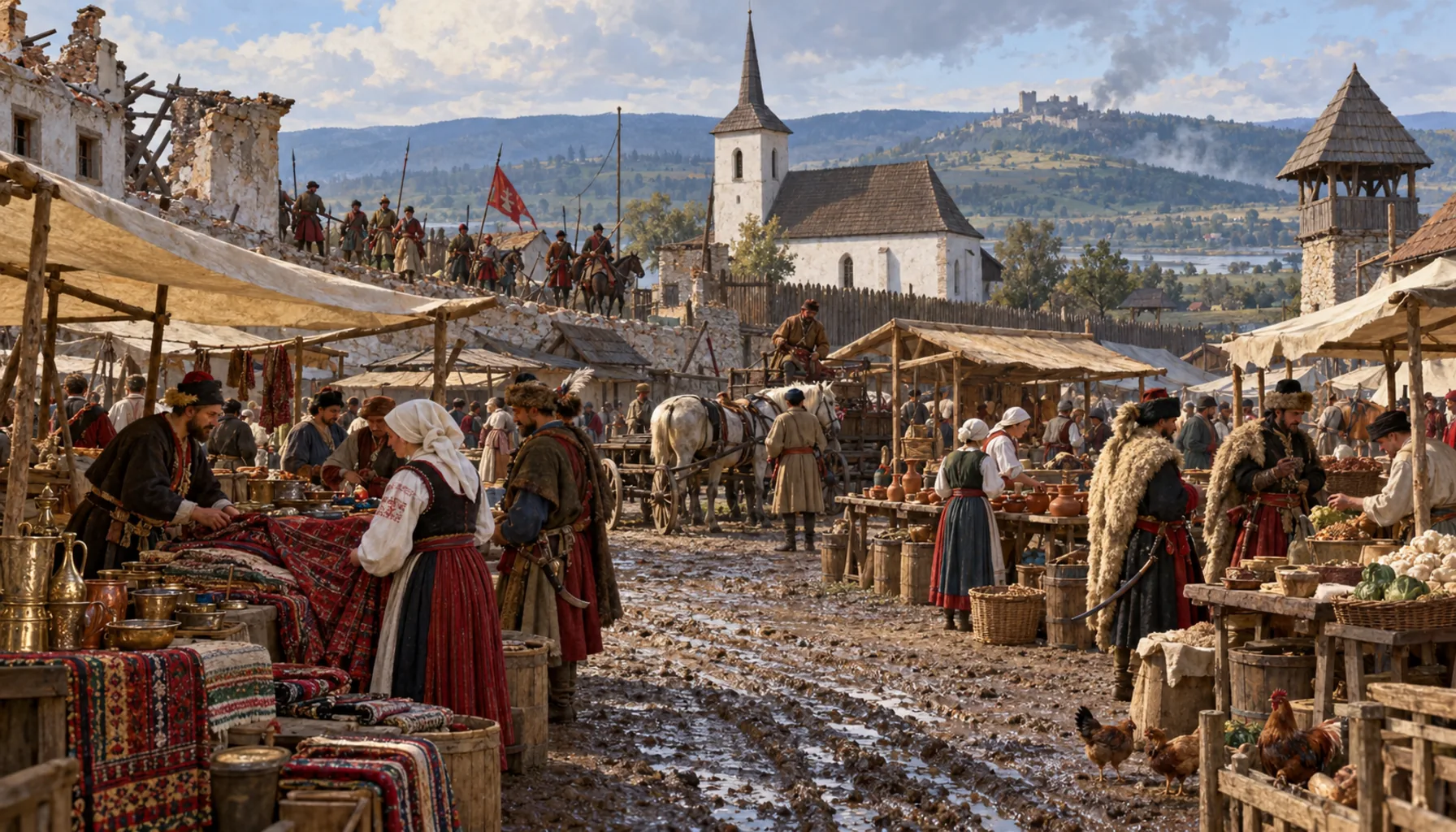
Zemplín was fought over for well over a century. Ottoman raiding pushed north after the Turks took Eger in 1596, and from the 1670s these counties rose against the Habsburgs under Imre Thököly and then Francis II Rákóczi, whose war lasted from 1703 to 1711. The town's own record shows it growing again from 1601 and its fairs becoming well known — which is the pattern of a market town: burned, requisitioned, and reopening, because the road is still there and people still need to buy salt. There is a habit in this region of blaming every ruin on the Turks; in Zemplín the imperial and rebel armies did at least as much damage, and often more.O Zemplín sa bojovalo vyše storočia. Turecké výpady zamierili na sever po tom, čo Osmani roku 1596 dobyli Jáger, a od 70. rokov 17. storočia sa tunajšie stolice búrili proti Habsburgovcom pod vedením Imricha Tököliho a potom Františka II. Rákóciho, ktorého vojna trvala od roku 1703 do roku 1711. Mestské pramene ukazujú, že od roku 1601 Sečovce znova rástli a ich jarmoky sa preslávili — a taký je osud trhového mesta: vypália ho, zrekvirujú a ono znova otvorí, lebo cesta tu stále je a ľudia stále potrebujú kúpiť soľ. V tomto kraji sa každá zrúcanina rada pripíše Turkom; v Zemplíne narobili cisárske a povstalecké vojská aspoň toľko škody, ak nie viac.