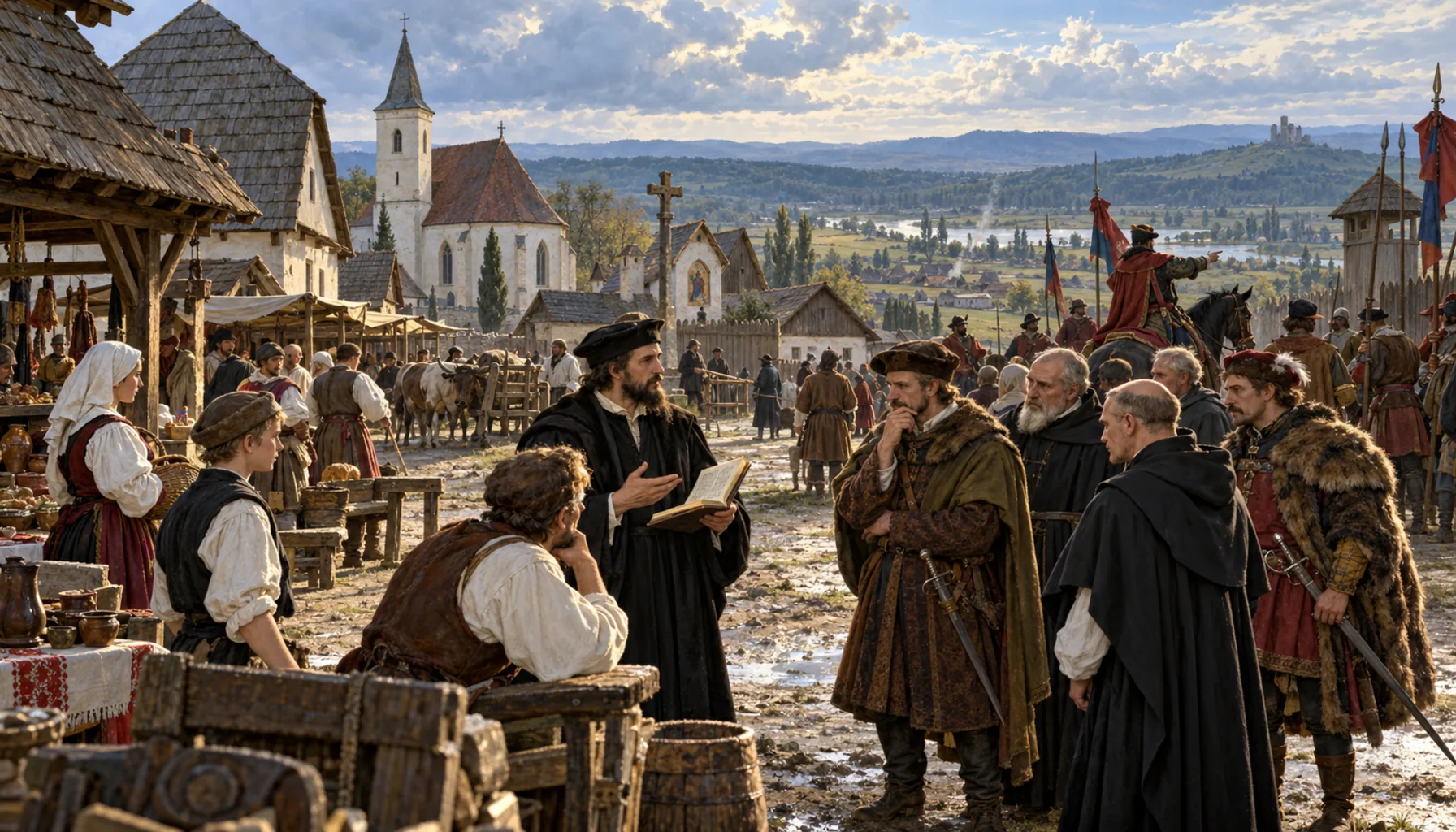
After the defeat at Mohács in 1526 the kingdom split and the east went to Szapolyai and later to the princes of Transylvania, and the Reformation spread quickly through these counties. One of its Hungarian pioneers came from here: István Gálszécsi, whose surname simply means of Gálszécs, the Hungarian name of Sečovce. He studied at Vienna, Kraków and Wittenberg, taught in Košice and then at the school in his native town, and in 1536 published in Kraków the first printed Hungarian hymnbook with musical notation, followed by a catechism in 1538. Only fragments of those books survive, which tells you something about how the following century treated this region.Po porážke pri Moháči roku 1526 sa kráľovstvo rozdelilo, východ pripadol Zápoľskému a neskôr sedmohradským kniežatám a reformácia sa týmito stolicami šírila rýchlo. Jeden z jej maďarských priekopníkov pochádzal práve odtiaľto: Štefan Gálszécsi, ktorého priezvisko znamená jednoducho „zo Sečoviec“ — Gálszécs je maďarský názov mesta. Študoval vo Viedni, Krakove a Wittenbergu, učil v Košiciach a potom na škole vo svojom rodnom meste a roku 1536 vydal v Krakove prvý tlačený maďarský spevník s notami, o dva roky nato katechizmus. Z tých kníh sa zachovali len zlomky — a aj to čosi hovorí o tom, ako s týmto krajom naložilo nasledujúce storočie.