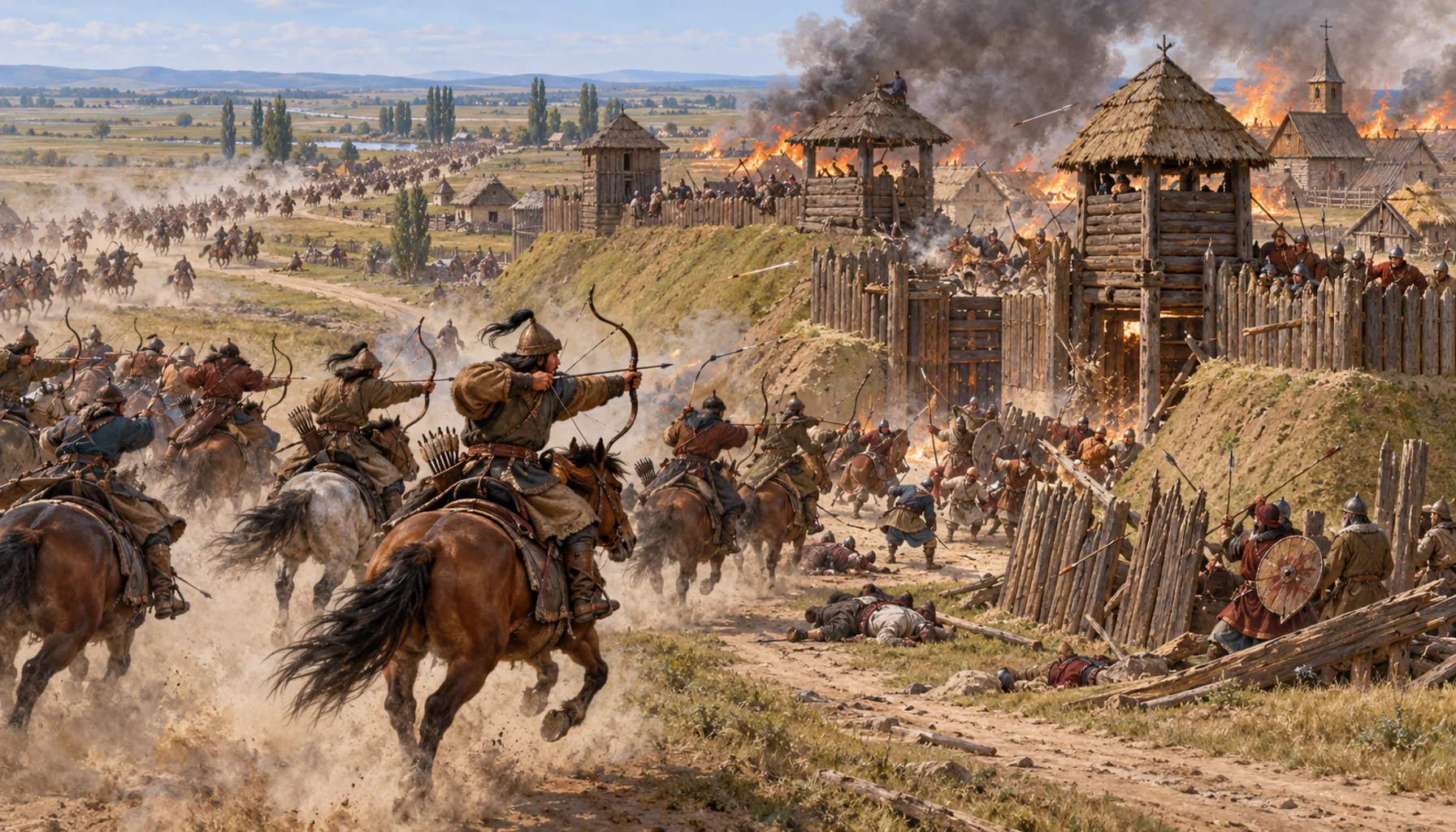
In 1241 the Mongol army crossed the Carpathians and swept the upper Tisza plain, and this open roadside country had nothing to stop it. Sečovce first appears in writing four years later, in 1245, in a charter of King Béla IV, where it is spelled Zeech and mentioned only as the land next to somewhere else. That is how most Slovak places enter history: as a boundary in somebody else's document. Béla IV is the king who rebuilt the kingdom after the invasion and covered it in stone castles — but he built those on rock, and there is none under Sečovce, so the town's defence was always the same one: keep the market open and pay whoever turns up.Roku 1241 prekročilo mongolské vojsko Karpaty a prevalilo sa hornou rovinou pri Tise; táto otvorená krajina pri ceste ho nemala čím zastaviť. Sečovce sa prvýkrát objavujú v písomnostiach o štyri roky neskôr, roku 1245, v listine kráľa Bela IV., kde sú zapísané ako Zeech a spomínajú sa iba ako pozemok susediaci s niečím iným. Takto vstupuje väčšina slovenských miest do dejín: ako hranica v cudzej listine. Belo IV. je kráľ, ktorý po vpáde krajinu obnovil a pokryl kamennými hradmi — no staval ich na skalách a pod Sečovcami nijaká nie je, takže obrana mesta bola vždy tá istá: nechať trh otvorený a zaplatiť tomu, kto práve príde.