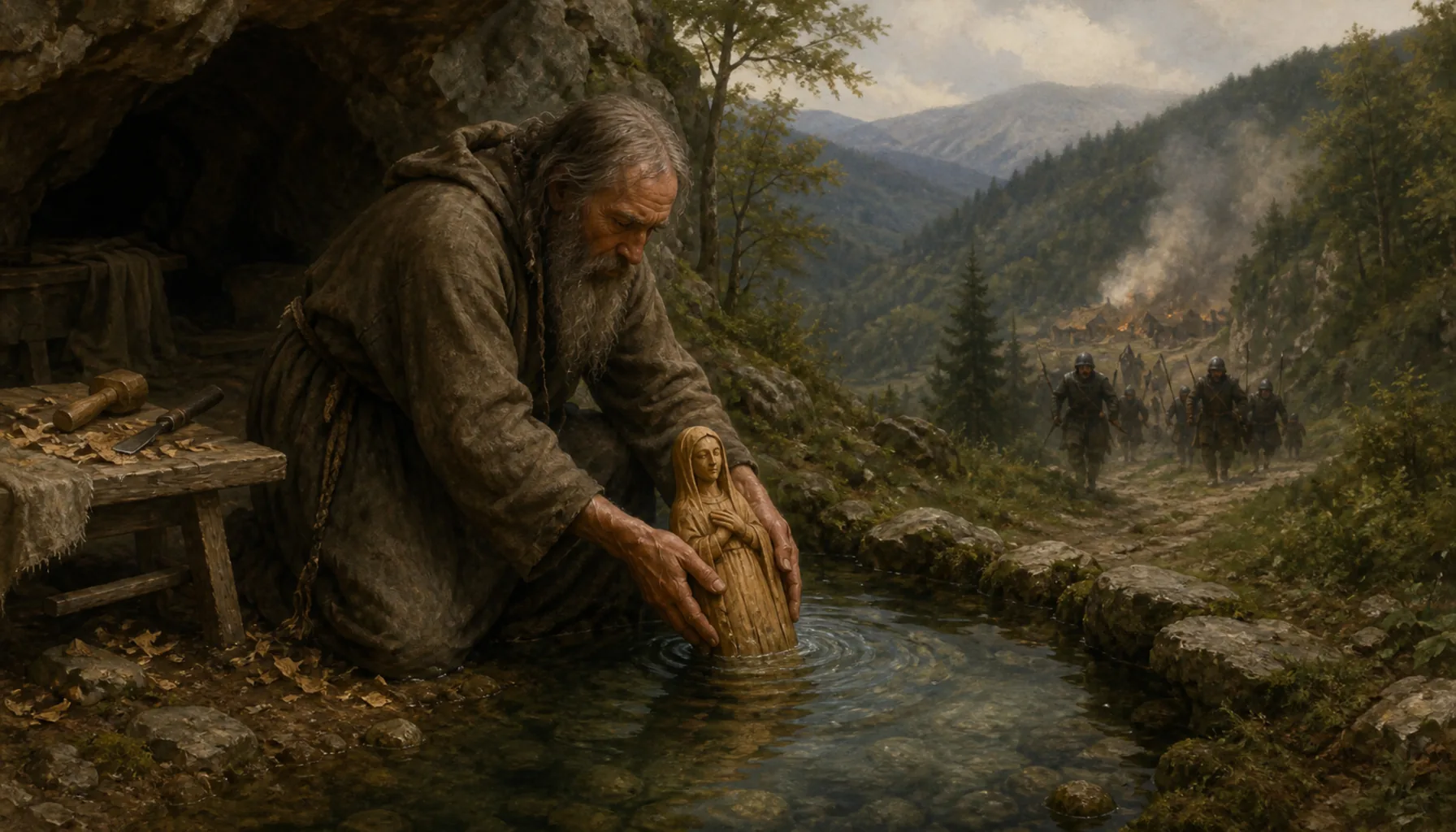
The story goes like this: a hermit living in the valley carved a small figure of the Virgin out of pear wood, and when danger came he hid it in the spring. Later the water healed a sick child, the statue was found again, and from then on people came. Nobody who was there wrote any of it down. Slovak accounts date the carving to about 1030, Hungarian ones put the hermit in the early thirteenth century, and the first hard fact of any kind is a document of 1367. The legend is real in a different sense, though: for six hundred years people believed it and acted on it, and that belief is why the church, the monastery and the village are there at all.Rozpráva sa to takto: v doline žil pustovník, ktorý si z hruškového dreva vyrezal malú sošku Panny Márie, a keď prišlo nebezpečenstvo, ukryl ju v prameni. Voda neskôr uzdravila choré dieťa, soška sa našla a odvtedy sem ľudia začali chodiť. Nikto, kto by pri tom bol, si to nezapísal. Slovenské podania kladú vyrezanie sošky do čias okolo roku 1030, maďarské hovoria o pustovníkovi až na začiatku 13. storočia — a prvým tvrdým údajom je až listina z roku 1367. Legenda je pritom skutočná v inom zmysle: šesťsto rokov jej ľudia verili a podľa nej konali, a práve preto tu stojí kostol, kláštor aj celá obec.