Bratislava region · VillagesBratislavský kraj · Obce
Villages of the Bratislava RegionObce Bratislavského kraja
The smallest region in Slovakia holds three quite different kinds of village: wine settlements on the loess foot of the Little Carpathians, sand-and-pine villages out on Záhorie, and flat lowland rows east of the capital.Najmenší kraj Slovenska má tri celkom odlišné druhy obcí: vinohradnícke osady na sprašovom úpätí Malých Karpát, piesočnaté obce medzi borovicami na Záhorí a ploché radové dediny na východ od hlavného mesta.
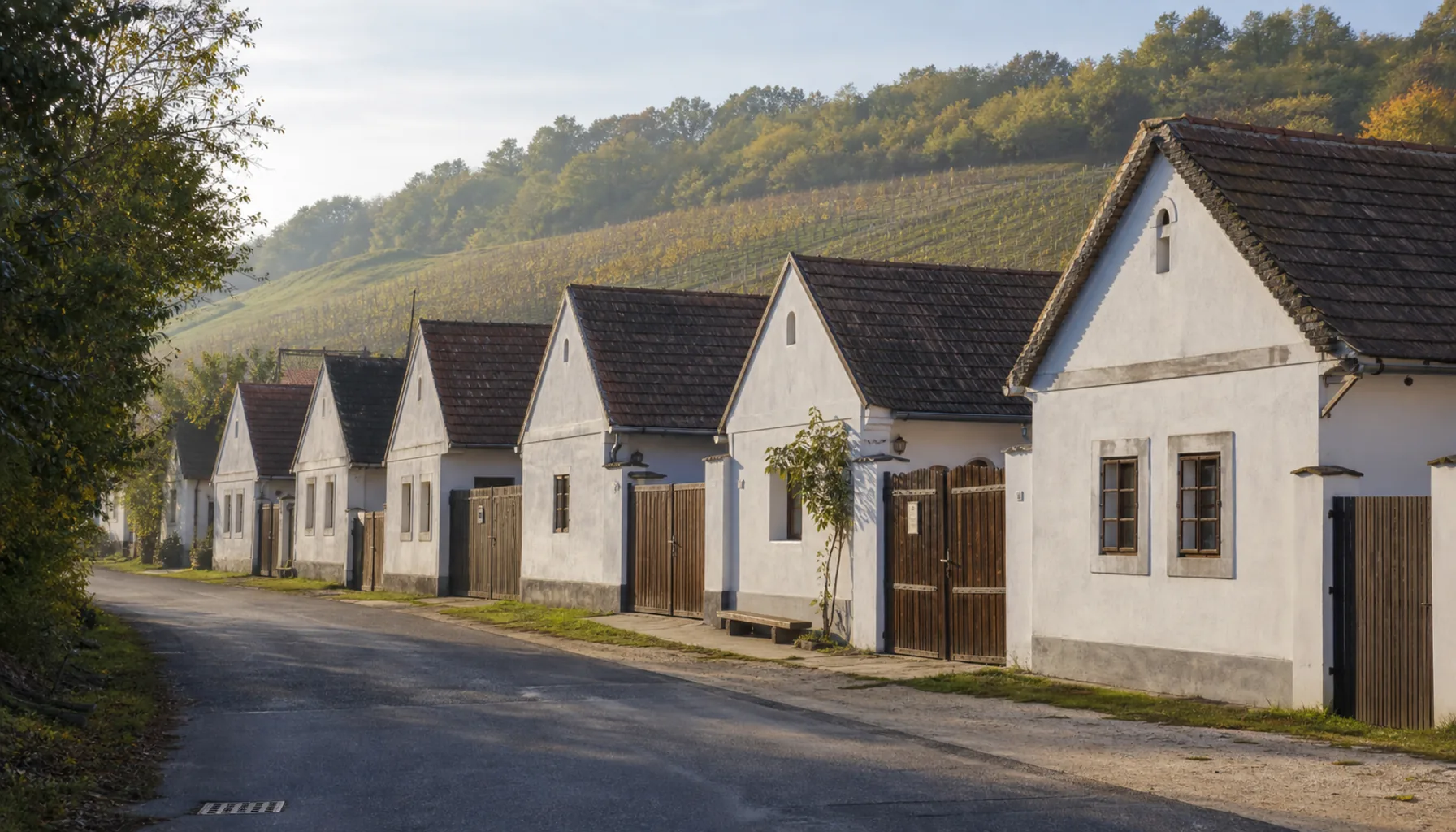
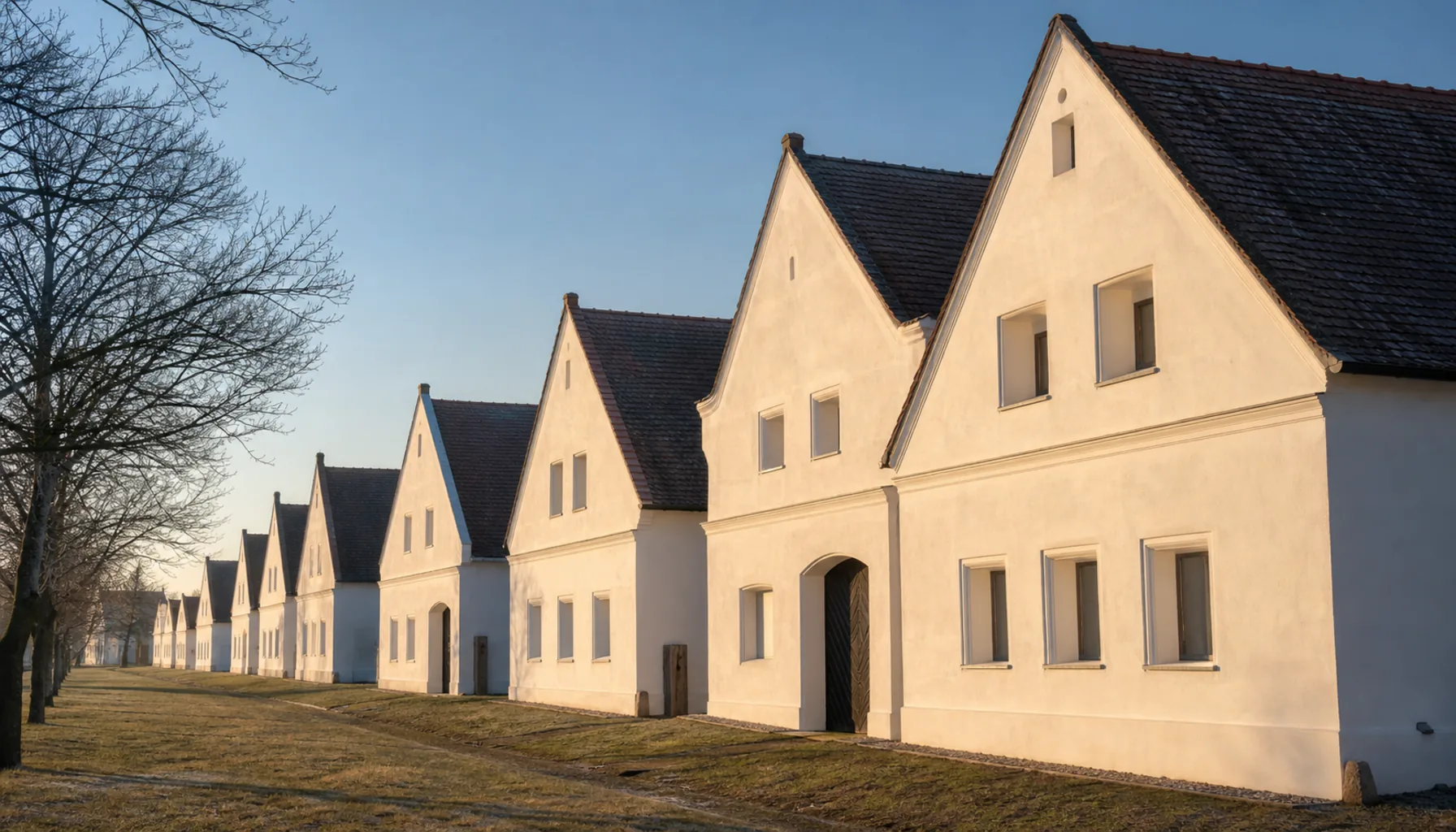
A village street of whitewashed houses standing gable-end to the road below the Little CarpathiansDedinská ulica vybielených domov stojacich štítom do cesty pod Malými Karpatmi
Three kinds of countryTri druhy krajiny
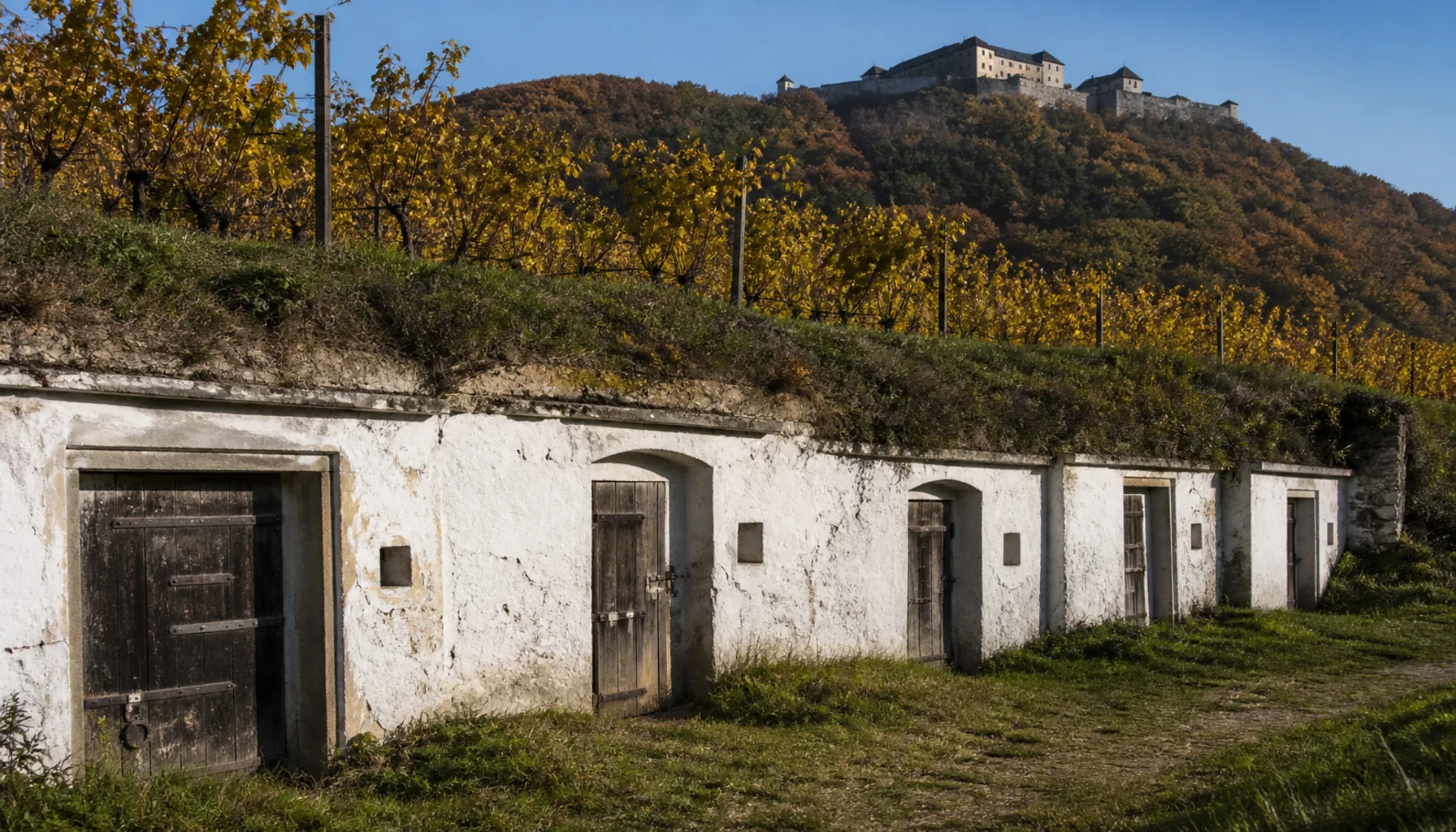
The Little Carpathians run diagonally through the region and divide it in two. On their eastern and southern foot, where loess lies deep over the slope, the villages are wine villages — vineyards above the houses, cellars driven into the bank below them, and a line of them running from the edge of Bratislava past Pezinok and Modra up to Častá and Doľany.Malé Karpaty prechádzajú krajom uhlopriečne a delia ho na dve časti. Na ich východnom a južnom úpätí, kde na svahu leží hlboká spraš, sú obce vinohradnícke — vinice nad domami, pivnice vyhĺbené do svahu pod nimi a celý ich rad sa tiahne od okraja Bratislavy cez Pezinok a Modru až po Častú a Doľany.
West of the ridge is Záhorie: flat, sandy, planted with pine, closed off by the Morava river and the Austrian border. Its villages are strung along one road and one railway, further apart and poorer in soil than their neighbours over the hill. East and south of Bratislava the ground flattens again into the Danubian lowland, where the villages sit on black earth among fields that have been ploughed without interruption for as long as there are records for.Na západ od hrebeňa leží Záhorie: rovné, piesočnaté, zalesnené borovicami, uzavreté riekou Moravou a rakúskou hranicou. Tamojšie obce sú navlečené na jednej ceste a jednej železnici, sú od seba ďalej a majú chudobnejšiu pôdu než ich susedia za kopcom. Na východ a juh od Bratislavy sa terén znova vyrovnáva do Podunajskej nížiny, kde obce stoja na černozemi uprostred polí, ktoré sa orú bez prestávky, odkedy o tom vôbec existujú záznamy.
Brick, loess and reedTehla, spraš a trstina
There is almost no timber vernacular here. This is not the mountain north: the building materials of the Bratislava region are fired brick, unfired clay, lime wash and, on the roofs, reed cut in the Danube backwaters before tile replaced it. The standard house stands gable-end to the street with its long side into a narrow yard, stable and barn behind it and a strip of garden running back — and a row of them makes a village street that reads as one continuous whitewashed wall.Drevená ľudová architektúra tu takmer nie je. Nie sme na horskom severe: stavebným materiálom Bratislavského kraja je pálená tehla, nepálená hlina, vápenný náter a na strechách trstina z dunajských ramien, kým ju nenahradila škridla. Bežný dom stojí štítom do ulice, dlhou stranou do úzkeho dvora, za ním maštaľ a stodola a dozadu vybieha pás záhrady — a ich rad tvorí dedinskú ulicu ako jednu súvislú vybielenú stenu.
Where the loess is deep, the cellar matters more than the house: barrel-vaulted tunnels cut into the bank, cool through the whole summer, with the press house in front of them. And the region keeps one real exception — the tall communal houses of the Anabaptist settlers at Veľké Leváre, built to a scale and a plan no ordinary Slovak village ever needed, because the people who built them held everything in common.Tam, kde je spraš hlboká, je pivnica dôležitejšia než dom: klenuté chodby vyhĺbené do svahu, celé leto chladné, a pred nimi prešovňa. A kraj si drží jednu skutočnú výnimku — vysoké spoločné domy novokrstencov vo Veľkých Levároch, postavené v mierke a podľa pôdorysu, aké obyčajná slovenská dedina nikdy nepotrebovala, pretože tí, čo ich stavali, mali všetko spoločné.
Visiting a village that is also a suburbNávšteva obce, ktorá je zároveň predmestím
These are the most heavily built-up villages in Slovakia. The capital has been spreading into them since the 1990s, and around several of them the fields have filled with new housing for people who work in the city. That does not make the old core worthless; it means you have to go looking for it, because the thing worth seeing is usually one street, one square or one lane of cellars with a ring of new roofs around it.Sú to najzastavanejšie obce na Slovensku. Hlavné mesto sa do nich rozlieva od 90. rokov a okolo viacerých z nich zaplnila polia nová výstavba pre ľudí, ktorí pracujú v meste. Staré jadro tým nestráca cenu, len ho treba hľadať, lebo tým, čo stojí za pozretie, býva jedna ulica, jedno námestie alebo jedna ulička pivníc s prstencom nových striech okolo.
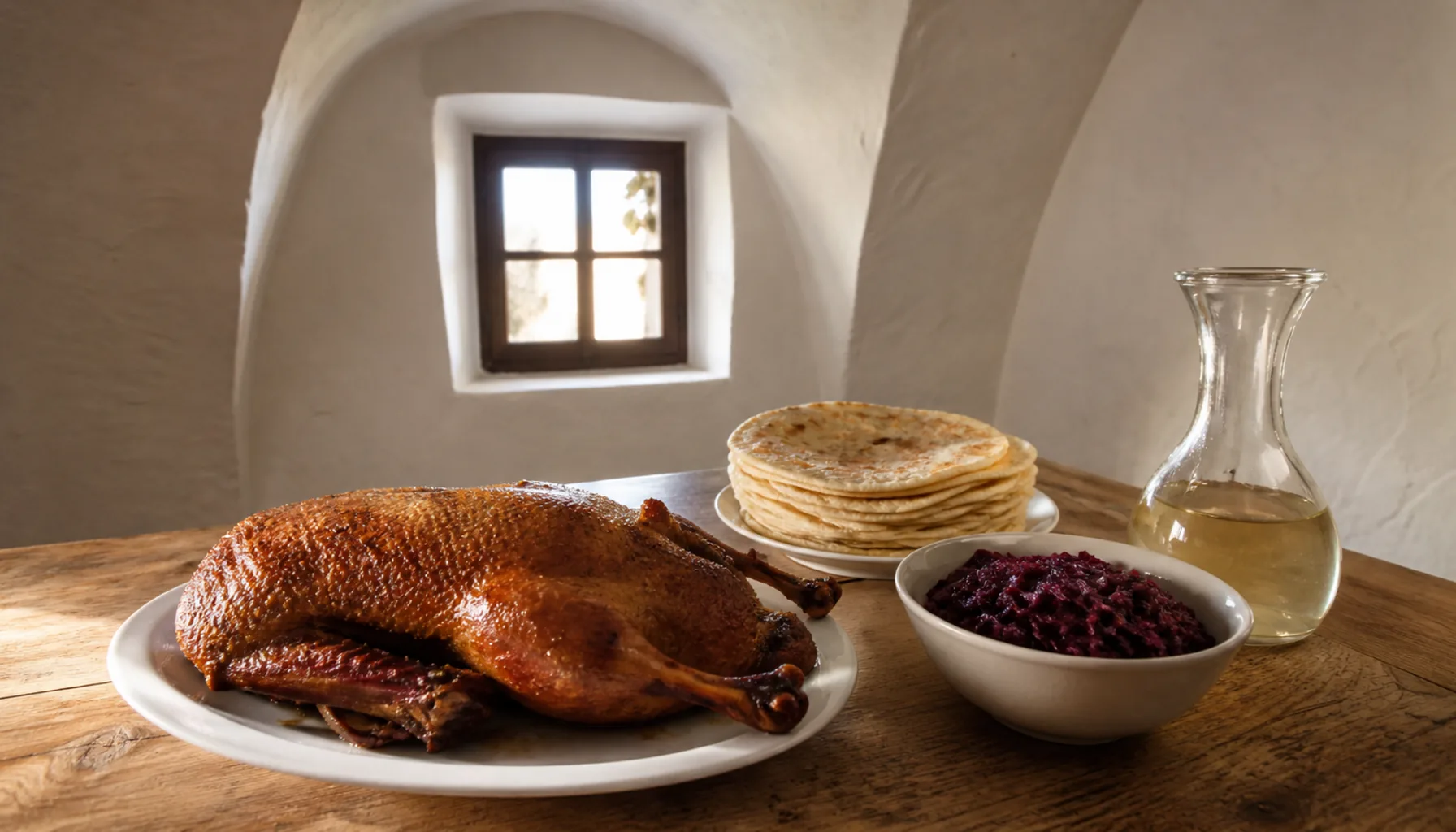
Season decides more here than opening hours do. The goose houses of Slovenský Grob work from late summer into November and are shut for the rest of the year; the pilgrimage at Marianka is a September matter; the wine cellars open on set weekends; the museum houses keep short seasonal times and can close without notice. Confirm before you drive out, and remember that people live in almost everything you will be photographing.Viac než otváracie hodiny tu rozhoduje sezóna. Husacie domy v Slovenskom Grobe fungujú od konca leta do novembra a zvyšok roka sú zavreté; púť v Marianke je záležitosťou septembra; vínne pivnice otvárajú v určené víkendy a múzejné domy majú krátke sezónne časy a môžu zavrieť bez ohlásenia. Pred cestou si to overte a pamätajte, že takmer vo všetkom, čo budete fotografovať, niekto býva.