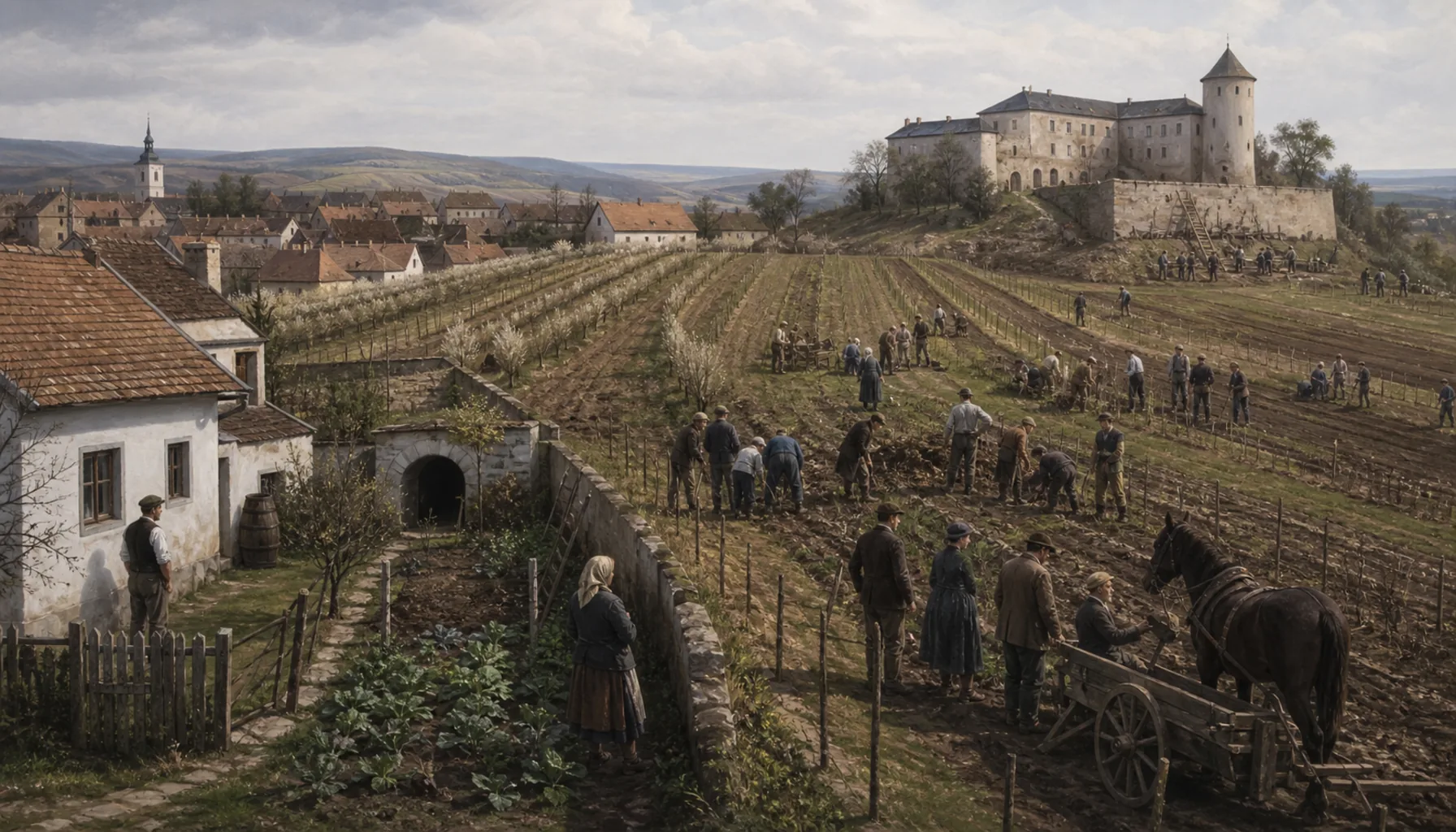
After the communist takeover of February 1948 the land was collectivised: the strips of vineyard and field that families had owned outright since 1848 were merged into a JRD, a unified agricultural co-operative, and what a household kept was a garden plot and the cellar behind the house. Červený Kameň, taken from the Pálffys, was opened as a state museum, and because it had been lived in rather than abandoned it is one of the few Slovak castles you walk through furnished instead of as bare walls — which is why the coaches come up the valley today. The quarry closed in 1963. For most people in Častá the working day now meant a bus to Bratislava or Pezinok and a bus home.Po komunistickom prevrate vo februári 1948 prišla kolektivizácia: pásiky viníc a polí, ktoré rodiny vlastnili od roku 1848, zlúčili do JRD – jednotného roľníckeho družstva – a domácnosti zostala záhradka a pivnica za domom. Červený Kameň, odobratý Pálfiovcom, otvorili ako štátne múzeum, a keďže sa v ňom bývalo a nespustol, je jedným z mála slovenských hradov, ktorý sa dá prejsť zariadený, nie ako holé múry – práve preto sem dnes dolinou prichádzajú autobusy. Kameňolom zavreli v roku 1963. Pracovný deň väčšiny Častianov znamenal odvtedy autobus do Bratislavy alebo do Pezinka a autobus domov.