Bratislava region · VillagesBratislavský kraj · Obce
ČastáČastá
The estate village under Červený Kameň — a wine settlement on the Little Carpathian foot whose own vineyards, cellars and forest trails are the part most visitors drive straight past on the way up to the castle.Obec pod Červeným Kameňom — vinohradnícka osada na malokarpatskom úpätí, ktorej vlastné vinice, pivnice a lesné chodníky väčšina návštevníkov prejde autom bez zastavenia cestou hore na hrad.
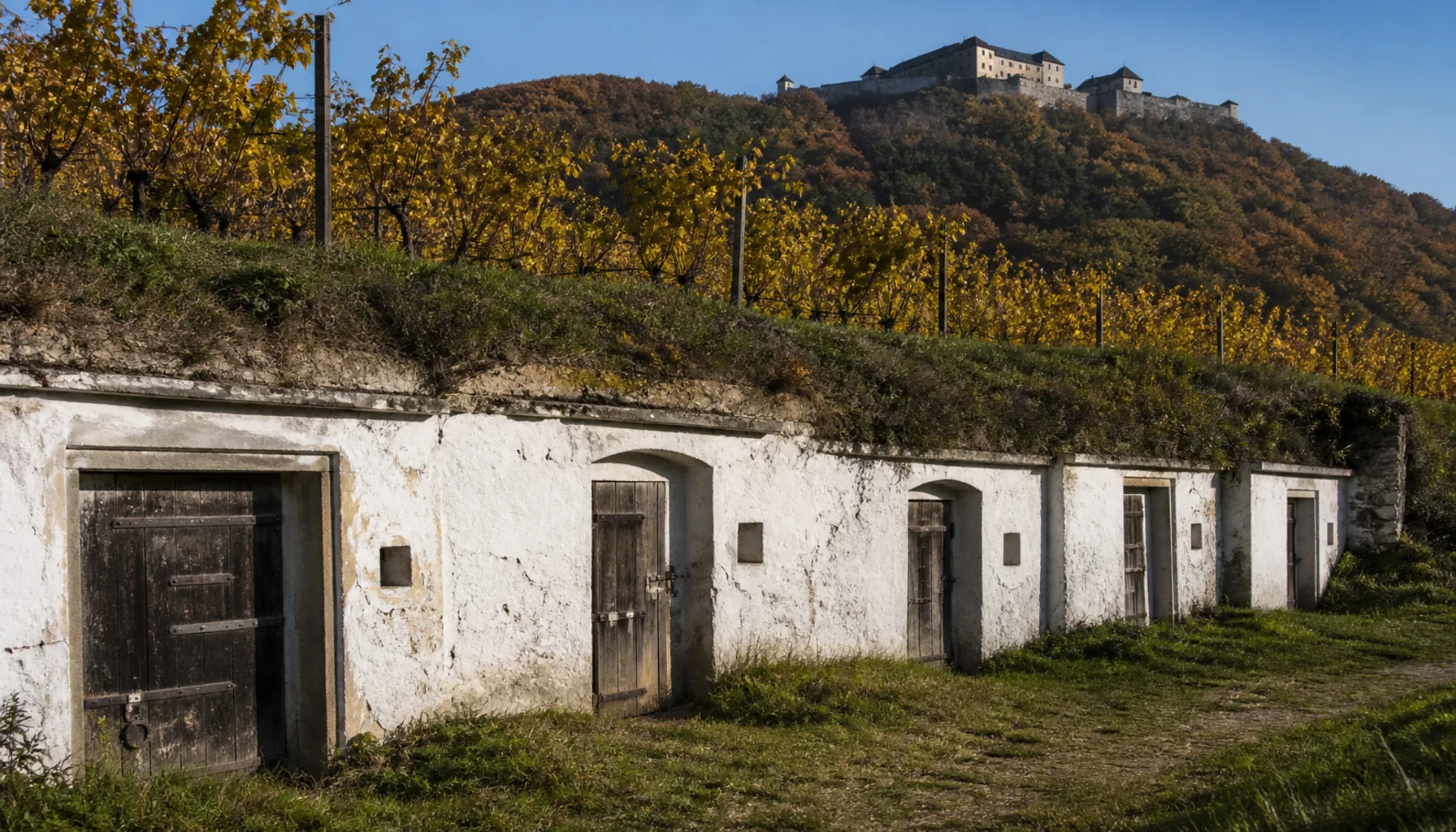
Vineyard cellars on the slope above Častá, with the wooded ridge and Červený Kameň behindVinohradnícke pivnice na svahu nad Častou, v pozadí zalesnený hrebeň a Červený Kameň
Where it standsKde leží
Častá lies on the eastern foot of the Little Carpathians north of Modra, where the vineyard belt runs out and the forest takes over. The village stands at the mouth of a valley coming down off the ridge, with the wooded height of the range immediately behind it and the plain opening out eastward towards Trnava.Častá leží na východnom úpätí Malých Karpát severne od Modry, tam, kde sa vinohradnícky pás končí a preberá to les. Obec stojí pri ústí doliny schádzajúcej z hrebeňa, hneď za ňou je zalesnená výška pohoria a na východ sa otvára rovina smerom na Trnavu.
Why it is herePrečo práve tu
Červený Kameň stands on the ridge above the village, and Častá exists because the castle did. An estate of that size needed a settlement to work it — vineyards, fields, woodland, carting, building — and the village below the rock was it. The two names are so firmly attached that the castle is often written as Červený Kameň at Častá.Nad obcou stojí na hrebeni Červený Kameň a Častá existuje preto, že existoval hrad. Panstvo takej veľkosti potrebovalo osadu, ktorá ho bude obhospodarovať — vinice, polia, les, povozníctvo, stavby — a tou osadou bola dedina pod skalou. Obe mená sú zrastené natoľko, že sa hrad často píše ako Červený Kameň pri Častej.
The castle's own story — the Fuggers' artillery fortress, the Pálffy centuries, the cellars and the furnished rooms above them — is told in full elsewhere on this site and is not repeated here. What matters at village level is what an estate of that weight does to the place beneath it: for four hundred years it fixed what was grown, who owned the presses and where the road went.Vlastný príbeh hradu — fuggerovská delostrelecká pevnosť, pálfiovské storočia, pivnice a zariadené sály nad nimi — je na tomto webe vyrozprávaný na inom mieste a tu sa neopakuje. Na úrovni obce je podstatné to, čo také ťažké panstvo robí s miestom pod sebou: štyristo rokov určovalo, čo sa pestuje, kto vlastní preše a kadiaľ vedie cesta.
Wine is the other half of the answer. Častá belongs to the Little Carpathian vineyard country, the belt of German- and Slovak-settled wine villages running from the edge of Bratislava up the eastern foot of the hills, and its slopes have been planted for as long as the castle has stood.Druhou polovicou odpovede je víno. Častá patrí do malokarpatského vinohradníckeho kraja — pásu nemecky a slovensky osídlených vinohradníckych obcí, ktorý beží od okraja Bratislavy po východnom úpätí kopcov — a jej svahy sú vysadené tak dlho, ako stojí hrad.
What you actually seeČo naozaj uvidíte
The village is a long street of low houses with a parish church of Gothic origin much rebuilt in later centuries, and behind the houses the working parts: cellars, press houses and vineyard plots stepping up the slope. It is a modest place that rewards ten minutes rather than an afternoon.Obec je dlhá ulica nízkych domov s farským kostolom gotického pôvodu, v neskorších storočiach viackrát prestavaným, a za domami sú hospodárske časti: pivnice, prešovne a vinohradnícke parcely stúpajúce po svahu. Je to skromné miesto, ktoré odmení desať minút, nie celé popoludnie.
The castle is a couple of kilometres up from the village on foot, or a drive to its own car park, and it is why most people are here. The better use of Častá is what comes after: marked trails carry on from behind the castle over the ridge into the main body of the Little Carpathians, towards Vysoká, one of the highest summits of the range, and down the far side.Hrad je pár kilometrov chôdze hore z obce alebo sa dá dôjsť na jeho parkovisko a je dôvodom, prečo je tu väčšina ľudí. Lepším využitím Častej je to, čo nasleduje potom: spoza hradu pokračujú značené chodníky cez hrebeň do vnútra Malých Karpát, k Vysokej, jednému z najvyšších vrchov pohoria, a dolu na druhú stranu.
Up the valley behind the village lies the small settlement of Píla and the stream that comes down off the ridge; the road on from there is a standard local excursion rather than a sight.Dolinou za obcou vyššie leží malá obec Píla a potok, ktorý schádza z hrebeňa; cesta odtiaľ ďalej je bežným miestnym výletom, nie pamiatkou.
Living village, not a museumŽivá obec, nie skanzen
Častá is an ordinary village that happens to have a major museum castle in its cadastre, and the two run on different clocks. The castle has guided tours, fixed times and a season; the village has a shop, a church and cellars that are private property. Do not expect a vineyard cellar to open to a caller — tastings here are arranged in advance or fall on the wine route's set open-cellar weekends, and for the rest of the year a cellar door is somebody's working building.Častá je bežná obec, ktorá má náhodou v chotári veľký múzejný hrad, a obe veci idú podľa iných hodín. Hrad má prehliadky so sprievodcom, pevné časy a sezónu; obec má obchod, kostol a pivnice, ktoré sú súkromným majetkom. Nečakajte, že sa vinárska pivnica otvorí okoloidúcemu — ochutnávky sa tu dohadujú vopred alebo pripadajú na určené víkendy otvorených pivníc na vínnej ceste a po zvyšok roka sú dvere pivnice niekomu pracovnou budovou.
Getting thereAko sa tam dostať
There is no railway; the nearest stations are Pezinok and Trnava, and regional buses run to the village from Pezinok and Modra. By car it is the road north from Modra along the foot of the hills, with the castle signposted from the village.Železnica sem nevedie; najbližšie stanice sú Pezinok a Trnava a do obce premávajú regionálne autobusy z Pezinka a z Modry. Autom sa ide cestou na sever z Modry popri úpätí kopcov, hrad je z obce vyznačený.
Explore ČastáObjavujte Častá
Every part of this place with a page of its own.Každá časť tohto miesta, ktorá má vlastnú stránku.