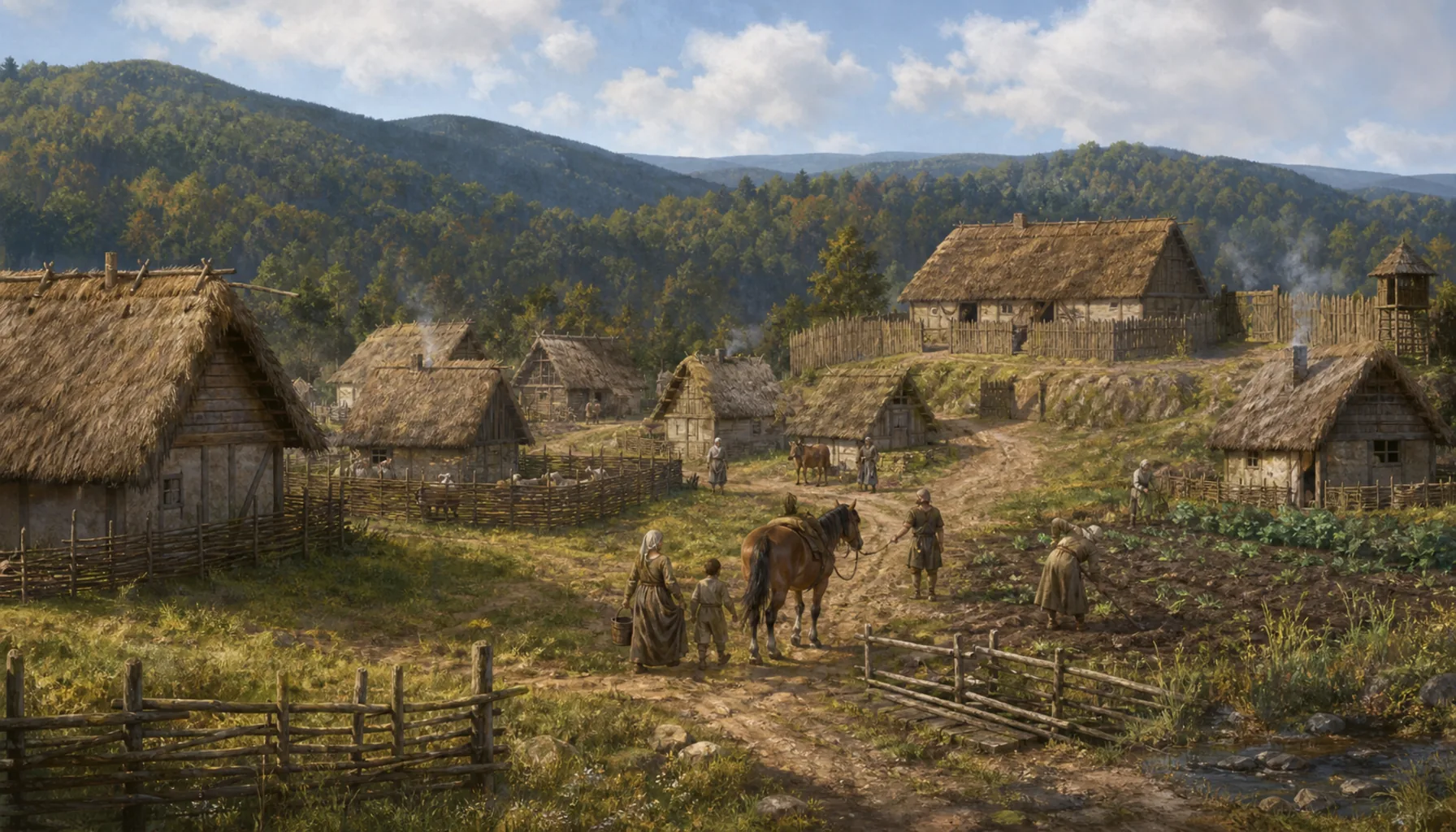
The village itself first appears in writing in 1296, under names a modern reader would not recognise: Vereskw and Chezthey, then Chastuc and Chastue in the papal tithe registers of 1332–37, then Sathmansdorf in 1390 and Sathmania in 1466. A first written mention is a fact about a document that happened to survive, not about when people arrived — the settlement is older than the oldest charter naming it. By the second half of the thirteenth century Častá had been attached to the Červený Kameň estate as a subject village: its people were not slaves, but they held their fields and vines from the lord of the castle and paid for them in labour and in a share of the harvest. The German name in the fourteenth-century documents is a clue to something else again — German settlers were being brought into the wine country all along this foot of the hills.Samotná dedina sa prvý raz spomína v roku 1296, a to pod menami, ktoré by dnešný čitateľ neuhádol: Vereskw a Chezthey, potom Chastuc a Chastue v pápežských desiatkových registroch z rokov 1332 – 1337, ďalej Sathmansdorf (1390) a Sathmania (1466). Prvá písomná zmienka je údaj o listine, ktorá sa náhodou zachovala, nie o tom, kedy sem prišli ľudia – osada je staršia než najstaršia listina, čo ju menuje. V druhej polovici 13. storočia sa Častá stala poddanskou obcou panstva Červený Kameň: jej obyvatelia neboli otroci, ale polia a vinice držali od hradného pána a platili za ne robotou a podielom z úrody. Nemecké meno v listinách 14. storočia prezrádza zase čosi iné – po celom tomto úpätí sa vtedy do vinohradníckeho kraja privádzali nemeckí osadníci.