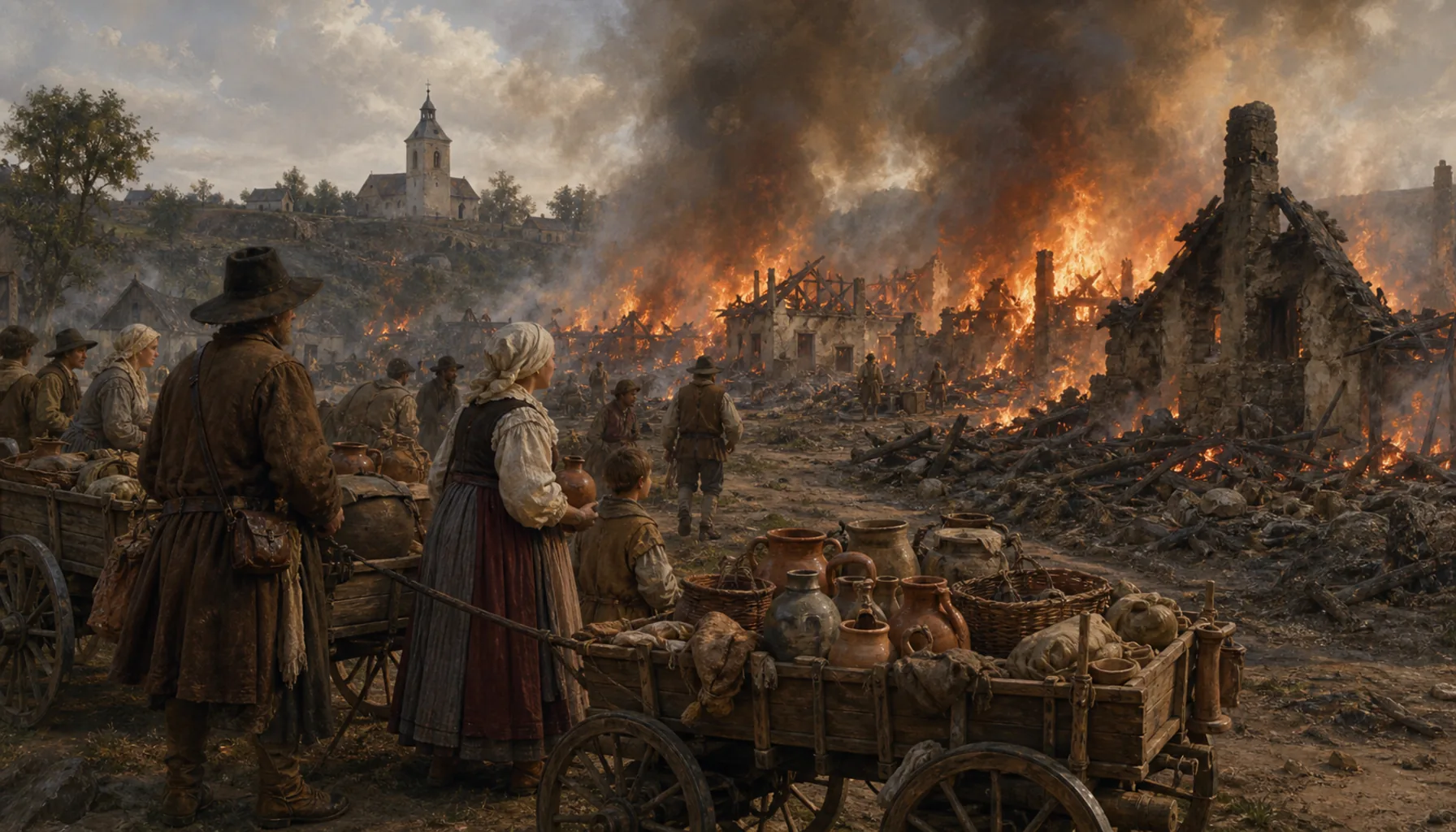
In 1644 a fire burned down nearly every house in the village. What was rebuilt was a craft town as much as a farming one: a coopers' guild is recorded here in the sixteenth century, and in the seventeenth a tailors' guild, a shoemakers' guild and a guild of Haban potters. The Habans were German-speaking Anabaptist refugees driven out of Moravia in the 1620s, who lived in communal households and made the blue-and-white tin-glazed pottery that Hungarian nobles wanted; landlords took them in for their skill, not their faith. Gold and silver were being mined in the hills above the village in 1674. This is also the century of Thököly's and then Rákóczi's uprisings against the Habsburgs, when armies crossed western Slovakia again and again — but the Pálffys were on the emperor's side, and Červený Kameň stayed in their hands throughout.V roku 1644 zhorela takmer celá dedina. To, čo vyrástlo znova, bolo remeselnícke mestečko nielen roľnícka obec: v 16. storočí je tu doložený debnársky cech, v 17. storočí cech krajčírov, obuvníkov a habánskych hrnčiarov. Habáni boli nemecky hovoriaci novokrstenci, ktorých v dvadsiatych rokoch 17. storočia vyhnali z Moravy; žili v spoločných dvoroch a robili modro-bielu fajansu, po ktorej uhorská šľachta túžila – zemepáni ich prijímali pre remeslo, nie pre vieru. V roku 1674 sa v kopcoch nad obcou dolovalo zlato a striebro. Je to aj storočie thökölyovského a potom rákociovského povstania proti Habsburgovcom, keď západným Slovenskom znova a znova prechádzali vojská – Pálfiovci však stáli na cisárskej strane a Červený Kameň im po celý čas zostal.