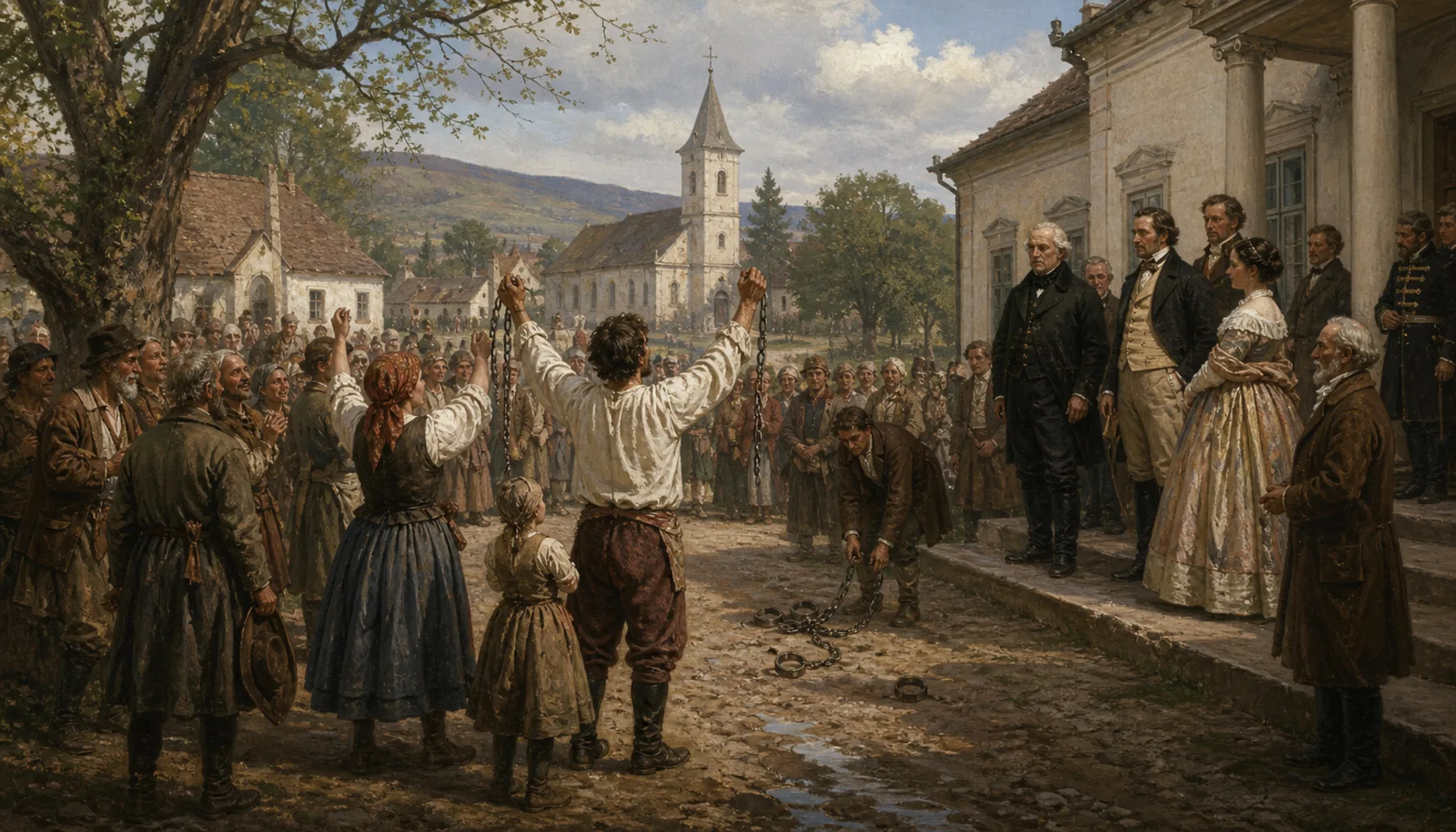
In 1848 the Hungarian diet abolished serfdom, and a legal tie six hundred years old was cut in a single session. Until then a Častá family held its strip of vineyard and field from the lord of Červený Kameň and paid for it in robota — unpaid labour days — and in a share of the harvest written down in the estate's register, the urbár. After 1848 the land was theirs outright. What followed across Hungary was decades of argument and lawsuits about everything else: which woods and pastures had been common and which belonged to the lord, and the Pálffys kept the forests and the castle. It is the most important date in the village's history that has nothing to do with a building.V roku 1848 zrušil uhorský snem poddanstvo a šesťsto rokov staré právne puto padlo na jedinom zasadnutí. Dovtedy držala častianska rodina svoj diel vinice a poľa od pána Červeného Kameňa a platila zaň robotou – neplatenými pracovnými dňami – a podielom z úrody, ktorý určoval panský súpis, urbár. Po roku 1848 bola tá pôda ich. V celom Uhorsku potom nasledovali desaťročia sporov o všetko ostatné: ktoré lesy a pasienky boli obecné a ktoré panské – a Pálfiovci si lesy aj hrad udržali. Je to najdôležitejší dátum v dejinách obce, ktorý sa netýka nijakej stavby.