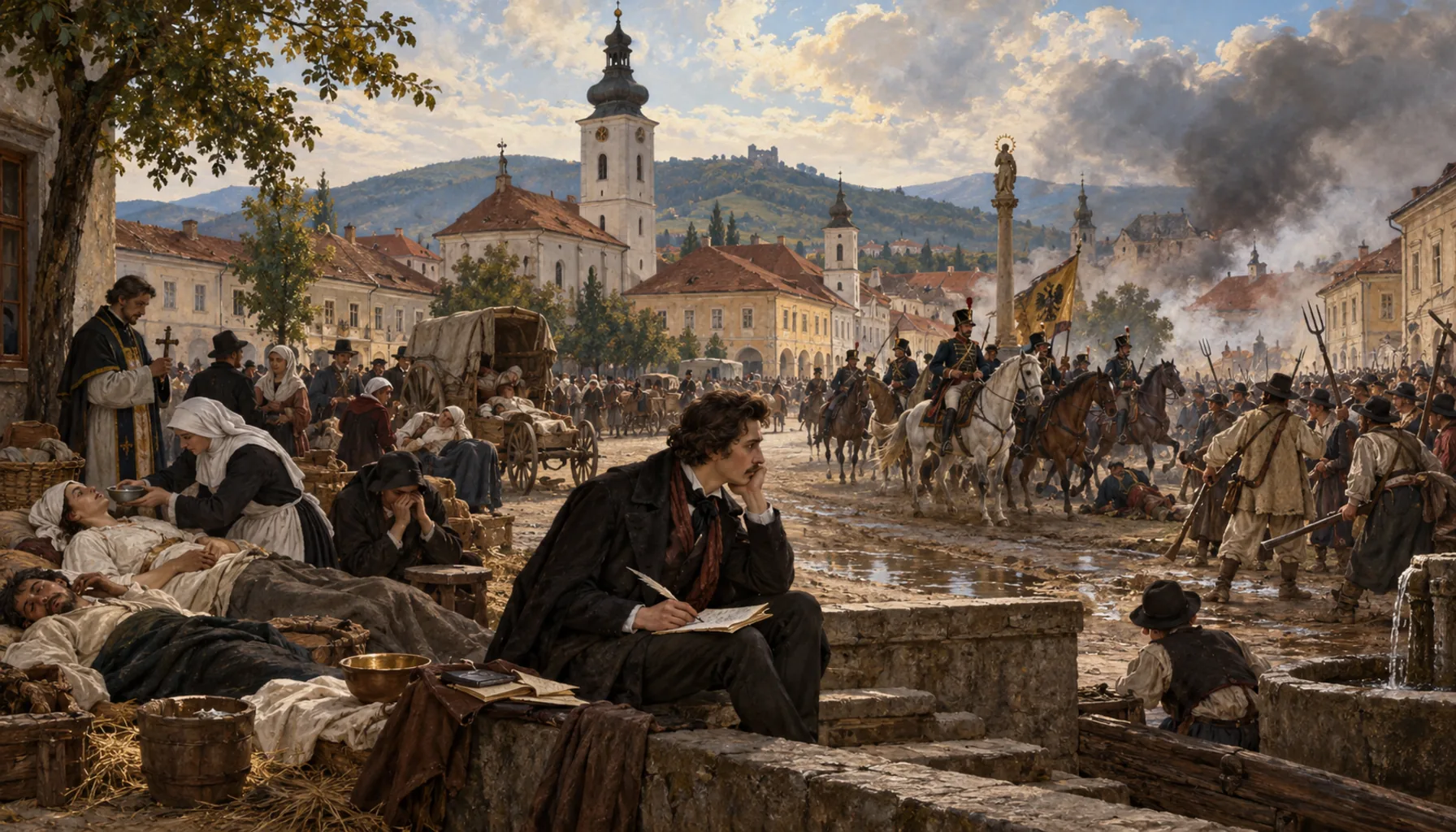
Cholera struck the town in 1831, in the same epidemic that set off a peasant uprising across the counties of north-eastern Hungary. In 1845 the townspeople elected the poet Sándor Petőfi their honorary judge — an honour rather than a job, but it tells you which way the town was leaning. In the revolution of 1848–49 Rimavská Sobota changed hands repeatedly between Hungarian, Slovak and Russian forces, and in July 1849 the Hungarian commander Artúr Görgey negotiated here with the Russians, shortly before the surrender that ended the war.Roku 1831 zasiahla mesto cholera — tá istá epidémia, ktorá vyvolala sedliacke povstanie v stoliciach severovýchodného Uhorska. Roku 1845 si mešťania zvolili básnika Sándora Petőfiho za čestného richtára; bola to pocta, nie úrad, no prezrádza, na ktorú stranu sa mesto klonilo. V revolúcii rokov 1848 – 1849 sa Rimavská Sobota opakovane striedala v rukách maďarských, slovenských a ruských vojsk a v júli 1849 tu maďarský veliteľ Artúr Görgey rokoval s Rusmi, krátko predtým, ako kapituláciou vojnu ukončil.