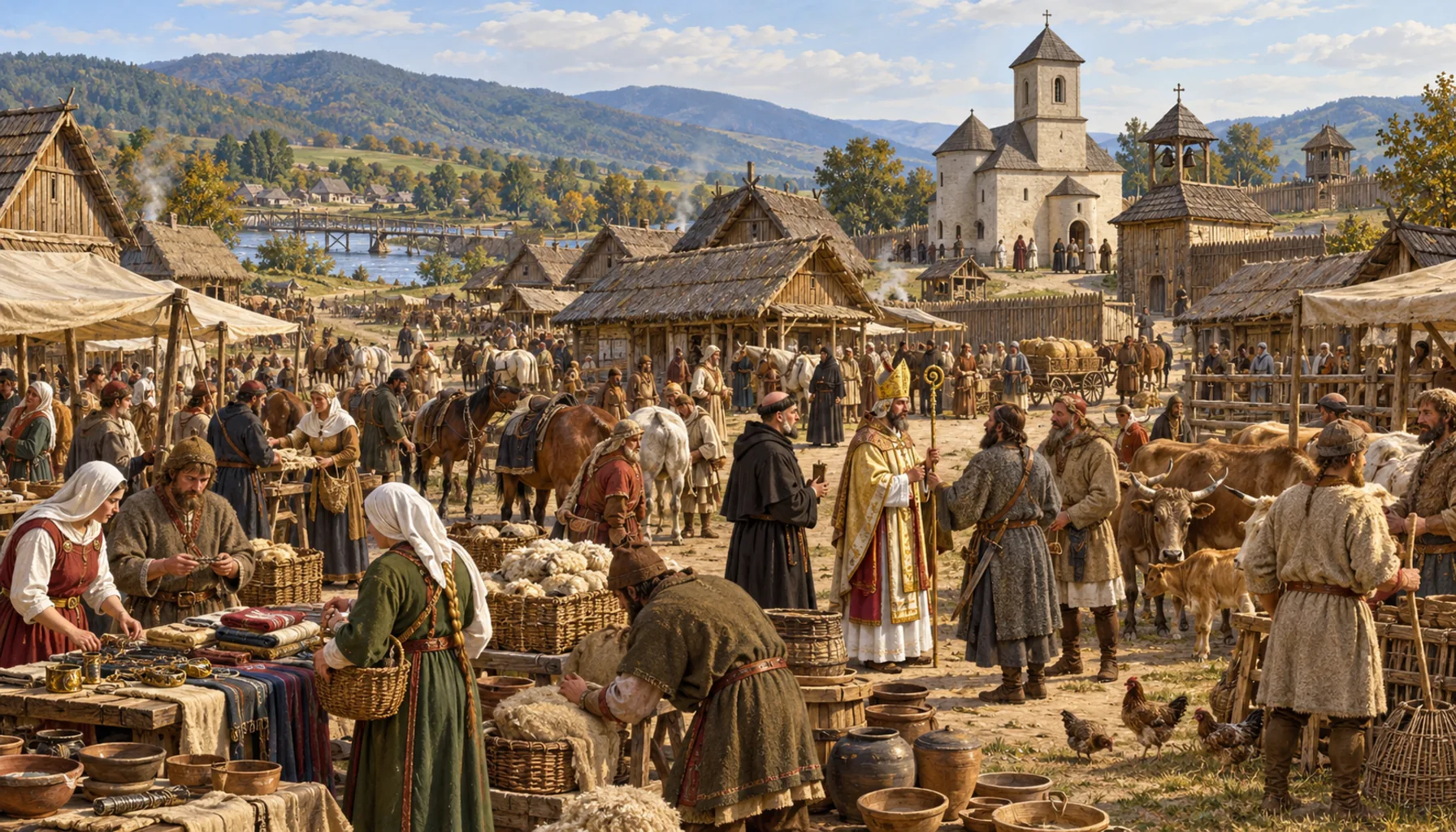
Hungarian settlement reached this country in the tenth and eleventh centuries, and the Rimava valley ended up not in a warrior's hands but in a churchman's: the estate belonged to the Archbishop of Kalocsa, one of the two archbishops of the Hungarian kingdom. That is unusual, and it shaped everything. A church landlord wanted rents and market dues rather than a garrison, so what grew here was a market rather than a fortress — and the market day, Saturday, ended up in the town's name and has stayed there for seven hundred years.Uhorské osídlenie sem dorazilo v desiatom a jedenástom storočí a údolie Rimavy neskončilo v rukách bojovníka, ale cirkevného hodnostára: panstvo patrilo kaločskému arcibiskupovi, jednému z dvoch arcibiskupov Uhorského kráľovstva. To je nezvyčajné a rozhodlo to o všetkom ostatnom. Cirkevný zemepán chcel nájmy a trhové poplatky, nie posádku — vyrástol tu teda trh, a nie pevnosť. A trhový deň, sobota, ostal mestu v mene a drží sa v ňom sedemsto rokov.