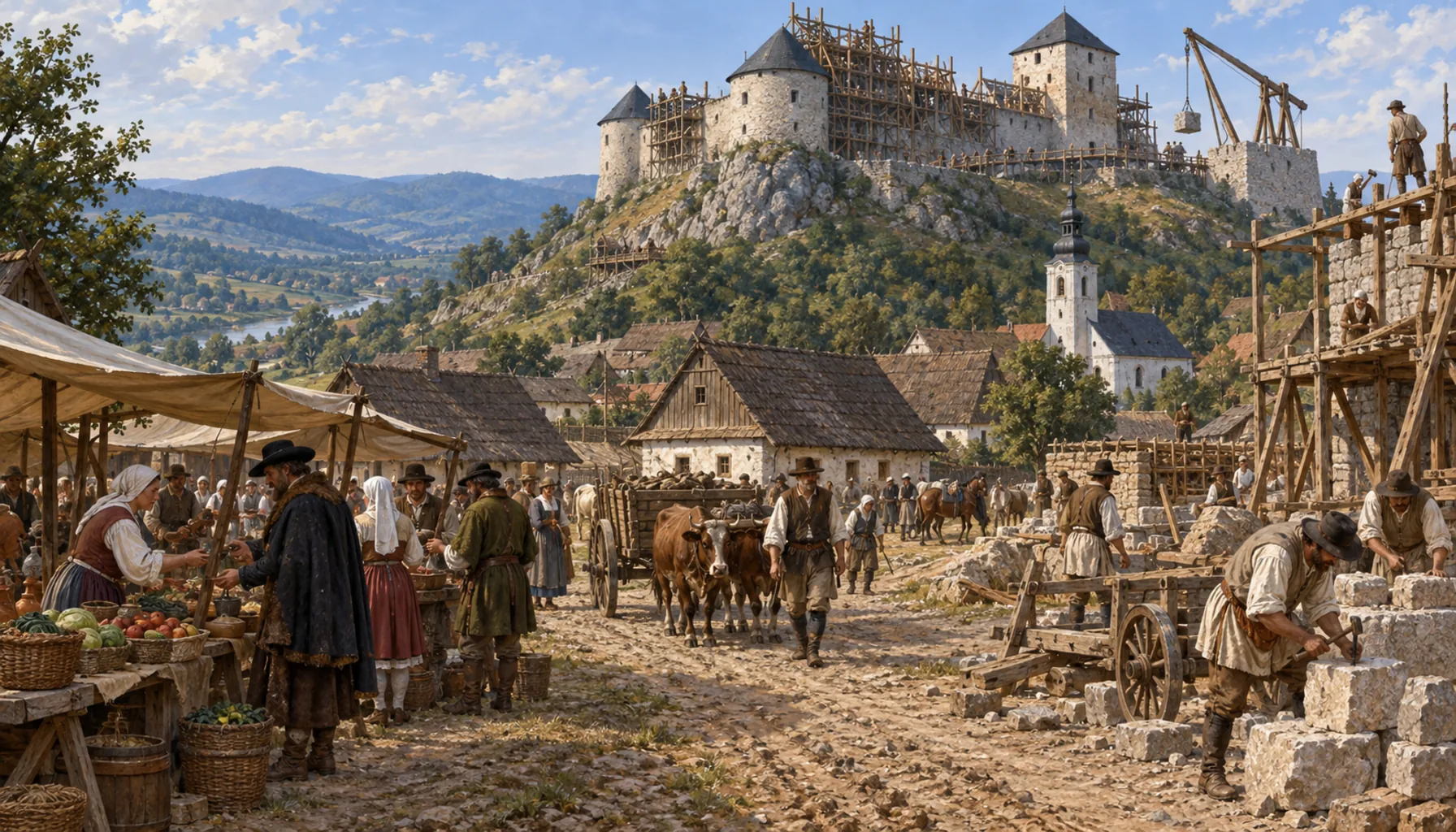
Once the frontier had been pushed back south, the Balassa rebuilt the castle and refilled the village beneath it between about 1609 and 1612 — landlords needed tenants, and an empty estate earned nothing. In 1658 the emperor granted the place market rights, which turned it from a village into an oppidum, a market town: it could hold fairs, its craftsmen could sell openly, and money came in from the countryside around. That was the high point for a long time. The middle of the seventeenth century emptied the town again, and it took generations to recover.Keď sa hranica posunula späť na juh, Balašovci hrad obnovili a dedinu pod ním medzi rokmi 1609 a 1612 znova zaľudnili — zemepán potreboval poddaných a prázdne panstvo nevynášalo nič. Roku 1658 udelil cisár mestečku trhové právo, čím sa z dediny stalo zemepanské mestečko: mohlo držať jarmoky, remeselníci mohli otvorene predávať a z okolitého vidieka sa sem sťahovali peniaze. Nadlho to bol vrchol. Polovica 17. storočia mestečko opäť vyprázdnila a spamätúvalo sa z toho celé generácie.