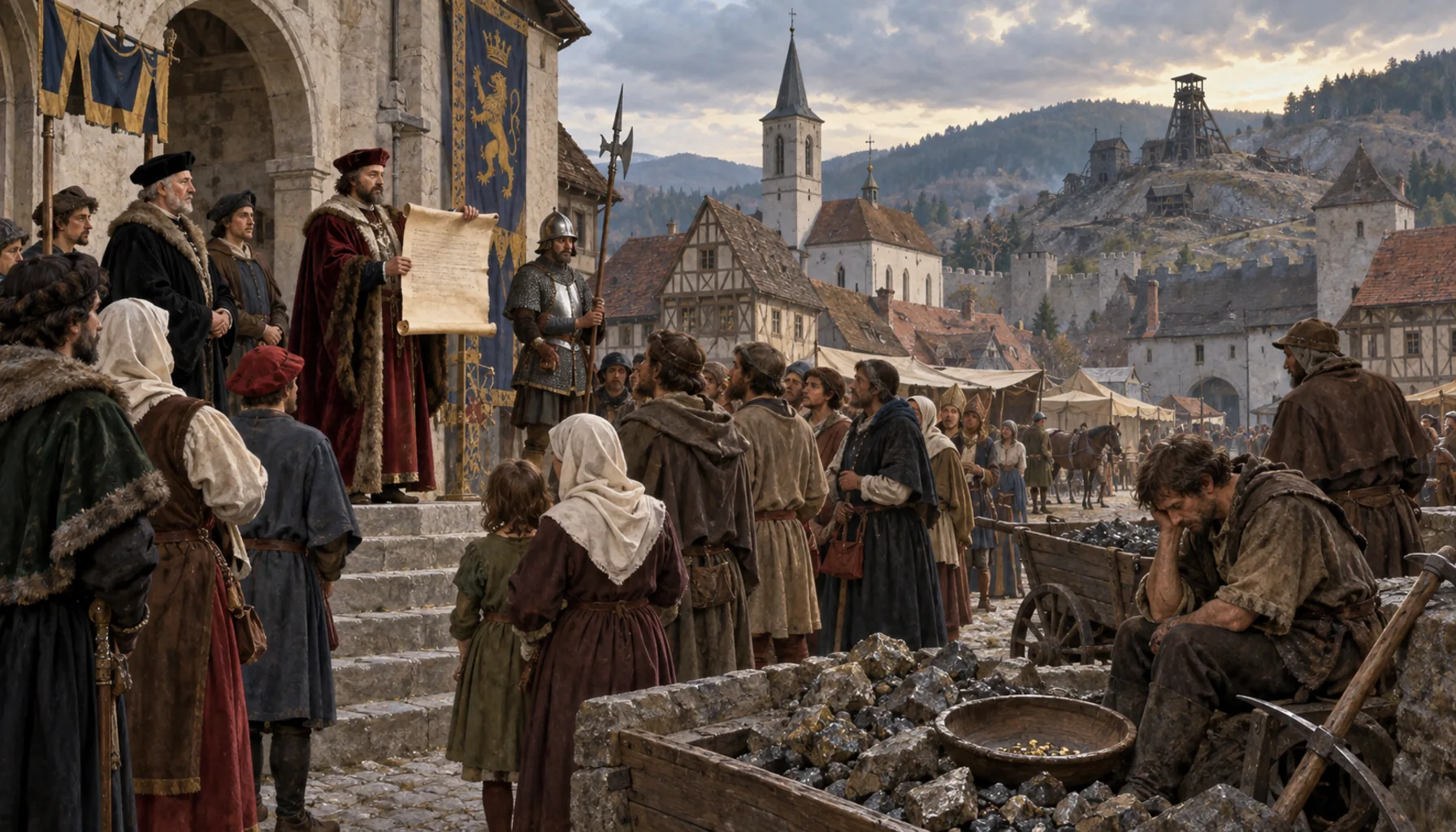
Krupina's charter grew into a legal code of its own. The Krupina law, built on the German Magdeburg model, set out how a town elected its council, ran its own court and settled inheritance — and it was taken as the model by a string of towns across central and northern Slovakia. That is Krupina's biggest export. Meanwhile the thing the town had been founded on ran out: the gold and silver in the ground were worked through during the fourteenth century, and Krupina turned to crafts, markets and farming instead. It received market rights in 1393. It never got rich the way Banská Štiavnica did, but it kept its charter and its independence.Z krupinskej listiny vyrástol vlastný právny poriadok. Krupinské právo, postavené na nemeckom magdeburskom vzore, určovalo, ako si mesto volí radu, ako súdi vlastných ľudí a ako sa dedí — a preberala ho celá skupina miest na strednom a severnom Slovensku. To je najväčší krupinský vývozný artikel. Medzitým sa minulo to, na čom mesto vzniklo: zlato a striebro v zemi sa počas 14. storočia vyťažili a Krupina prešla na remeslá, trhy a poľnohospodárstvo. Roku 1393 dostala trhové právo. Nikdy nezbohatla tak ako Banská Štiavnica, ale udržala si listinu aj samostatnosť.