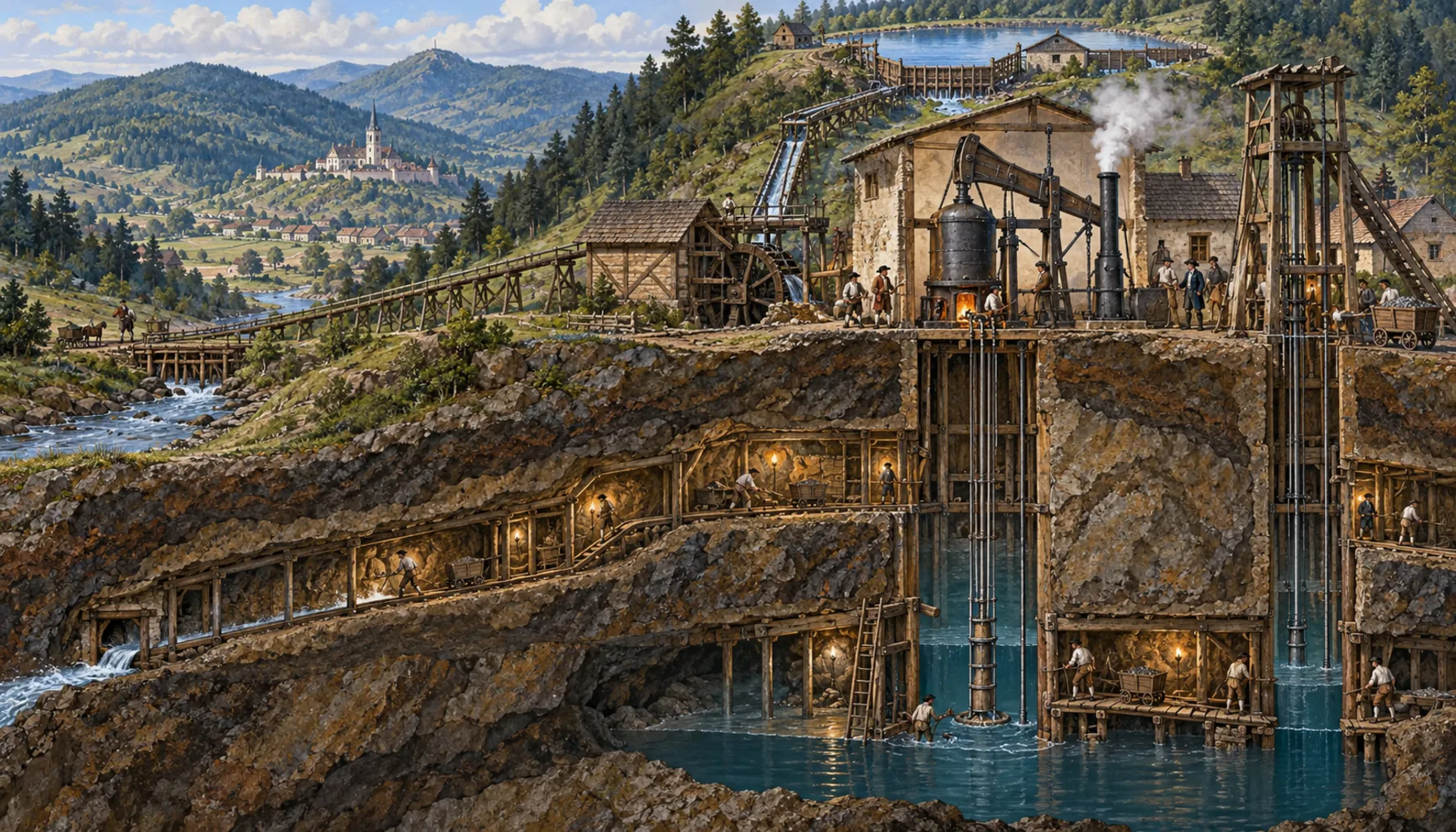
The deeper the shafts went, the more water stood in them, and the whole mining region spent the eighteenth century fighting it: long drainage adits driven out into the valleys, ponds built high in the hills to store water power, and in 1722, at Nová Baňa, the first working steam engine on the European mainland. The mint modernised too. Kremnica introduced the screw press, which stamped a coin with one swing of a heavy weighted arm, and Prague and Vienna copied it afterwards; from 1785 the presses were belt-driven. The plague column that still stands on the square was built between 1765 and 1772 — a vow in stone, of the kind put up all over central Europe after an epidemic.Čím hlbšie šachty klesali, tým viac vody v nich stálo, a celá banská oblasť s ňou v osemnástom storočí zápasila: razili sa dlhé dedičné štôlne von do dolín, vysoko v kopcoch sa stavali tajchy na zásobu vodnej sily a v roku 1722 spustili v Novej Bani prvý fungujúci parný stroj na európskej pevnine. Modernizovala sa aj mincovňa. Kremnica zaviedla balanciér, vretenový lis, ktorý razil mincu jediným rozhojdaním ťažkého ramena, a Praha aj Viedeň ho po nej prevzali; od roku 1785 poháňali lisy remene. Morový stĺp, ktorý na námestí stojí dodnes, postavili v rokoch 1765 až 1772 — kamenný sľub, aké sa po epidémiách stavali po celej strednej Európe.