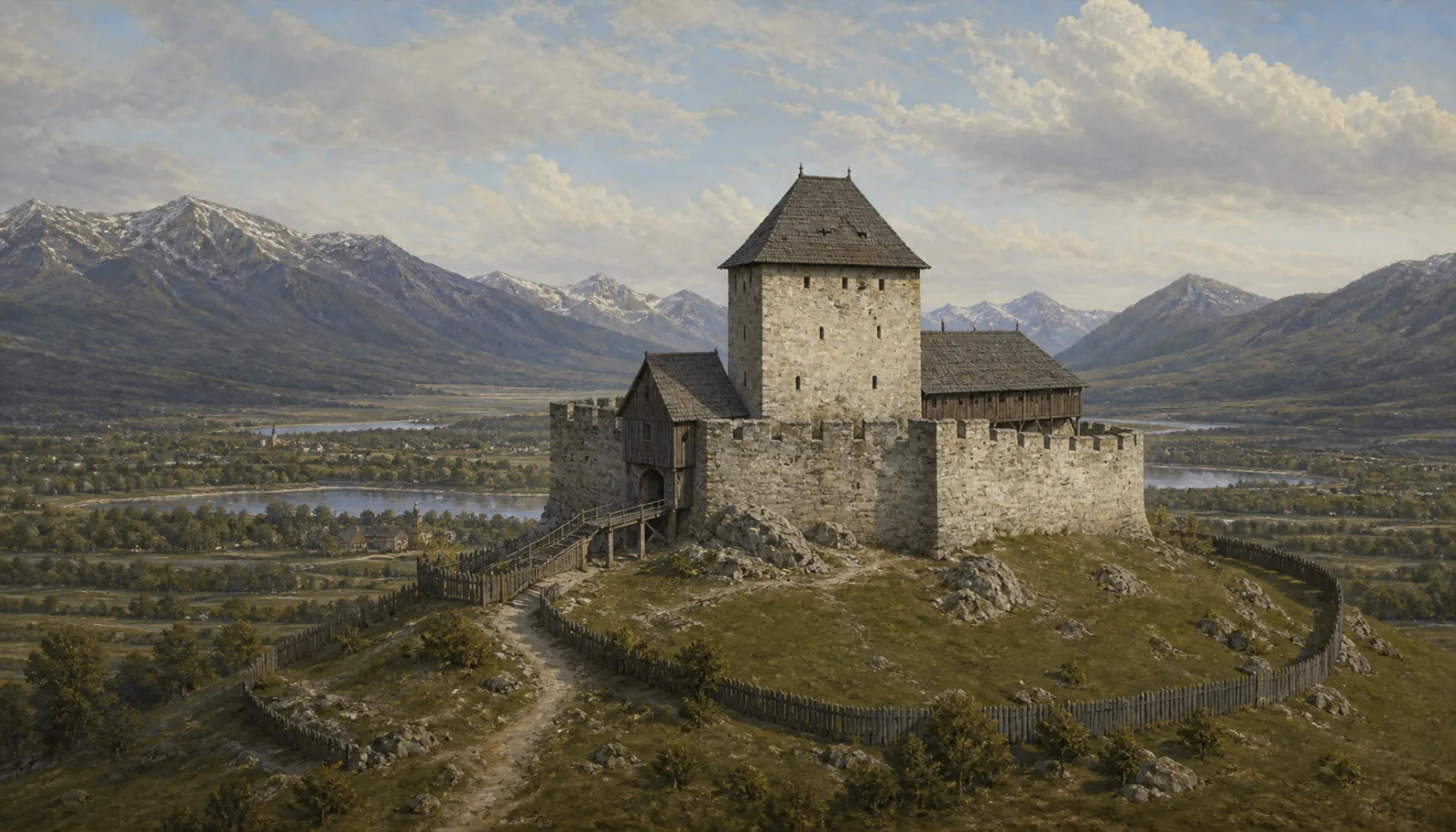
The first documented mention of the castle is from 1341, and it names the builder: Master Donč, a great royal officer of his day. From that year the castle was royal property and became the new seat of the Liptov county. It sits on a narrow rock spur at the meeting of the Váh and the Belá, originally ringed by a water moat — the lake beside it is what is left of it — and its job was to hold the link between the Váh valley and the Spiš region to the east. Here is the thing worth noticing. Most Slovak stone castles were built because of the Mongol invasion of 1241, in the decades after it, when King Béla IV decided that earth and timber were worthless. This one is a full century later still, and it answers a different need: not an invasion, but the everyday business of holding a road and running a county. Its name says its size — hrádok means a small castle.Prvá doložená zmienka o hrade je z roku 1341 a menuje aj staviteľa: magistra Donča, veľkého kráľovského úradníka svojej doby. Od toho roku bol hrad kráľovským majetkom a stal sa novým sídlom Liptovskej stolice. Stojí na úzkom skalnom výbežku pri sútoku Váhu a Belej, pôvodne obohnaný vodnou priekopou — jazierko vedľa neho je to, čo z nej ostalo — a jeho úlohou bolo strážiť spojnicu Považia so Spišom. A teraz to podstatné. Väčšina slovenských kamenných hradov vznikla pre vpád Mongolov v roku 1241, v desaťročiach po ňom, keď kráľ Belo IV. usúdil, že hlina a drevo sú na nič. Tento je ešte o celé storočie mladší a odpovedá na inú potrebu: nie na vpád, ale na každodennú vec — udržať cestu a spravovať stolicu. Jeho meno hovorí o jeho veľkosti: hrádok je malý hrad.