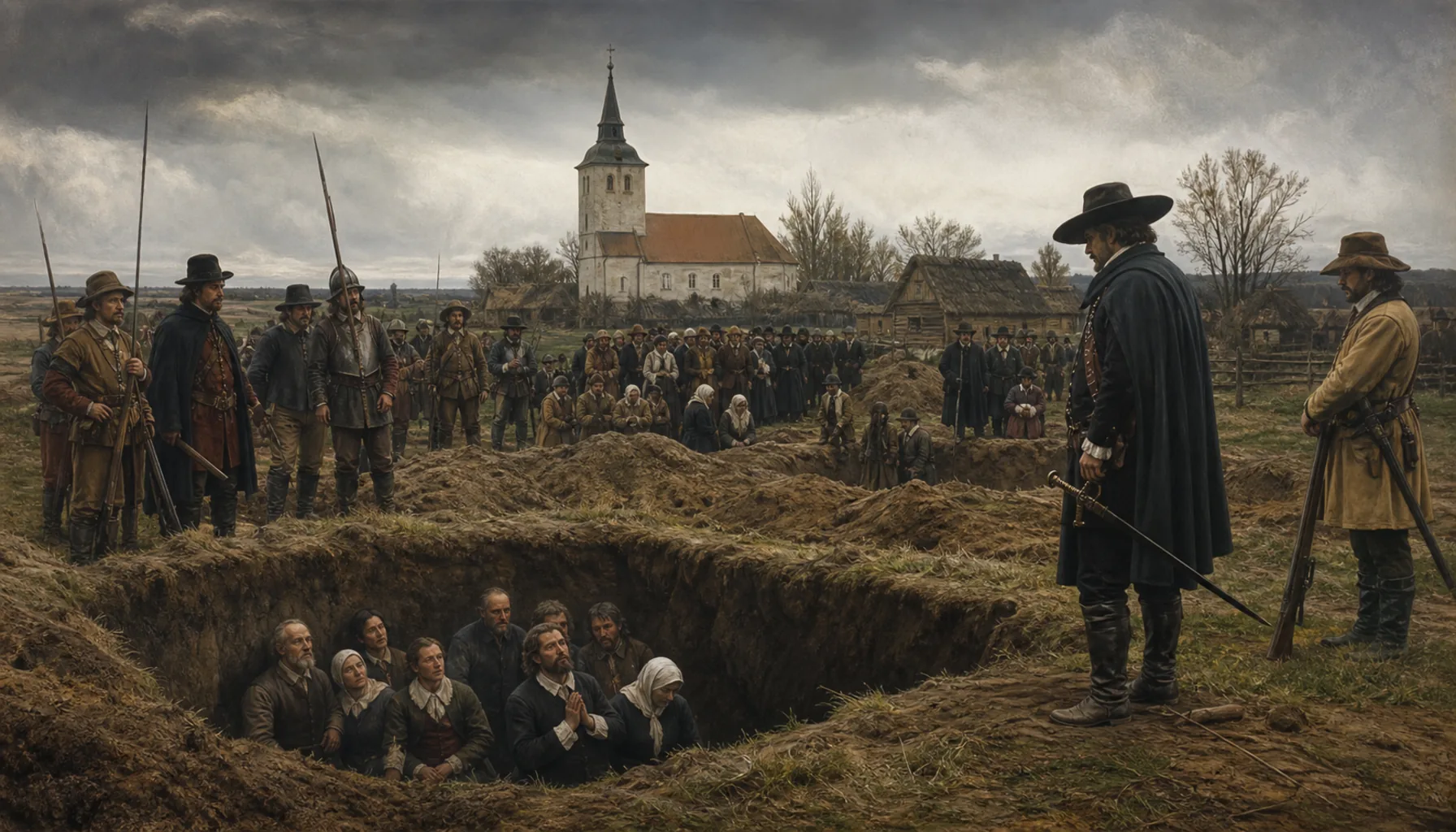
In the 1670s Emperor Leopold I moved hard against the Protestant churches of Hungary. Extraordinary courts sitting at Pressburg in 1673 and 1674 summoned hundreds of Lutheran and Calvinist pastors and teachers; those who would neither convert nor go into exile were marched across Europe and sold as galley slaves at Naples in 1675. This was not distant news here: at Branč, the castle in the hills above Senica, Protestant clergy were imprisoned in the castle pits under its last lord, František Ňári, and some of them died there. Forty years of revolt against Vienna followed, and Záhorie lay on the road the armies used.V sedemdesiatych rokoch 17. storočia tvrdo zakročil cisár Leopold I. proti protestantským cirkvám v Uhorsku. Mimoriadne súdy v Bratislave v rokoch 1673 a 1674 predvolali stovky evanjelických a kalvínskych kňazov a učiteľov; tých, čo nechceli konvertovať ani odísť do vyhnanstva, hnali cez Európu a v roku 1675 ich v Neapole predali na galeje. Tu to nebola správa z diaľky: na Branči, hrade v kopcoch nad Senicou, dal jeho posledný pán František Ňári väzniť protestantských duchovných v hradných hladomorniach a niektorí v nich zomreli. Nasledovalo štyridsať rokov povstaní proti Viedni a Záhorie ležalo na ceste, ktorou chodili vojská.