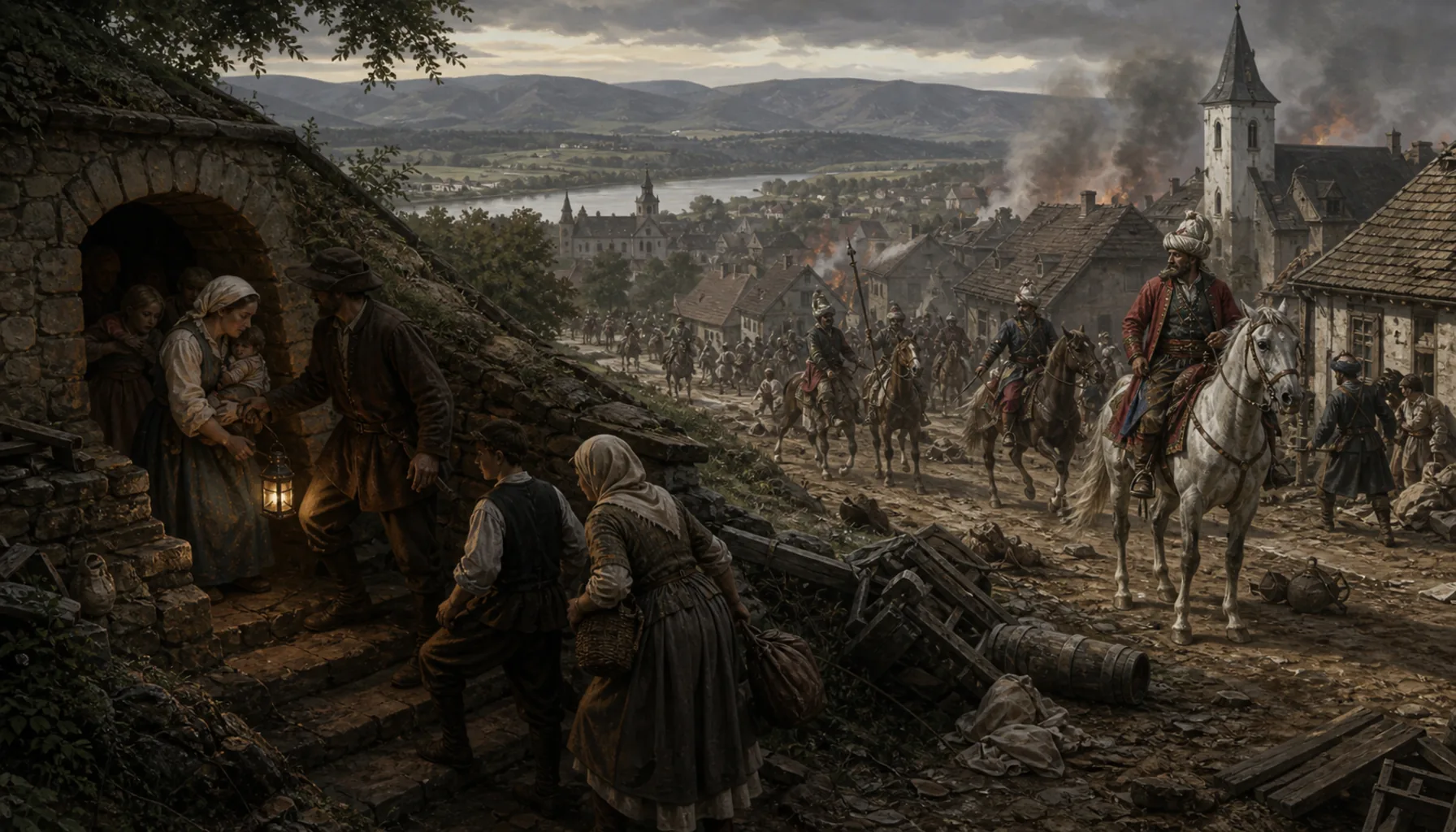
In 1663 the Ottomans came up the Váh again and plundered the valley as far as Moravia. The scholar Matej Bel later wrote that nobody could establish how many people of Nové Mesto ended in Turkish captivity; those who survived were the ones who got underground. Beneath the old centre of this town runs a system of multi-storey cellars and passages twenty to thirty metres deep, linking house to house and leading out beyond the walls — that is what they were for. A generation later, during the Rákóczi uprising, the imperial general Schlik had a house set alight because its guests had insulted his Germans, and most of the town burned with it; when Rákóczi's men took the town in 1703 he compensated the citizens by freeing them from taxes.Roku 1663 sa Turci znova objavili na Považí a vyplienili údolie Váhu až po Moravu. Učenec Matej Bel neskôr napísal, že sa nedá zistiť, koľko Novomešťanov skončilo v tureckom zajatí; prežili tí, čo sa stihli dostať pod zem. Pod starým jadrom mesta vedie sústava viacpodlažných pivníc a chodieb hlbokých dvadsať až tridsať metrov, ktoré spájajú dom s domom a vedú až za hradby — presne na toto slúžili. O generáciu neskôr, počas Rákociho povstania, dal cisársky generál Schlik podpáliť dom, ktorého hostia nadávali na jeho Nemcov, a s ním zhorela väčšina mesta; keď roku 1703 mesto obsadili Rákociho vojská, odškodnil mešťanov odpustením daní.