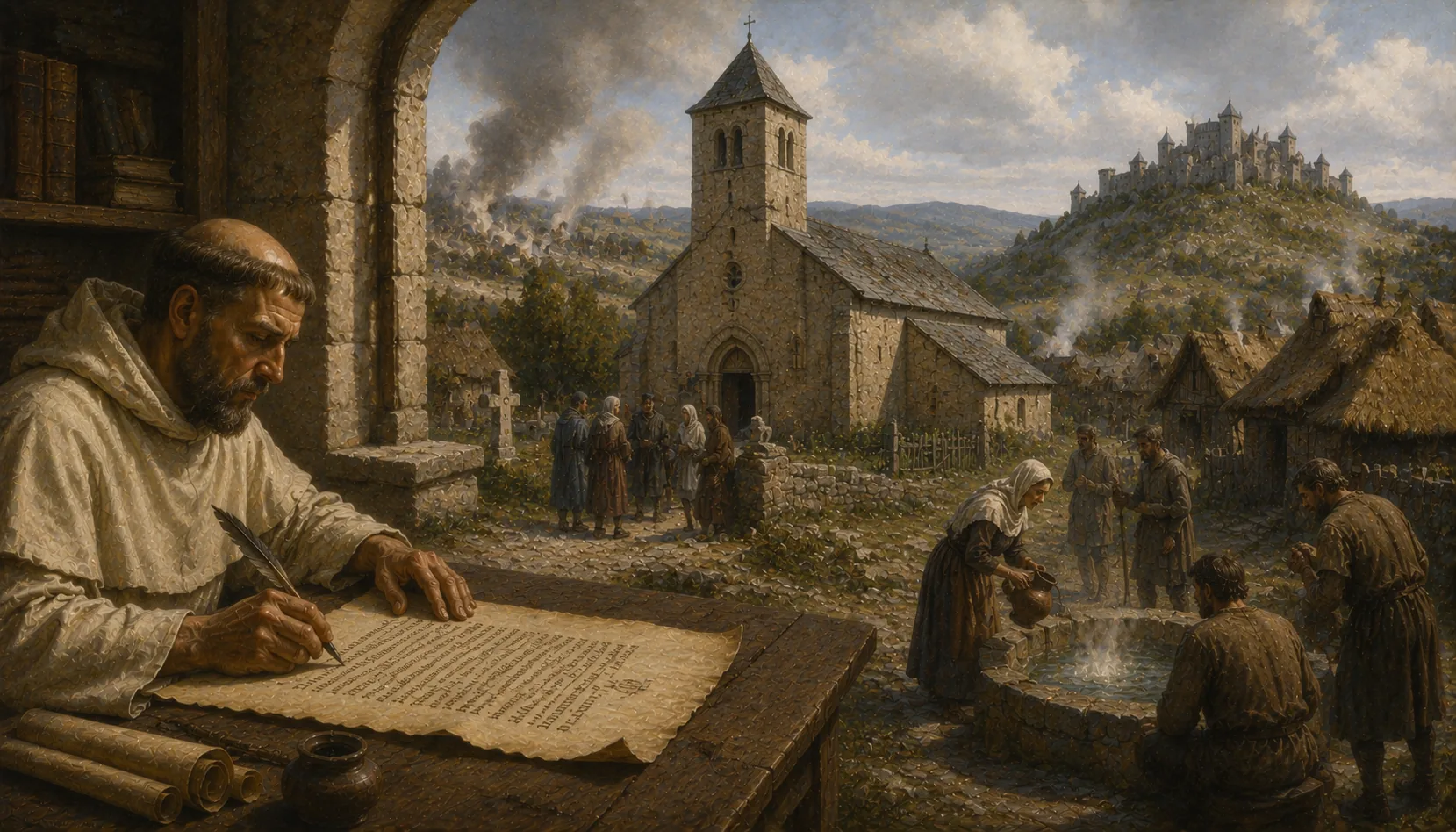
A church is documented at Bojnice by 1244, three years after the Mongol invasion had swept the kingdom — the kind of detail that shows a settlement carrying on rather than starting again from nothing. Thirteenth-century documents also mention the hot springs, which means people were using the warm water here at least eight hundred years ago, long before anyone called it a spa. Nothing records the Mongols burning Bojnice. What the invasion changed here, as everywhere, was the castle above the village: wood gave way to stone.Kostol je v Bojniciach doložený do roku 1244, teda tri roky po tom, čo krajinou prešiel mongolský vpád — taký údaj skôr ukazuje sídlo, ktoré pokračuje, než sídlo, ktoré začína od nuly. Listiny 13. storočia spomínajú aj teplé pramene, čo znamená, že sa tunajšia teplá voda využívala prinajmenšom pred ôsmimi storočiami, dávno predtým, než jej niekto povedal kúpele. Nikde nie je zapísané, že by Mongoli Bojnice vypálili. Vpád tu, ako všade, zmenil predovšetkým hrad nad dedinou: drevo ustúpilo kameňu.