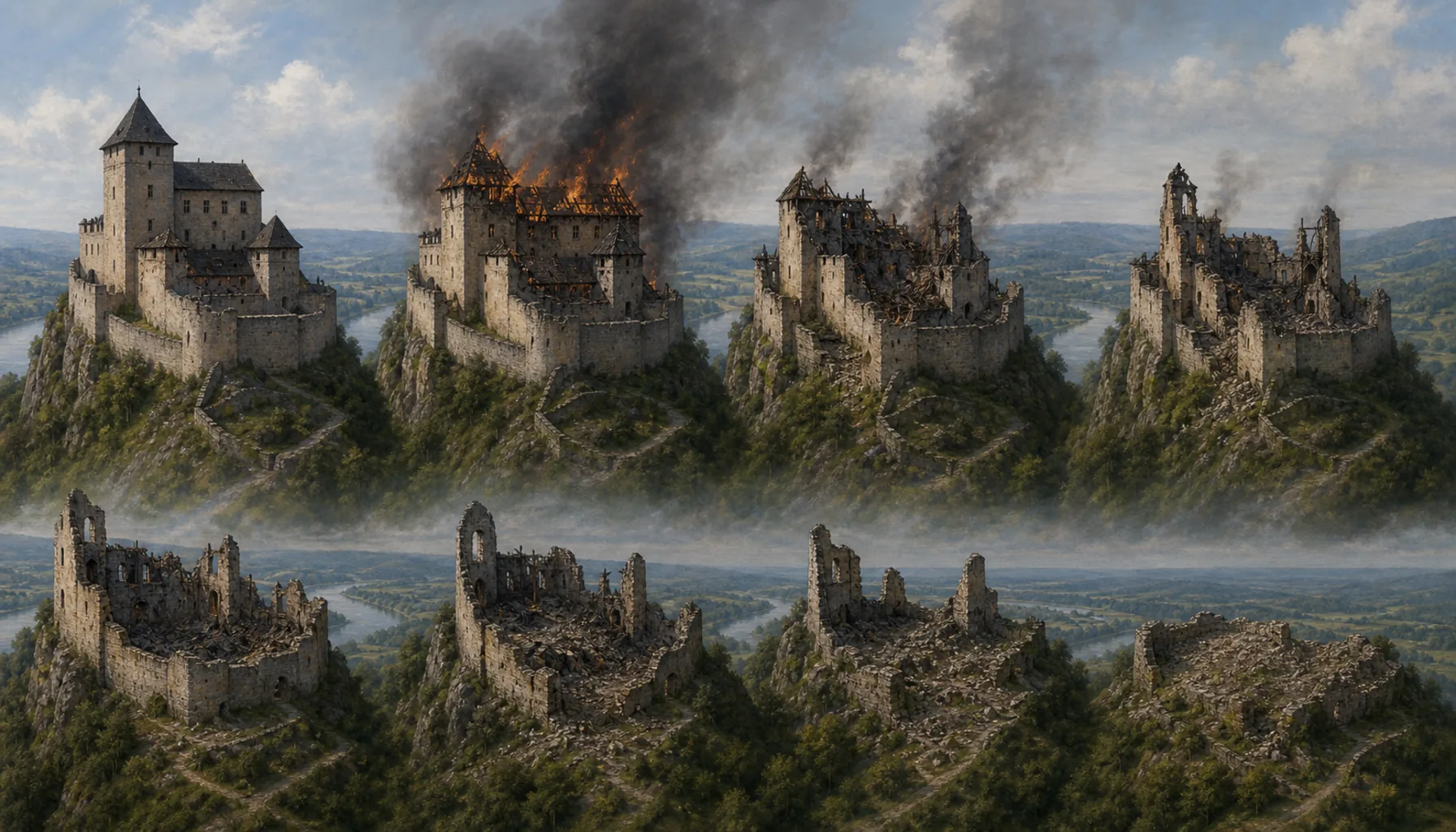
A burned castle does not fall down at once; it comes apart in a predictable order. First the roofs go, then rain gets into the floors and they go, then the tops of the walls open up and frost takes them apart course by course. That is what happened here through the eighteenth century, while the estate went on being run perfectly well from the manor house below. Rákóczi's insurgents attacked the town again in 1707, but by then the ridge held nothing worth attacking. This is the ordinary end of a Slovak castle — not a siege, but two hundred years of weather and nobody's interest.Vypálený hrad nespadne naraz; rozpadáva sa v predvídateľnom poradí. Najprv zmiznú strechy, potom sa do stropov dostane dážď a zmiznú aj tie, napokon sa otvoria vrchy múrov a mráz ich rozoberie vrstvu po vrstve. Presne to sa tu dialo počas 18. storočia, kým panstvo úplne pokojne spravovali z kaštieľa pod kopcom. Roku 1707 napadli mesto Rákociho povstalci, no na hrebeni už nebolo čo dobývať. Toto je obyčajný koniec slovenského hradu — nie obliehanie, ale dvesto rokov počasia a ničieho záujmu.