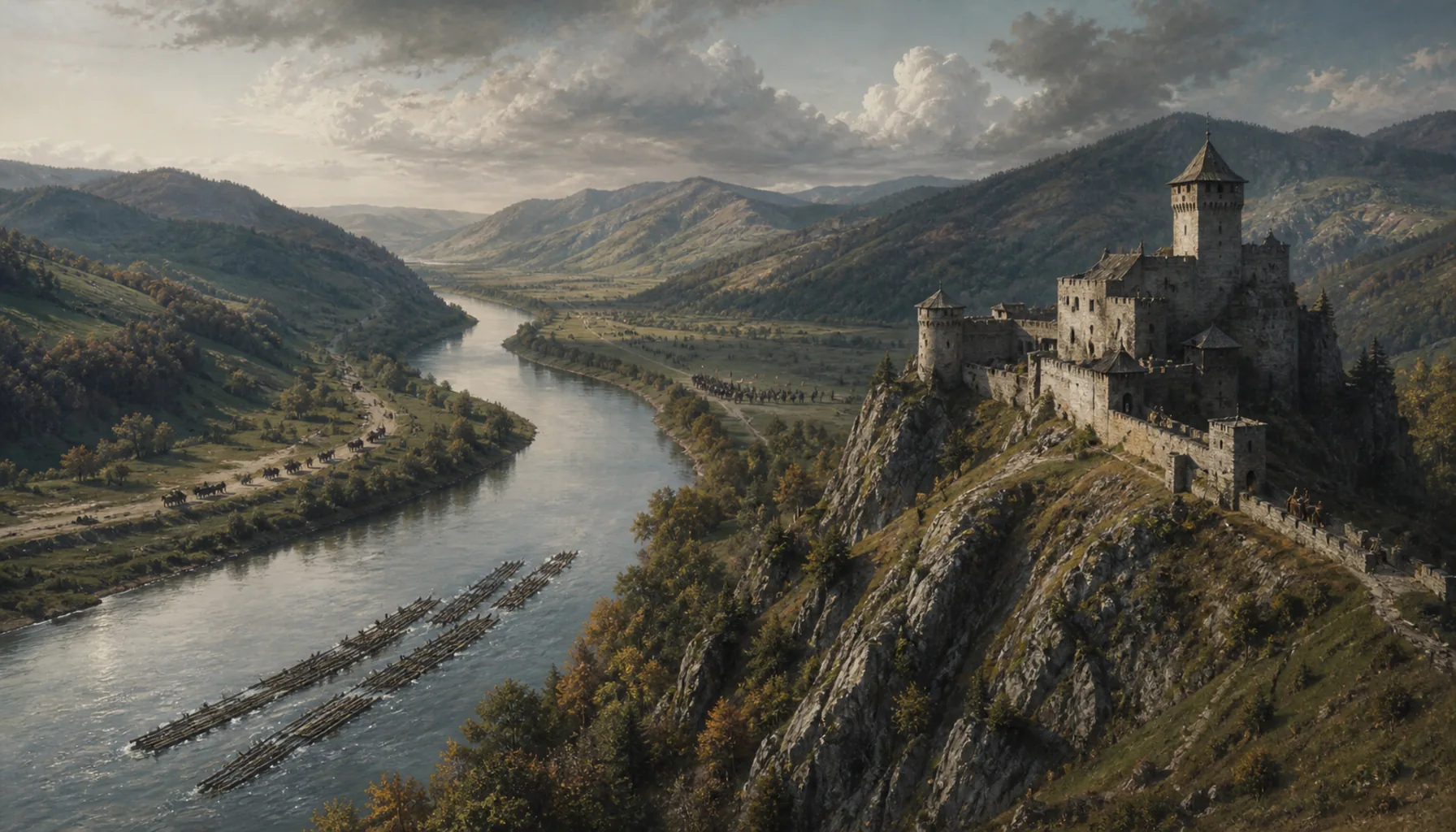
The Váh valley is the natural corridor north through the western Carpathians — for centuries the only sensible way to move an army, a merchant train or a timber raft through this country — and whoever held the heights above it controlled who passed. No document says exactly when a castle was built here; an old and unverified tradition puts it as early as 1128, and the first secure mention is 1316. What is certain is the pattern it belongs to. After a Mongol army destroyed the royal army of Hungary in 1241, King Béla IV drove a programme of stone castle building across the kingdom, and the chain of stone castles along the Váh, from Trenčín northwards, took the shape we know in the century that followed.Dolina Váhu je prirodzený koridor na sever cez Západné Karpaty — po stáročia jediná rozumná trasa, po ktorej sa dalo týmto krajom pohnúť vojskom, kupeckou karavánou či pltou — a kto držal výšiny nad ňou, ten rozhodoval, kto prejde. Nijaká listina nehovorí, kedy presne tu hrad postavili; stará a neoverená tradícia ho kladie už do roku 1128 a prvá bezpečná zmienka je z roku 1316. Isté je to, do akého vzorca patrí. Keď roku 1241 mongolské vojsko rozdrvilo uhorskú kráľovskú armádu, Belo IV. rozbehol v celom kráľovstve program stavby kamenných hradov a reťaz hradov pozdĺž Váhu, od Trenčína na sever, dostala v nasledujúcom storočí podobu, ktorú poznáme.