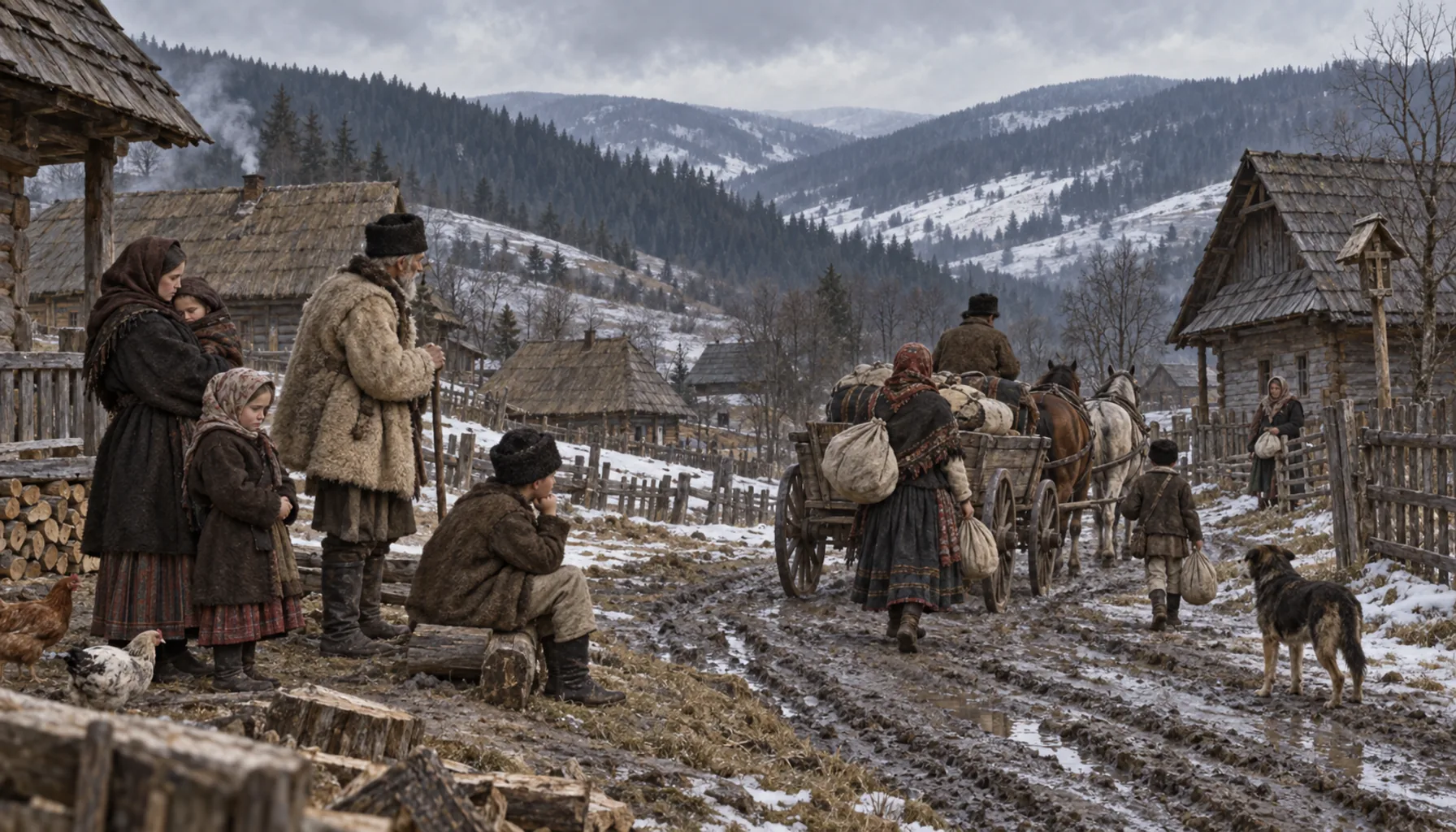
Under Austria-Hungary the Rusyn villages of the far east were among the poorest places in the kingdom: no industry, no railway, thin soil and long winters. The answer, from the 1880s onwards, was emigration — to the mines and steel mills of the United States. The scale is easy to underestimate: in nearby Snina in 1910, 466 of the town's 2,939 inhabitants were already abroad, roughly one person in six. Money sent home from America paid for roofs, land and church bells in villages like this one, and a great many of those who left never came back.Za Rakúsko-Uhorska patrili rusínske obce ďalekého východu k najchudobnejším miestam kráľovstva: žiadny priemysel, žiadna železnica, chudobná pôda a dlhé zimy. Odpoveďou bolo od osemdesiatych rokov 19. storočia vysťahovalectvo — do baní a oceliarní v Spojených štátoch. Rozsah sa dá ľahko podceniť: v neďalekej Snine bolo v roku 1910 zo 2 939 obyvateľov už 466 v zahraničí, teda zhruba každý šiesty. Peniaze poslané z Ameriky platili v takýchto dedinách strechy, pôdu aj zvony a veľká časť tých, čo odišli, sa už nikdy nevrátila.